
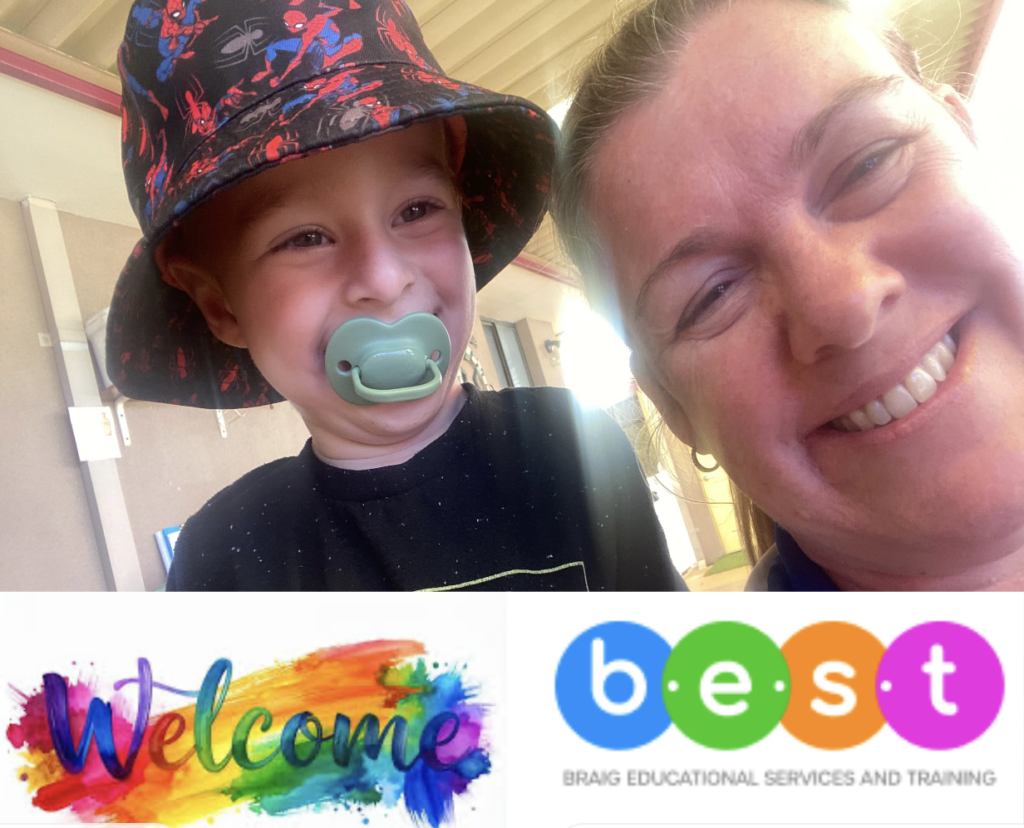
By BEST Childcare Consulting
Welcoming a new child into an early childhood education and care service is a moment of deep responsibility and privilege. Behind every enrolment is a child taking a brave step into the unknown, and a family placing enormous trust in the hands of educators they may only just be getting to know. Those first days and weeks matter — they shape how safe a child feels, how confident they become, and whether they believe this new place truly belongs to them.
For families, this transition is often layered with pride, hope, emotion, and uncertainty. For children, it is felt through the smallest moments — a warm greeting at the door, a familiar routine, a calm voice that says, “You are safe here.” When educators respond with empathy, intention, and consistency, they do far more than ease separation anxiety. They build secure attachments, nurture emotional wellbeing, and establish respectful partnerships that last long beyond the settling-in period.
When welcoming practices are thoughtfully planned and genuinely embedded into everyday routines and service culture, they become a powerful marker of quality. They reflect who we are, what we value, and how deeply we honour children and families. These practices not only support smooth transitions — they set the foundation for high-quality pedagogy and Exceeding-level practice across the National Quality Standard.
Building Trusting Relationships with Children
Creating trusting relationships with new children begins with educators understanding the importance of attachment. Attachment theory tells us that young children need consistent, emotionally available adults who respond sensitively to their cues in order to feel safe enough to explore, learn, and form relationships with others. In practice, this means educators slowing down, being present, and prioritising connection over compliance — especially during arrivals, transitions, and moments of distress. Trust is built through small, repeated actions: greeting children warmly by name, maintaining predictable routines, staying physically and emotionally close during uncertain moments, and responding promptly and calmly to children’s emotions rather than dismissing them. Assigning a key educator, offering comfort without rushing separation, getting down to the child’s level, and using gentle language such as “I’m here with you” all help children develop a sense of security. When educators consistently follow through, honour children’s feelings, and remain calm and attuned, children learn that this is a place where they are safe, seen, and supported — forming the secure attachments that underpin wellbeing, resilience, and confident engagement in learning.
Building Trust and Strong Partnerships with Families
Supporting families during their child’s transition into care is just as important as supporting the child. Trust with families is built when educators communicate openly, listen without judgement, and genuinely value parents and carers as their child’s first and most important teachers. Families need to feel confident that their knowledge, concerns, and cultural practices are respected and acted upon. In practice, this means taking time to learn about each family’s routines and values, providing regular and honest updates during the settling-in period, and reassuring families that their child’s emotional wellbeing is a priority. Simple actions such as checking in at drop-off, sharing photos or learning stories early, explaining how educators will support separation, and inviting families to contribute to settling plans all help build confidence. When educators are consistent, transparent, and compassionate in their communication, families feel seen, supported, and secure — forming strong partnerships that underpin trust, continuity of care, and positive outcomes for children.
Educational Programming Ideas
1. The “Welcome to Country” & Acknowledgment Ritual
- Begin the day with a simple, child-friendly Acknowledgment of Country.
- Invite children to contribute gestures, actions, or rhythms.
- Use picture books by Aboriginal authors (e.g. Welcome to Country by Aunty Joy Murphy).
Links & Resources:
- SNAICC – Aboriginal and Torres Strait Islander Resources
https://www.snaicc.org.au - Koori Curriculum – Transition & Cultural Resources
https://kooricurriculum.com - Welcome to Country – Aunty Joy Murphy
2. “All About Me” Displays & Identity Corners
- Create family photo walls, cultural displays, and home-language labels.
- Include comfort objects and items from home.
- Showcase new children’s voices through drawings, words, or photographs.
- Link learning to EYLF Outcome 1 (Identity) and Outcome 2 (Connection).
Links & Resources:
- ACECQA – Transitions in Early Childhood
https://www.acecqa.gov.au - Starting Blocks – Helping Children Settle In
https://www.startingblocks.gov.au/
3. Settling-In Story Basket
Curate a basket containing:
- Books about starting childcare (The Invisible String, Owl Babies, First Day).
- A soft comfort puppet or familiar toy.
- A visual emotions chart to support emotional literacy.
Use this basket during drop-off times, group discussions, or rest-time reassurance.
Links & Resources:
- The Invisible String – Patrice Karst
- Owl Babies – Martin Waddell
- First Day – Margaret Wild
- Be You (KidsMatter) – Separation Anxiety
https://beyou.edu.au
4. Visual Routines & First-Day Social Stories
- Create personalised visual timetables for each new child.
- Share digital versions with families for home use.
- Use social stories to explain daily routines, transitions, and expectations.
Links & Resources:
- Starting Blocks – Helping Children Settle In
https://www.startingblocks.gov.au/ - ACECQA – Transitions in Early Childhood
https://www.acecqa.gov.au
5. “My New Friends” Peer Buddy Program
- Pair new children with confident peers for the first fortnight.
- Encourage connection through shared mealtimes, table activities, and outdoor play.
- Use cooperative play experiences such as puzzles, playdough, and collaborative art.
Links & Resources:
- ACECQA – Transitions in Early Childhood
https://www.acecqa.gov.au - Starting Blocks – Helping Children Settle In
https://www.startingblocks.gov.au/
6. Family Voice Wall
Invite families to contribute statements such as:
- “My child feels safe when…”
- “At home, we comfort them by…”
- “Our favourite family activity is…”
Display these responses to visually demonstrate partnerships with families.
Links & Resources:
- ACECQA – Transitions in Early Childhood
https://www.acecqa.gov.au - Starting Blocks – Family Partnerships
https://www.startingblocks.gov.au/
7. First-Week Learning Stories
- Observe and document children’s exploration, relationships, and emerging interests.
- Share learning stories with families during the first week to build trust and transparency.
- Use observations to inform ongoing program planning.
Links & Resources:
- ACECQA – Educational Program and Documentation
https://www.acecqa.gov.au - Starting Blocks – Sharing Children’s Learning
https://www.startingblocks.gov.au/
8. Calm Corners for Emotional Safety
- Provide sensory bottles, weighted items, breathing cards, and quiet books.
- Model emotion coaching: “I can see you’re feeling unsure; I’m here with you.”
- Encourage self-regulation and co-regulation strategies.
Links & Resources:
- Be You – Emotional Wellbeing & Separation Anxiety
https://beyou.edu.au - The Zones of Regulation
https://www.zonesofregulation.com - Smiling Mind – Mindfulness for Children
https://www.smilingmind.com.au
9. Welcome Packs
Include:
- A handwritten postcard from educators.
- A photo of the child in their new room.
- Service values and a short “What your child did today” snapshot.
Links & Resources:
- Starting Blocks – Helping Children Settle In
https://www.startingblocks.gov.au/ - ACECQA – Supporting Families Through Transitions
https://www.acecqa.gov.au
10. Inclusive Celebrations of Each Child’s Identity
- Use home languages in greetings and daily routines.
- Learn one word from each family’s culture and teach it to the group.
- Ensure all children see themselves reflected in the environment and curriculum.
Links & Resources:
- SNAICC – Aboriginal and Torres Strait Islander Resources
https://www.snaicc.org.au - Koori Curriculum – Cultural Inclusion & Identity
https://kooricurriculum.com - ACECQA – Respectful and Inclusive Practice
https://www.acecqa.gov.au
QIP Write-Up – Welcoming New Children to Childcare
QA1 – Educational Program and Practice
Embedded Practice:
Educators consistently embedded settling-in strategies into the educational program through the use of visual routines, personalised social stories, settling-in story baskets, and first-week learning stories that responded to each child’s interests, emotions, and stage of transition.
Critical Reflection:
The team regularly reflected on children’s first-week experiences by reviewing observations, emotional cues, learning stories, and family feedback to refine transition practices and strengthen continuity between home and the service.
Meaningful Engagement:
Families were actively involved in shaping the program through shared settling plans, contributions to identity displays, and information about home routines, cultural practices, and comfort strategies, ensuring the program reflected each child’s lived experience.
QA2 – Children’s Health and Safety
Embedded Practice:
Calm, predictable environments were consistently implemented using visual timetables, calm corners, emotion-coaching strategies, and supportive routines to promote children’s emotional wellbeing during separation and transitions.
Critical Reflection:
Educators analysed patterns in children’s emotional responses during arrival, rest times, and transitions to adjust routines, calming resources, and educator support strategies to better meet individual wellbeing needs.
Meaningful Engagement:
Families shared comfort items, wellbeing strategies, and emotional cues used at home, which informed personalised settling approaches and supported consistent emotional regulation across environments.
QA3 – Physical Environment
Embedded Practice:
The physical environment was intentionally arranged to support belonging and emotional safety through identity corners, family photo displays, cultural resources, quiet retreat spaces, and sensory calming areas used daily by children.
Critical Reflection:
The team reflected on how room layout, access to calm spaces, and visual supports influenced children’s sense of security and independence, making adjustments to better support transitions and emotional regulation.
Meaningful Engagement:
Families contributed photos, cultural items, home-language words, and personal artefacts, which were respectfully incorporated into learning environments to create welcoming, inclusive spaces.
QA4 – Staffing Arrangements
Embedded Practice:
Consistent staffing arrangements and key-educator approaches were implemented to support secure attachments, with educators intentionally present during arrivals, transitions, and drop-off times for new children.
Critical Reflection:
Teams reflected on staffing patterns, peer-buddy support, and educator interactions during transitions to ensure continuity of care and emotional availability for children and families.
Meaningful Engagement:
Families were consulted about educator relationships, comfort preferences, and transition needs, which informed staffing decisions and continuity planning.
QA5 – Relationships with Children
Embedded Practice:
Educators prioritised warm, responsive, and attuned relationships by using peer-buddy programs, one-to-one reassurance, co-regulation strategies, and emotion-coaching language to build trust and security.
Critical Reflection:
The team reflected on attachment-building strategies such as peer connections, calm-corner use, and educator presence to strengthen relationships and support children’s sense of belonging.
Meaningful Engagement:
Families shared insights into their child’s temperament, emotional needs, and relationship cues, guiding educators in forming meaningful, responsive connections.
QA6 – Collaborative Partnerships with Families
Embedded Practice:
Strong partnerships were embedded through daily communication, family voice walls, welcome packs, shared learning stories, and collaborative settling-in plans that supported transparent and respectful engagement.
Critical Reflection:
Educators reviewed family feedback and communication practices to improve clarity, accessibility, and responsiveness during the transition period.
Meaningful Engagement:
Families actively contributed their voices, cultural perspectives, and transition experiences, participating as partners in decision-making and program development.
QA7 – Governance and Leadership
Embedded Practice:
Leadership embedded consistent orientation procedures, transition policies, and professional learning to ensure high-quality, child-centred welcoming practices across the service.
Critical Reflection:
Leaders guided reflective discussions on transition quality, cultural responsiveness, emotional safety, and attachment practices, using feedback from educators and families to drive continuous improvement.
Meaningful Engagement:
Service leaders worked in partnership with families to strengthen orientation processes, improve communication systems, and uphold a shared commitment to children’s wellbeing and belonging.
BEST Childcare Consulting
At BEST Childcare Consulting, we are proud to support early childhood services across Western Australia to move beyond compliance and embed practices that genuinely honour children, families, and educators. We believe that quality is felt in everyday moments — in how children are welcomed, how families are heard, and how educators are supported to do their best work.
Through our Exceeding-focused articles, practical resources, mock ECRU spot checks, and tailored consultancy support, we work alongside services to build confident teams, strong partnerships, and meaningful outcomes for children.
As always, use these inspirations to lead your service throughout the whole year in your everyday practices to truly earn an Exceeding rating.
Contact us TODAY.