
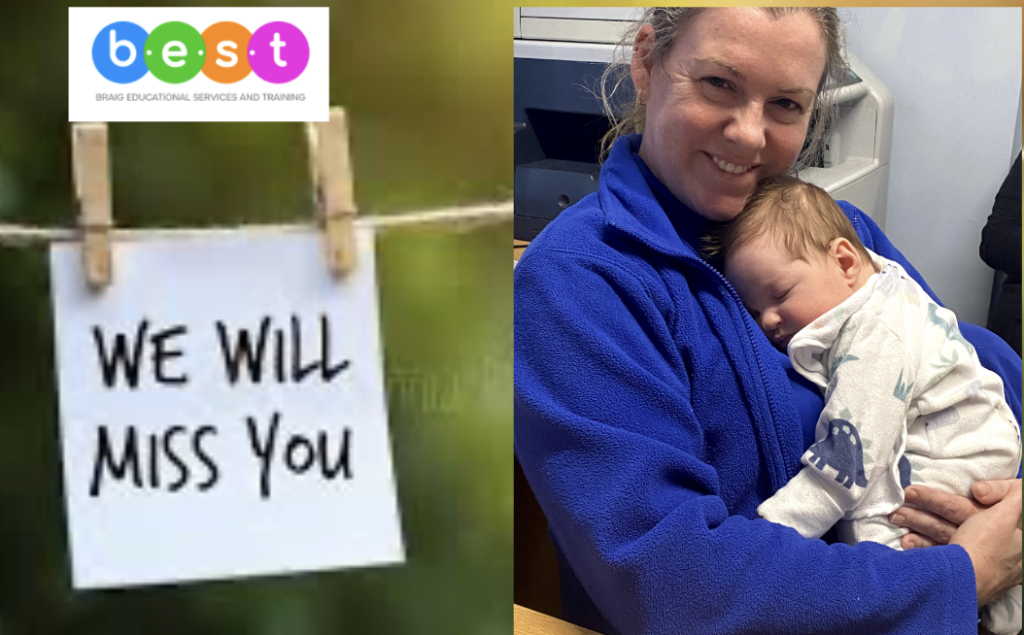
By BEST Childcare Consulting
Saying goodbye to children who have been part of a service for many years is one of the most meaningful — and emotional — moments in early childhood education and care. These are the children who took their first steps in familiar rooms, formed their earliest friendships in well-loved playgrounds, and built their sense of identity within a trusted learning community. They may leave taller, more confident, and ready for the next stage, but the connections formed remain deeply significant.
For educators, these transitions carry pride, gratitude, and a quiet sense of loss. Children leave not because the relationship ends, but because it has done its work well. They move forward with the security, resilience, and confidence nurtured through years of consistent care, responsive teaching, and meaningful relationships.
At its heart, a respectful goodbye is as important as a thoughtful welcome. How services support children and families during long-term transitions reflects the quality of relationships, emotional wellbeing practices, and service culture. When farewells are intentional and child-centred, they honour the shared journey, strengthen partnerships with families, and reinforce each child’s enduring sense of belonging.
This BEST article explores meaningful programming approaches and Quality Improvement Plan practices that support children, families, and educators through long-term goodbyes with care, dignity, and purpose — ensuring every farewell is a celebration of growth, connection, and readiness for what comes next.
More Than a Transition — A Milestone
When a child leaves after years in your care, it marks a powerful milestone in their life and yours. They leave not because they are being lost, but because they are ready — ready for new challenges, bigger spaces, new teachers, and the next stage of their educational journey.
For educators, this moment is layered with pride and grief all at once:
- Pride in knowing you helped shape a confident, capable learner
- Gratitude for the relationships built with families
- Sadness in letting go of daily rituals, inside jokes, and familiar faces
This emotional complexity is not a weakness — it is evidence of deep, meaningful work.
The Invisible Impact Educators Leave Behind
Children may not remember every activity, program plan, or learning story — but they will remember how they felt.
They will remember:
- Feeling safe when the world was new
- Being comforted when emotions were big
- Being encouraged to try again
- Being seen, known, and valued
Educators are often the first adults outside a child’s family to teach trust, resilience, empathy, and independence. These lessons do not disappear when a child walks out the door — they travel with them into school and beyond.
Honouring the Goodbye
A thoughtful goodbye matters.
Rituals such as farewell books, memory walls, graduation ceremonies, or quiet conversations help children and educators process the transition with dignity and care. These moments reinforce that relationships do not end abruptly — they evolve.
For families, these goodbyes can be deeply emotional. Many are entrusting you with their child during the most formative years of their life. Acknowledging this shared journey strengthens partnerships and leaves families feeling supported, respected, and grateful.
Holding Space for Educators
It is important to recognise that educators feel these transitions too.
Supporting staff through reflection, shared storytelling, and acknowledgement allows teams to process emotions collectively. This strengthens wellbeing, reinforces purpose, and builds a culture where care extends to adults as much as children.
Letting go is not easy — but it is meaningful.
They Leave, But They Never Really Leave
Children may outgrow our rooms, but they never outgrow the impact of those who cared for them. They carry your voices, your encouragement, and your belief in them into every new space they enter.
And while they may no longer walk through your doors each morning, they remain part of your story — and your heart.
Programming Ideas: Saying Goodbye in Meaningful, Child-Centred Ways
Thoughtful farewell programming supports children’s emotional wellbeing, honours relationships, and models respectful transitions. These ideas can be embedded over several weeks rather than treated as a one-off event.
1. Memory Books & Learning Journeys
Create individual or group farewell books that capture children’s time at the service.
Ideas include:
- Photos of favourite spaces, friends, and educators
- Children dictating memories (“I remember when…”)
- Educators writing affirmations about each child’s strengths
- Families contributing a message or photo
Useful links:
ACECQA – Transitions in early childhood education and care
https://www.acecqa.gov.au/resources/supporting-materials/transitions
Raising Children Network – Helping children with transitions
https://raisingchildren.net.au/preschoolers/behaviour/routines-transitions/handling-transitions
2. Farewell Rituals That Feel Safe and Predictable
Rituals provide emotional closure and reassurance.
Ideas include:
- A goodbye circle with shared reflections
- Passing a “talking stone” where children share what they loved
- A planting ceremony (tree, herb, flower) to symbolise growth
- A memory wall or “Our Journey Together” display
Useful links:
Early Childhood Australia – Supporting children’s emotional wellbeing
https://www.earlychildhoodaustralia.org.au/our-work/emotional-wellbeing/
Beyond Blue – Supporting children through change
https://www.beyondblue.org.au/mental-health/mental-health-in-young-people/supporting-children
3. Transition-to-School Conversations Through Play
Embed discussions about school naturally through role-play and storytelling rather than formal lessons.
Ideas include:
- Dramatic play: “school corners” with uniforms, lunchboxes, bells
- Drawing “My new school” and “What I feel excited about”
- Storytime followed by open-ended discussions
Book suggestions:
- Starting School by Janet & Allan Ahlberg
- Miss Lily’s Fabulous Pink Feather Boa by Margaret Wild
- The Kissing Hand by Audrey Penn
Storytime videos:
- The Kissing Hand (read-aloud):
https://www.youtube.com/watch?v=QZfN7K9FJ4E
4. Supporting Educators & Families Emotionally
Acknowledge that goodbyes affect adults too.
Ideas include:
- Staff reflection meetings focused on emotional labour
- A shared educator reflection board
- Family farewell letters acknowledging the shared journey
Useful links:
KidsMatter / Be You – Supporting educator wellbeing
https://beyou.edu.au/early-learning
Safe Work Australia – Psychological health at work
https://www.safeworkaustralia.gov.au/mental-health
QIP Write-Up: Saying Goodbye to Long-Term Children
Quality Area 1 – Educational Program and Practice
Embedded Practice
Educators intentionally embedded farewell experiences and transition planning into the educational program over time, using play-based, child-led approaches such as memory books, reflective conversations, storytelling, and expressive arts. Learning experiences supported children to explore change, continuity, emotions, and identity in developmentally appropriate ways.
Critical Reflection
The team regularly reflected on how children responded emotionally to transitions, considering how programming could better acknowledge feelings of pride, sadness, excitement, and uncertainty. Educators adjusted experiences to ensure transitions were not rushed and were responsive to individual children’s cues and needs.
Meaningful Engagement
Children were actively involved in shaping farewell experiences, sharing their memories, asking questions about the future, and contributing ideas. Their voices informed how transitions were planned and implemented.
Quality Area 2 – Children’s Health and Safety
Embedded Practice
Educators prioritised children’s emotional wellbeing during transition periods, recognising that psychological safety is as important as physical safety. Predictable routines, consistent educators, and calming spaces were maintained to support children during emotionally significant changes.
Critical Reflection
The service reflected on how emotional transitions can impact behaviour, sleep, and regulation. Educators reviewed practices to ensure children were supported with reassurance, clear communication, and emotional co-regulation strategies.
Meaningful Engagement
Children were supported to identify and express emotions in safe ways, building self-regulation and resilience skills that promote ongoing wellbeing during times of change.
Quality Area 3 – Physical Environment
Embedded Practice
The physical environment was adapted to support farewells and transitions, including memory displays, reflection spaces, visual prompts, and calm areas where children could engage with memories or seek quiet connection with educators.
Critical Reflection
Educators reflected on how the environment could support emotional security and belonging during transitions, making intentional changes to ensure spaces remained familiar, welcoming, and supportive.
Meaningful Engagement
Children contributed to farewell displays and environmental changes, strengthening their sense of ownership and belonging within the service.
Quality Area 4 – Staffing Arrangements
Embedded Practice
Staffing practices supported continuity of care, ensuring children experienced consistency with familiar educators during farewell periods. Teams worked collaboratively to support children and families with empathy and professionalism.
Critical Reflection
The service reflected on the emotional labour associated with long-term relationships and transitions, recognising the need to support educator wellbeing alongside children’s wellbeing.
Meaningful Engagement
Educators were supported to share reflections, acknowledge emotions, and contribute ideas for meaningful farewell practices, fostering a strong, supportive team culture.
Quality Area 5 – Relationships with Children
Embedded Practice
Strong, secure relationships were prioritised as the foundation for transition practices. Educators intentionally created moments of connection, reassurance, and affirmation to support children through separation from familiar people and environments.
Critical Reflection
The team reflected on attachment theory and the long-term impact of respectful goodbyes, recognising that how children leave is as important as how they are welcomed.
Meaningful Engagement
Children were supported to reflect on relationships, express emotions, and celebrate friendships, strengthening empathy, confidence, and emotional literacy.
Quality Area 6 – Collaborative Partnerships with Families and Communities
Embedded Practice
Families were actively involved in farewell processes through shared reflections, communication, and contributions to memory books and celebrations. Educators maintained open, respectful communication acknowledging the shared journey over many years.
Critical Reflection
The service reflected on family feedback to improve how transitions were communicated and supported, ensuring families felt valued, heard, and emotionally supported during this milestone.
Meaningful Engagement
Strong partnerships with families were reinforced through meaningful acknowledgement of relationships, trust, and shared responsibility for children’s ongoing learning and wellbeing.
Quality Area 7 – Governance and Leadership
Embedded Practice
Leadership embedded transition and farewell practices into service philosophy, policies, and planning, recognising emotional wellbeing, relationships, and continuity as indicators of quality practice.
Critical Reflection
Leaders reflected on how service culture supports both children and educators during significant transitions and implemented opportunities for reflection, professional dialogue, and emotional support.
Meaningful Engagement
Educators were empowered to contribute to decision-making, reflect on practice, and uphold a culture that values relationships beyond enrolment timelines.
BEST Childcare Consulting
Supporting services to honour relationships, transitions, and the emotional heart of early childhood practice — because excellence is not just what we do, but how we care.
As always, use these programming ideas and reflections throughout the year — not just at graduation — to demonstrate deeply embedded, child-centred practice and truly earn an Exceeding rating under the National Quality Standard.
Contact BEST today for guidance, support, and heartfelt practice that lasts.
Contact us TODAY.