By BEST Childcare Consulting
In early childhood education, belonging is not a theme — it is the foundation of everything we do.
Harmony Week reminds us that every child walks through our doors carrying language, culture, history, hopes and identity. Some children arrive confident in who they are. Others are still discovering where they fit. Our role is to ensure that every single child feels seen, safe and valued — not just during one week in March, but every day of the year.
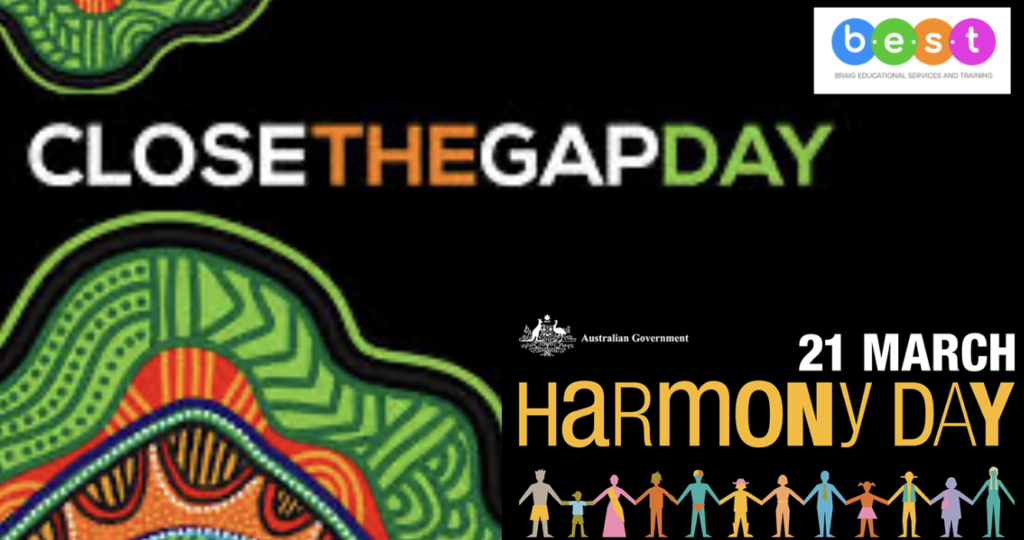
This week also provides an important opportunity to acknowledge Closing the Gap and Australia’s national commitment to improving outcomes for Aboriginal and Torres Strait Islander peoples through the work of the National Indigenous Australians Agency.
When embedded authentically, Harmony Week demonstrates Exceeding practice under the National Quality Standard, guided by the Australian Children’s Education and Care Quality Authority (ACECQA), the Early Childhood Australia Code of Ethics, and the United Nations Convention on the Rights of the Child.
This is not about orange cupcakes. (although do make them, everyone enjoys a cupcake) It is about equity, courage and leadership.
What is Harmony Week?
Harmony Week (16–22 March each year) is an Australian Government initiative celebrating cultural diversity, inclusion and respect. Centred around 21 March — the United Nations International Day for the Elimination of Racial Discrimination — it carries one clear message: Everyone Belongs.
In early childhood settings, Harmony Week aligns directly with the values of the National Quality Framework. It reflects the principles promoted by the Australian Children’s Education and Care Quality Authority (ACECQA), particularly around belonging, respectful relationships, inclusive practice and equity. It also connects strongly to the Early Childhood Australia Code of Ethics, which commits educators to social justice and inclusion.
For childcare services, Harmony Week is not simply about celebrating food or wearing orange — it is about embedding culturally responsive practice, anti-bias education and environments where every child’s identity is respected and affirmed.
What is Closing the Gap?
Closing the Gap is Australia’s national strategy aimed at improving life outcomes for Aboriginal and Torres Strait Islander peoples. It is led by the National Indigenous Australians Agency in partnership with Aboriginal and Torres Strait Islander organisations and communities.
The framework sets measurable targets across health, education, safety, economic participation and wellbeing to address systemic disadvantage and inequity.
How Are They Connected and Relevant to Childcare?
Harmony Week promotes inclusion and belonging across all cultures in Australia. Closing the Gap focuses specifically on equity and justice for Aboriginal and Torres Strait Islander peoples.
Together, they highlight two essential responsibilities in early childhood education:
- Creating inclusive environments where every child feels they belong.
- Actively addressing inequity by embedding Aboriginal and Torres Strait Islander perspectives authentically and respectfully.
For childcare services, this means:
- Embedding First Nations perspectives in curriculum year-round
- Building culturally safe environments
- Reflecting on bias and equity in practice
- Partnering with families and communities
- Demonstrating Exceeding practice under the NQS through meaningful engagement and critical reflection
Harmony Week reminds us that diversity is our strength. Closing the Gap reminds us that equity requires action. In early childhood, both begin with belonging.
Educational Programming
1. Exploring Identity and Belonging
Children engaged in meaningful explorations of family identity, languages spoken at home, traditions and personal stories, aligned with the Harmony Week message that Everyone Belongs.
Experiences included:
- Creating “All About Me” books celebrating identity
- Learning greetings in home languages
- Mapping family heritage
- Discussing what fairness and kindness look like
- Reading diverse children’s literature featuring authentic cultural representation
Support Materials & Links:
- Harmony Week resources: https://www.harmony.gov.au
- Australian Human Rights Commission education resources: https://humanrights.gov.au/education
- Early Childhood Australia Code of Ethics: https://www.earlychildhoodaustralia.org.au
2. Embedding Aboriginal and Torres Strait Islander Perspectives
Closing the Gap conversations were introduced in age-appropriate ways, focusing on fairness, opportunity and respect, informed by the national Closing the Gap framework.
Experiences included:
- Learning about local Traditional Custodians
- Exploring the meaning of the Aboriginal and Torres Strait Islander flags
- Engaging with reconciliation learning materials
- Exploring fairness through storytelling and discussion
- Creating collaborative art inspired by learning about Country
Support Materials & Links:
- Closing the Gap: https://www.closingthegap.gov.au
- Reconciliation Australia: https://www.reconciliation.org.au
- Narragunnawali curriculum resources: https://www.narragunnawali.org.au
3. Anti-Bias Curriculum in Practice
Children explored difference positively and safely through intentional teaching and daily conversations about inclusion.
Experiences included:
- Role-play scenarios about fairness
- Exploring similarities and differences respectfully
- Problem-solving exclusion scenarios
- Embedding emotional literacy daily
- Discussing children’s rights in simple, meaningful language
Support Materials & Links:
- United Nations Convention on the Rights of the Child (child-friendly resources via UNICEF): https://www.unicef.org/child-rights-convention
- Australian Children’s Education and Care Quality Authority Guide to the NQS: https://www.acecqa.gov.au
Professional Learning & Programming for Adults
1. Cultural Competence & Anti-Bias Reflection
Professional learning activities:
- Staff meeting discussion on unconscious bias
- Audit of resources for representation
- Review of enrolment forms for inclusive language
- Reflection on behaviour guidance and equity patterns
Support Materials & Links:
- Australian Human Rights Commission workplace resources: https://humanrights.gov.au
- Early Childhood Australia professional learning: https://www.earlychildhoodaustralia.org.au
2. Closing the Gap Professional Dialogue
Professional learning activities:
- Team discussion on Closing the Gap targets
- Reviewing how Aboriginal perspectives are embedded year-round
- Reflecting on the service’s Reconciliation Action Plan (if applicable)
- Engaging respectfully with local Aboriginal organisations
Support Materials & Links:
- Closing the Gap: https://www.closingthegap.gov.au
- Reconciliation Australia
- Narragunnawali
3. Policy & Systems Review
Leadership actions:
- Reviewing inclusion, equity and anti-discrimination policies
- Evaluating recruitment practices for diversity
- Aligning strategic planning with reconciliation commitments
- Ensuring alignment with National Quality Standard expectations
Support Materials & Links:
- Australian Children’s Education and Care Quality Authority Guide to the NQS
- United Nations Convention on the Rights of the Child
QIP Write-Up
Quality Area 1 – Educational Program and Practice
Theme 1: Embedded in Service Operations
Culturally responsive and anti-bias pedagogy was embedded consistently across the curriculum cycle. Identity, belonging and equity were intentionally documented within planning, observations and evaluations, demonstrating sustained implementation rather than one-off celebration activities.
Theme 2: Informed by Critical Reflection
Educators critically reflected on representation within the program, identifying gaps in authentic Aboriginal perspectives and diverse cultural voices. Adjustments were made to ensure resources and intentional teaching strategies were inclusive and culturally respectful.
Theme 3: Shaped by Meaningful Engagement
Families contributed stories, language, feedback and cultural insights. Local Aboriginal community connections informed planning decisions, strengthening authenticity and accountability.
Quality Area 2 – Children’s Health and Safety
Theme 1: The service embedded culturally safe environments that supported children’s emotional wellbeing and psychological safety. Inclusive practices were consistently evident in routines and interactions.
Theme 2: Educators reflected on bias in behaviour guidance to ensure equitable responses. Team discussions examined patterns and ensured fair, respectful approaches for all children.
Theme 3: Families were consulted regarding cultural safety practices, ensuring alignment between home and service expectations.
Quality Area 3 – Physical Environment
Theme 1: The physical environment authentically reflected diversity year-round, including culturally inclusive books, images and learning materials.
Theme 2: The team critically analysed displays to avoid tokenism and stereotyping, replacing superficial decorations with meaningful representation.
Theme 3: Community members contributed knowledge and guidance regarding respectful use of cultural materials.
Quality Area 4 – Staffing Arrangements
Theme 1: Ongoing professional learning in cultural competence and anti-bias practice was systematically planned and documented.
Theme 2: Leadership reflected on recruitment, onboarding and mentoring processes to ensure inclusivity and cultural responsiveness.
Theme 3: Staff engaged collaboratively in dialogue and shared learning to strengthen consistent practice across the service.
Quality Area 5 – Relationships with Children
Theme 1: Educators intentionally fostered belonging through respectful communication, affirmation of identity and culturally responsive interactions.
Theme 2: Reflective conversations strengthened understanding of how educator language shapes children’s sense of self and inclusion.
Theme 3: Children’s voices were actively sought and respected in discussions about fairness, kindness and community.
Quality Area 6 – Collaborative Partnerships
Theme 1: Partnerships supporting cultural inclusion were embedded beyond Harmony Week and sustained throughout the year.
Theme 2: The service evaluated family feedback to identify opportunities for deeper engagement and inclusion.
Theme 3: Community organisations and local Aboriginal representatives informed reconciliation and inclusion strategies.
Quality Area 7 – Governance and Leadership
Theme 1: Inclusion and equity policies were actively implemented, reviewed and aligned with strategic planning.
Theme 2: Leadership critically analysed service data to identify equity gaps and inform continuous improvement.
Theme 3: Strategic planning reflected a genuine commitment to reconciliation and social justice principles.
Links & Resources Summary
Harmony Week (Australian Government)
https://www.harmony.gov.au
Closing the Gap (National Indigenous Australians Agency)
https://www.closingthegap.gov.au
National Indigenous Australians Agency (NIAA)
https://www.niaa.gov.au
Reconciliation Australia
https://www.reconciliation.org.au
Narragunnawali: Reconciliation in Education
https://www.narragunnawali.org.au
Australian Human Rights Commission – Education Resources
https://humanrights.gov.au/education
Early Childhood Australia – Code of Ethics & Professional Learning
https://www.earlychildhoodaustralia.org.au
ACECQA – Guide to the National Quality Standard
https://www.acecqa.gov.au/nqf/national-quality-standard
United Nations Convention on the Rights of the Child (UNICEF Overview)
https://www.unicef.org/child-rights-convention
BEST Childcare Consulting
Harmony Week asks one simple but powerful question: Does everyone truly belong in your service?
Exceeding services answer this not with decorations — but with systems, pedagogy, relationships and leadership that reflect courage, accountability and care. At BEST, we guide services to move from celebration to embedded Exceeding practice — aligning culture, curriculum and compliance with authenticity and heart.
As always, use these inspirations to lead your service throughout the whole year in your everyday practices to truly earn an exceeding rating.
Contact us TODAY.