
By BEST Childcare Consulting
There is something deeply human about watching a child connect with nature. It is in the quiet moments—small hands digging into soil, eyes lighting up at the discovery of a bug, the careful balance along a log—that we see children exactly as they are meant to be: curious, capable, and completely engaged in their world.
Nature Play Week is not simply a themed event on the calendar. It is a powerful reminder of what childhood should feel like. In a time where routines can become rushed and environments increasingly structured, nature offers something irreplaceable—freedom, wonder, and the space to just be. It invites children to slow down, to take risks, to problem-solve, and to develop a genuine connection to the world around them.
For educators, this is where our role becomes most meaningful. Nature play challenges us to step back, to trust children, and to move beyond pre-planned outcomes. It calls us to observe more closely, listen more deeply, and respond with intention. It is in these moments that the richest learning occurs—not because it was planned, but because it was lived.
Importantly, nature play is not about creating perfect outdoor setups or aesthetically pleasing experiences. It is about authenticity. It is about mud, unpredictability, and real discovery. It is about giving children the time and permission to explore, to fail, to try again, and to succeed in ways that truly matter to them.
When we embed nature play into our everyday practice, we are doing far more than meeting frameworks or ticking boxes. We are supporting children to build resilience, develop confidence, and form a strong sense of identity and belonging. We are shaping children who feel connected—to themselves, to others, and to the environment they will one day care for.
This is the heart of quality practice. This is what exceeding truly looks like.
Educational Programming Ideas
Loose Parts Nature Construction
Children use sticks, bark, leaves, stones and seed pods to design and build structures.
Extend the learning:
- Ask: “What could make this stronger?”
- Introduce problem-solving: balancing, stability, weight
- Encourage collaboration and leadership roles
Mini Beast Investigations
Children explore insects in natural environments using magnifying glasses and observation tools.
Extend the learning:
- Document findings through drawings or photos
- Introduce respect for living things
- Link to sustainability and ecosystems
https://www.australianchildhoodfoundation.org.au
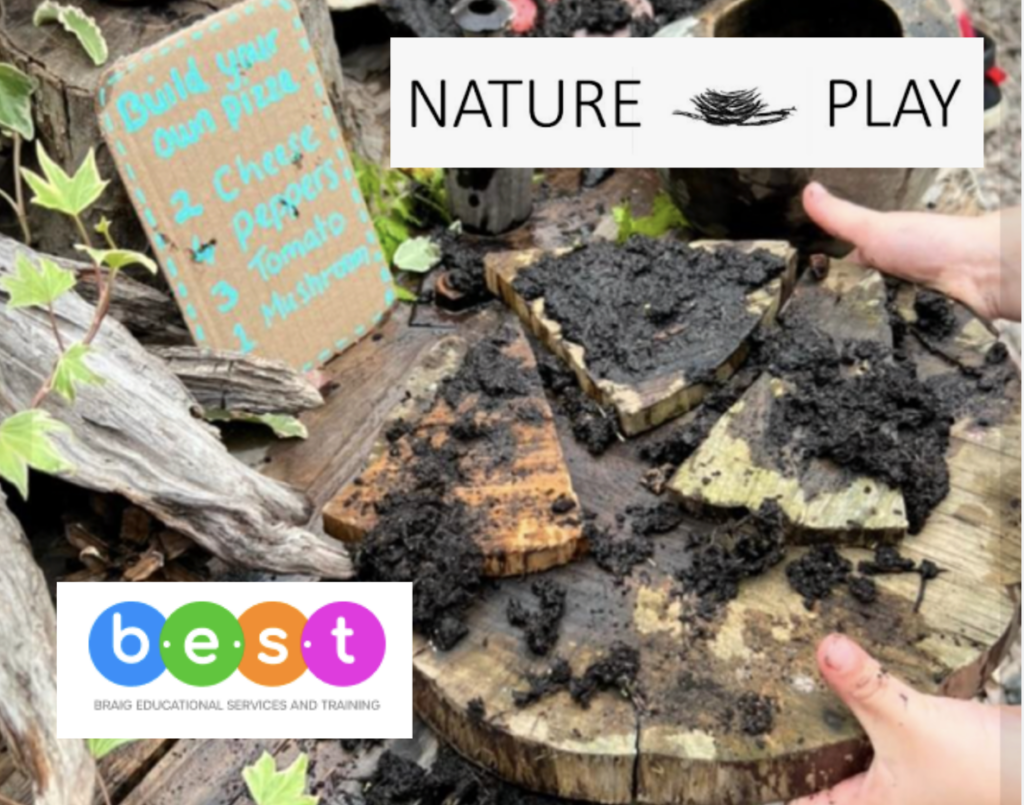
Mud Kitchen Exploration
Children engage in sensory, imaginative play using mud, water, and natural materials.
Extend the learning:
- Introduce measurement language (full/empty, heavy/light)
- Encourage storytelling and role play
- Support sensory regulation
https://www.beactive.wa.gov.au
Risky Play & Physical Challenge
Children climb, balance, jump and test their physical limits in a supported environment.
Extend the learning:
- Use language of safety: “What’s your plan?”
- Encourage self-assessment of risk
- Build resilience and confidence
https://raisingchildren.net.au
Nature Art & Ephemeral Creations
Children create temporary artworks using leaves, flowers, and natural objects.
Extend the learning:
- Discuss patterns, symmetry, and design
- Encourage appreciation of impermanence
- Link to cultural perspectives of land and nature
QIP Write-Up
QA1 – Educational Program and Practice
Exceeding Theme 1: Practice is embedded in service operations
Nature play was consistently embedded within the daily program as a core component of children’s learning rather than an occasional experience. Educators intentionally incorporated natural environments, loose parts, and outdoor inquiry into planning cycles, ensuring alignment with the EYLF and service philosophy. Programming reflected a sustained commitment to child-led exploration, where nature-based learning opportunities were prioritised across all age groups and routines.
Exceeding Theme 2: Practice is informed by critical reflection
Educators engaged in ongoing critical reflection regarding children’s engagement, learning outcomes, and developmental progression within nature play experiences. Reflection processes informed intentional adjustments to environments, interactions, and teaching strategies, enabling deeper inquiry and sustained engagement. Educators analysed how nature play supported wellbeing, resilience, and problem-solving, and used this insight to continuously strengthen practice.
Exceeding Theme 3: Practice is shaped by meaningful engagement with families and/or the community
Families were actively engaged in contributing to the nature play program through shared knowledge, feedback, and participation in experiences. Educators communicated the value of nature play and incorporated family perspectives into planning, ensuring the program reflected the community context. This collaboration strengthened continuity of learning between home and the service.
QA2 – Children’s Health and Safety
Exceeding Theme 1: Practice is embedded in service operations
Risk-benefit approaches were consistently embedded in daily practice, supporting children to engage in challenging nature play experiences while maintaining safety. Educators implemented clear supervision strategies and promoted children’s understanding of safe risk-taking as part of everyday learning. Health and safety practices supported both physical wellbeing and emotional security in outdoor environments.
Exceeding Theme 2: Practice is informed by critical reflection
Educators critically reflected on how children interacted with risk, challenge, and physical exploration in natural environments. These reflections informed adjustments to supervision, environment design, and educator support, ensuring children were both protected and empowered. Ongoing evaluation ensured that safety practices did not unnecessarily limit children’s learning opportunities.
Exceeding Theme 3: Practice is shaped by meaningful engagement with families and/or the community
Families were supported to understand the importance of risky play and were engaged in discussions about safety, resilience, and independence. Educators incorporated family perspectives into risk management approaches, ensuring shared understanding and consistency. This partnership strengthened confidence in the service’s approach to balancing safety with meaningful challenge.
QA3 – Physical Environment
Exceeding Theme 1: Practice is embedded in service operations
The physical environment consistently reflected a commitment to nature play, with natural elements, open-ended materials, and flexible spaces embedded into daily use. Outdoor areas were intentionally designed to promote exploration, sustainability, and creativity. The environment supported ongoing access to nature-based experiences for all children.
Exceeding Theme 2: Practice is informed by critical reflection
Educators regularly reflected on how children used the environment and how it influenced their engagement, wellbeing, and learning. These reflections informed continuous improvements, including the addition of natural resources, redesign of spaces, and increased opportunities for child-led exploration. The environment evolved in response to children’s interests and developmental needs.
Exceeding Theme 3: Practice is shaped by meaningful engagement with families and/or the community
Families contributed natural materials, ideas, and feedback that influenced the development of the outdoor environment. Community connections supported access to natural spaces and sustainability initiatives. This collaboration ensured the environment was relevant, meaningful, and reflective of the local context.
QA4 – Staffing Arrangements
Exceeding Theme 1: Practice is embedded in service operations
Educators consistently worked collaboratively to support nature play, demonstrating shared understanding and aligned practices across the team. Roles and responsibilities were clearly defined, ensuring effective supervision and engagement during outdoor learning. Team consistency supported high-quality experiences for all children.
Exceeding Theme 2: Practice is informed by critical reflection
Professional discussions and reflective practices informed how educators facilitated nature play and supported children’s learning. Educators reflected on their confidence, interactions, and teaching strategies, identifying areas for growth and improvement. This reflective culture strengthened team capability and practice.
Exceeding Theme 3: Practice is shaped by meaningful engagement with families and/or the community
Families were engaged in discussions about educator practices, including approaches to risk, play, and learning. Feedback from families informed staffing approaches and supported transparency. This engagement strengthened trust and collaborative relationships.
QA5 – Relationships with Children
Exceeding Theme 1: Practice is embedded in service operations
Educators consistently fostered secure, respectful relationships through shared nature play experiences. Interactions were responsive, supportive, and focused on empowering children to take initiative and lead their own learning. Children’s voices were embedded in daily practice.
Exceeding Theme 2: Practice is informed by critical reflection
Educators reflected on the quality of their interactions and relationships with children during nature play. This reflection informed more intentional, responsive engagement, supporting children’s sense of identity, belonging, and wellbeing. Educators continuously adapted their approach to meet individual needs.
Exceeding Theme 3: Practice is shaped by meaningful engagement with families and/or the community
Families shared insights into children’s interests, strengths, and experiences with nature, which informed relationship-building practices. Educators incorporated this knowledge to strengthen connections and support continuity of care. Partnerships enhanced children’s sense of belonging.
QA6 – Collaborative Partnerships with Families and Communities
Exceeding Theme 1: Practice is embedded in service operations
Family and community engagement in nature play was consistently embedded within service practices. Educators regularly communicated with families, invited participation, and created opportunities for shared experiences. Partnerships were ongoing and meaningful.
Exceeding Theme 2: Practice is informed by critical reflection
Educators reflected on the effectiveness of partnerships and identified ways to strengthen engagement. Feedback from families informed improvements in communication, programming, and involvement opportunities. This reflective approach ensured partnerships remained responsive and effective.
Exceeding Theme 3: Practice is shaped by meaningful engagement with families and/or the community
Families and community members contributed knowledge, resources, and cultural perspectives that enriched the nature play program. Educators actively sought and incorporated these contributions, ensuring inclusivity and relevance. This collaboration strengthened the service’s connection to its community.
QA7 – Governance and Leadership
Exceeding Theme 1: Practice is embedded in service operations
Leadership ensured that nature play was embedded as a priority within the service’s philosophy, policies, and practices. Systems supported consistent implementation, including planning processes, professional development, and resource allocation. This ensured sustainability and quality.
Exceeding Theme 2: Practice is informed by critical reflection
Leaders facilitated ongoing reflection at both individual and service levels, analysing practice, outcomes, and opportunities for improvement. Reflection informed decision-making, ensuring continuous improvement and alignment with regulatory requirements and best practice.
Exceeding Theme 3: Practice is shaped by meaningful engagement with families and/or the community
Leadership actively engaged families and the community in shaping the service’s approach to nature play. Feedback and collaboration informed strategic direction and practice. This inclusive approach ensured the service remained responsive, relevant, and community-focused.
Links & Resources
Nature Play WA: https://natureplaywa.org.au/
Nature Play Australia: https://www.natureplay.org.au/
Raising Children Network: https://raisingchildren.net.au/
Be Active WA: https://www.beactive.wa.gov.au/
Australian Childhood Foundation: https://www.childhood.org.au/
BEST Childcare Consulting
Nature play is not about creating perfect outdoor setups or Pinterest-worthy activities. It is about trusting children, slowing down, and allowing learning to unfold naturally in the spaces that matter most.
When we prioritise nature play, we are not only supporting development—we are shaping future citizens who care deeply for their environment, their communities, and themselves.
As always, use these inspirations to lead your service throughout the whole year in your everyday practices to truly earn an exceeding rating.
Contact us TODAY.