
By BEST Childcare Consulting
Valentine’s Day in early childhood is a gentle reminder of what matters most — love shown through safety, kindness, listening and care. For young children, love isn’t about cards or gifts; it’s about feeling secure, valued and deeply understood.
When approached with intention, Valentine’s Day becomes a meaningful opportunity to nurture friendships, express gratitude and strengthen the relationships at the heart of quality early learning — between children, educators and families. These practices align deeply with the Early Years Learning Framework, the National Quality Standard, and the everyday actions that underpin Exceeding-level services.
Rather than being a one-off event, Valentine’s Day serves as a quiet prompt to reflect on how love, care and respect are intentionally embedded into daily practice, all year round.
Is It Okay to Celebrate Valentine’s Day in Early Childhood?
Yes — when it is approached thoughtfully and inclusively.
In early learning settings, Valentine’s Day should:
- Focus on friendship, kindness, gratitude and care
- Avoid romantic or exclusionary themes
- Be inclusive of all family structures and cultures
- Emphasise collective belonging, not individual gifting or popularity
When framed through a child-centred lens, Valentine’s Day supports:
- Social and emotional learning
- Respectful relationships
- Emotional literacy
- Community connection
This makes it entirely appropriate — and highly valuable — in early childhood settings.
Educational Programming Ideas
Kindness and Friendship
Create a “Kindness Tree” or “Friendship Wall” where children add drawings, photos or dictated stories about kind actions they notice each day.
EYLF v2.0 – Belonging, Being & Becoming
https://www.acecqa.gov.au/nqf/national-law-regulations/approved-learning-frameworks
Use role play and small-group scenarios to practise helping, sharing and inclusion, supported by visual prompts and social stories.
Be You – Social and Emotional Learning
https://beyou.edu.au
Introduce compliment circles, where educators model positive language and children practise acknowledging each other’s strengths.
Raising Children Network – Teaching Kindness
https://raisingchildren.net.au/preschoolers/behaviour/kindness-empathy
Gratitude and Emotional Literacy
Hold group discussions about “What makes me feel safe, happy and cared for?”, documenting children’s voices to show agency and reflection.
EYLF v2.0 – Outcome 1: Children have a strong sense of identity
https://www.acecqa.gov.au/eylf
Use emotion cards, mirrors and storytelling to explore feelings and facial expressions in a safe, supportive way.
Be You – Emotional Literacy
https://beyou.edu.au/fact-sheets/emotional-development
Model emotional language during routines and transitions to demonstrate how feelings are recognised and respected every day.
NQS Guide – Quality Area 5
https://www.acecqa.gov.au/nqf/national-quality-standard
Creative Expression
Provide collaborative art experiences (shared murals, group collages, handprint art) focused on connection rather than individual outcomes.
ACECQA – Intentional Teaching
https://www.acecqa.gov.au/nqf/national-quality-standard/quality-area-1
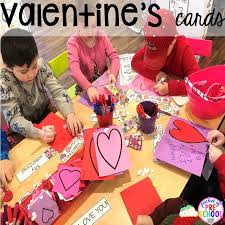
Invite children to make cards or artworks for families, educators or community helpers, reinforcing gratitude and respect.
EYLF v2.0 – Outcome 2: Children are connected with and contribute to their world
Offer sensory play experiences using colours, textures and materials associated with warmth and comfort — without gender stereotypes.
Early Childhood Australia – Inclusive Practice
https://www.earlychildhoodaustralia.org.au
Family and Community Connection
Invite families to share how they show care and kindness at home, through photos, stories or short written contributions.
NQS – Quality Area 6
https://www.acecqa.gov.au/nqf/national-quality-standard/quality-area-6
Display family photos, drawings and children’s narratives to strengthen continuity between home and the service.
EYLF v2.0 – Partnerships with Families
Share learning stories and reflections with families explaining how Valentine’s Day learning supports wellbeing and relationships, rather than focusing on the event itself.
ACECQA – Engaging Families
https://www.acecqa.gov.au/resources/supporting-materials/infosheet/engaging-families
Quality Improvement Plan (QIP) Write-Ups
Quality Area 1 – Educational Program and Practice
Embedded Practice
Valentine’s Day learning experiences were thoughtfully embedded into the ongoing program, focusing on kindness, empathy, friendship and emotional understanding rather than isolated activities.
Informed by Critical Reflection
Educators reflected on how relationship-based learning was represented in everyday practice and adjusted experiences to ensure they were inclusive, meaningful and developmentally appropriate.
Shaped by Meaningful Engagement
Children actively contributed ideas about kindness and care, influencing programming decisions and demonstrating agency in how learning experiences unfolded.
Quality Area 2 – Children’s Health and Safety
Embedded Practice
Educators consistently promoted emotional wellbeing by creating environments where children felt safe to express feelings, ask for support and build secure relationships.
Informed by Critical Reflection
The team reflected on how emotional safety and belonging were supported across routines, transitions and group interactions, strengthening protective practices.
Shaped by Meaningful Engagement
Children were supported to identify emotions and practise respectful interactions, building resilience and self-regulation skills.
Quality Area 3 – Physical Environment
Embedded Practice
The environment was intentionally arranged to promote collaboration, calm interactions and shared creative experiences that reinforced connection and belonging.
Informed by Critical Reflection
Educators reflected on how spaces encouraged inclusive participation and adjusted layouts to support positive peer interactions.
Shaped by Meaningful Engagement
Children influenced the design of displays and shared spaces, fostering pride, ownership and a sense of community.
Quality Area 4 – Staffing Arrangements
Embedded Practice
Educators modelled respectful communication, teamwork and emotional awareness, reinforcing positive relationships across the service.
Informed by Critical Reflection
Team discussions focused on how educator wellbeing and collaboration impacted children’s sense of security and belonging.
Shaped by Meaningful Engagement
Strong educator relationships created a consistent, nurturing environment where children felt emotionally supported.
Quality Area 5 – Relationships with Children
Embedded Practice
Respectful, responsive and trusting relationships were consistently evident, with educators attuned to children’s emotional cues and needs.
Informed by Critical Reflection
Educators reflected on attachment-informed practices and adjusted interactions to further support children’s emotional development.
Shaped by Meaningful Engagement
Children formed secure relationships with educators and peers, demonstrating empathy, cooperation and confidence.
Quality Area 6 – Collaborative Partnerships with Families and Communities
Embedded Practice
Families were included in Valentine’s Day experiences through shared reflections, documentation and communication about learning.
Informed by Critical Reflection
The service reflected on how family voices and diverse perspectives were represented and strengthened inclusive practices.
Shaped by Meaningful Engagement
Families contributed insights into their children’s relationships, reinforcing continuity between home and the service.
Quality Area 7 – Governance and Leadership
Embedded Practice
Leadership supported a culture where relationship-based practice, emotional wellbeing and inclusion were prioritised across the service.
Informed by Critical Reflection
Policies, procedures and professional discussions were reviewed to ensure alignment with child-safe, trauma-aware and respectful practice.
Shaped by Meaningful Engagement
Educators were empowered to contribute ideas, reflections and leadership in embedding relationship-focused learning.
Links and Resources
Early Years Learning Framework (EYLF v2.0)
https://www.acecqa.gov.au/nqf/national-law-regulations/approved-learning-frameworks
Guide to the National Quality Standard
https://www.acecqa.gov.au/nqf/national-quality-standard/guide-nqs
ACECQA – Supporting Children’s Social and Emotional Learning
https://www.acecqa.gov.au/resources/supporting-materials/infosheet/supporting-childrens-social-and-emotional-development
Be You – Relationships and Mental Health in Early Learning
https://beyou.edu.au/early-learning
https://beyou.edu.au/fact-sheets/relationships
Raising Children Network – Teaching Children Kindness and Empathy
https://raisingchildren.net.au/preschoolers/behaviour/kindness-empathy
https://raisingchildren.net.au/toddlers/behaviour/kindness-empathy
National Principles for Child Safe Organisations
https://www.childsafety.gov.au/child-safe-organisations/national-principles
BEST Childcare Consulting
At BEST Childcare Consulting, we believe the heart of quality practice lies in relationships. When services intentionally embed kindness, care and connection into everyday practice, they build environments where children, families and educators truly thrive.
Valentine’s Day is not about a single date on the calendar — it is about reinforcing the values that underpin exceptional early childhood education.
As always, use these inspirations to lead your service throughout the whole year in your everyday practices to truly earn an Exceeding rating.
Contact us TODAY.