By BEST Childcare Consulting
There is something profoundly powerful about a child being heard. Not just listened to — but truly heard. Heard when they whisper. Heard when they gesture. Heard when they sign. Heard when they are still finding the words.
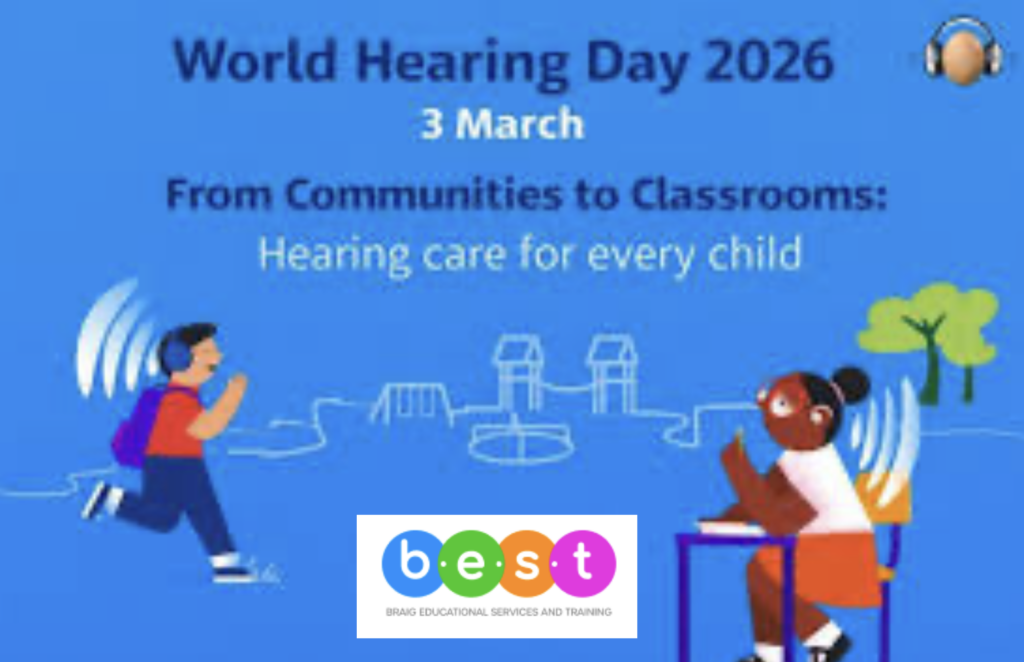
The 2026 World Hearing Day theme, “From communities to classrooms: hearing care for all children,” is more than a public health message. It is a reminder of our responsibility as early childhood professionals. It calls us to look closely at the environments we create, the noise we allow, the language we model, and the inclusion we practise every single day. This theme emphasises the importance of preventing avoidable hearing loss, ensuring early identification and care, and embedding hearing health and inclusive communication into everyday community and early learning environments. It recognises that supporting children’s ability to hear, listen and communicate is foundational to learning, wellbeing and participation in all aspects of ECEC life.
In early childhood education, hearing care is not only about ears — it is about belonging. It is about ensuring that every child can access learning, connection, relationships and joy. It is about noticing when a child leans closer to hear. It is about recognising when frustration may stem from not fully understanding. It is about slowing down our speech, adding visual cues, learning a few Auslan signs, and adjusting our spaces so every child can participate with confidence.
Our classrooms are communities. And our communities shape futures. When we intentionally embed hearing awareness into our everyday practice, we are not simply acknowledging a calendar event — we are strengthening children’s identities, protecting their wellbeing, and building bridges between health, education and family life. This is the work of early childhood
From Communities to Classrooms — What This Means in ECEC
Early childhood settings are both community hubs and learning environments. They are places where children:
- Build early language and social skills
- Engage with peers and educators
- Develop listening, communication, and foundational literacy
- Explore sounds safely and confidently
Supporting hearing care means aligning health awareness with everyday practice — ensuring environments are quiet when needed, listening opportunities are plentiful, and communication differences are embraced and understood.
Educational Programming Ideas
1. Sound & Listening Exploration
- Create sound scavenger hunts around the service: footsteps, rain, instruments, voices.
- Reflect on what we hear versus what we can’t — encouraging children to differentiate sounds.
- Incorporate quiet reflection areas where children can rest their ears and bodies after active play.
2. Auslan & Communication Play
Use the free Building Bridges resources from Deaf Children Australia — including Auslan signs, activity sheets and visual supports — to introduce sign language in playful ways.
- Auslan Word of the Day/Week: Start the day by learning a sign and using it in routines.
- Emotion Charades with Sign: Act out feelings and practice signing them back.
- Interactive Games: Pair children to sign words and guess what their partner is signing.
These activities strengthen vocabulary, visual communication and empathy.
3. Inclusive Storytelling
Invite local Auslan users or families to share a story in both sign and voice (or play Auslan Storytime videos where available). This supports diverse language exposure and demonstrates communication can be multi-modal.
4. Family & Community Engagement
- Share hearing health tips in newsletters — including suggestions for family listening games at home.
- Encourage families to explore hearing checks and safe listening habits (turn down loud music, use quiet spaces).
5. Online Training and Professional Learning
Support staff by engaging with the Building Bridges online course — a free, self-paced short course designed to build confidence, deaf awareness and communication strategies. This course includes access to the Building Bridges Auslan video library and downloadable inclusive resources for everyday practice.
Incorporating Auslan — Communication for All
Auslan (Australian Sign Language) enriches communication for all children — not just those who are deaf or hard of hearing. Research indicates that early exposure to a rich language environment enhances cognitive and social development. Introducing Auslan supports diverse learners and fosters inclusive learning dispositions.
In your service you could:
- Label common classroom objects in Auslan and English
- Use simple songs with sign components
- Celebrate International Day of Sign Languages (23 September) as a yearly focus connected to this theme
Building Bridges Program
Building Bridges is a specialist awareness and inclusion initiative developed by Deaf Children Australia, designed to support educators, services, families and communities in understanding and embracing deafness, hearing loss and diverse communication needs. It is grounded in the belief that every child — whether hearing, deaf, hard of hearing, or communication diverse — deserves respect, connection and access to quality learning opportunities.
At its heart, Building Bridges celebrates communication diversity and helps professionals in early childhood and school settings move from uncertainty about hearing loss and communication differences to confidence, skill and inclusive practice.
Core Focus of Building Bridges
Building Bridges is not just about teaching a set of skills — it is about:
- Raising awareness of how deafness and hearing differences impact learning and participation
- Celebrating language diversity, including Auslan (Australian Sign Language) and multimodal communication
- Strengthening inclusive practice, so all children feel seen, understood and supported
- Connecting families and educators through shared language tools and resources
Importantly, Building Bridges reframes communication differences as neutral and enriching, rather than deficits — aligning with strengths-based, anti-bias early learning pedagogy.
Online Training: What It Is
The Building Bridges training is delivered via an online learning platform designed specifically for educators, early learning teams and support staff.
Who It’s For
- Childcare educators and teachers
- Early childhood leaders and directors
- Support workers and inclusion aides
- Families and community professionals
What the Training Offers
The online training includes:
✔ Foundational understanding of deafness and hearing loss
✔ Communication strategies that benefit all learners
✔ Access to the Building Bridges Auslan Library — a rich collection of videos showing Auslan signs and phrases tailored for early years use
✔ Downloadable activities and visual supports to embed in your environment
✔ Examples of inclusive practice and suggestions for everyday routines
The focus is always practical — helping educators feel confident to use what they learn immediately in everyday teaching, meaningful interactions and positive engagement with children and families.
What You’ll Learn
Participants in Building Bridges training will:
- Understand how hearing differences can present in early childhood settings
- Learn how to communicate effectively with children using visual cues, signs and inclusive strategies
- Build familiarity with basic Auslan signs that enhance communication for all children
- Explore how to create environments that reduce barriers and support active engagement
- Gain confidence in adapting practice for diverse communication needs
Why It Matters in Early Childhood Education
Research and practice consistently show that:
- Early communication shapes language development, social connection and confidence
- Inclusive environments promote a sense of belonging for every child
- Skilled educators adapt communication to meet diverse needs without delay
Building Bridges equips educators not just with information, but with practical tools and a compassionate mindset — essential for curriculum delivery, behaviour support, family partnership and everyday interactions.
Where to Find It
The online training and resources are freely available through Deaf Children Australia’s Building Bridges hub:
https://www.deafchildrenaustralia.org.au/building-bridges/ (Australia)
This page includes:
- Online learning access
- Auslan video library
- Printable activity sheets
- Support information for families and services
QIP write ups
QA1 – Educational Program and Practice
Exceeding Theme 1 – Practice Embedded in Service Operations
Hearing awareness and inclusive communication were intentionally embedded into our educational program beyond World Hearing Day through the integration of the Building Bridges program. Educators utilised the Building Bridges Auslan video library and activity resources to consistently incorporate listening games, sound exploration and basic Auslan signs into daily routines such as greetings, transitions and group times. Documentation demonstrated clear links to EYLF Outcome 5 (Communication) and Outcome 1 (Identity), showing sustained and intentional planning rather than one-off experiences.
Exceeding Theme 2 – Practice Informed by Critical Reflection
Through critical reflection meetings, educators analysed how noise levels, room layouts and teaching strategies impacted children’s listening and engagement. Insights gained from the Building Bridges training informed adjustments to reduce background noise during focused learning times and increase visual supports for children requiring multimodal communication strategies.
Exceeding Theme 3 – Practice Shaped by Meaningful Engagement
Families were invited to share insights regarding their children’s hearing, speech and communication strengths. Information from the Building Bridges resources was shared with families, encouraging shared understanding of inclusive communication. Feedback influenced planning decisions, including the expansion of visual cue systems and continued use of Auslan across the service.
QA2 – Children’s Health and Safety
Exceeding Theme 1 – Practice Embedded in Service Operations
The service embedded hearing health awareness into daily health and wellbeing routines, informed by learning from the Building Bridges program. Quiet spaces were intentionally designed to support auditory comfort. Educators actively monitored environmental noise and supported children in recognising safe listening practices as part of everyday wellbeing discussions.
Exceeding Theme 2 – Practice Informed by Critical Reflection
Critical reflection identified opportunities to strengthen early identification practices. Following insights from Building Bridges training, enrolment discussions were updated to include prompts about hearing checks and ear health history, ensuring proactive communication with families.
Exceeding Theme 3 – Practice Shaped by Meaningful Engagement
Families were provided with World Hearing Day information and Building Bridges resources to support shared awareness. Conversations strengthened partnerships around early intervention and hearing health support, ensuring families felt confident in discussing communication needs.
QA3 – Physical Environment
Exceeding Theme 1 – Practice Embedded in Service Operations
Learning environments were intentionally adapted to support inclusive communication, drawing directly from Building Bridges guidance. This included visual signage, Auslan word displays sourced from the Building Bridges library, and acoustically mindful room arrangements that supported equitable participation.
Exceeding Theme 2 – Practice Informed by Critical Reflection
Reflection on sound intensity during peak activity times led to rearranging furniture, adding soft furnishings and redesigning group areas to reduce echo and background noise. Building Bridges professional learning informed our understanding of how physical spaces impact listening and communication access.
Exceeding Theme 3 – Practice Shaped by Meaningful Engagement
Family and community input supported the development of visually accessible environments. Feedback from families enhanced our understanding of sensory considerations for children with hearing differences and informed ongoing environmental adjustments.
QA4 – Staffing Arrangements
Exceeding Theme 1 – Practice Embedded in Service Operations
Educators completed the Building Bridges online training and integrated learning into everyday practice. Staff meetings regularly included discussion on inclusive communication strategies, Auslan use and practical implementation of Building Bridges resources across all age groups.
Exceeding Theme 2 – Practice Informed by Critical Reflection
Post-training reflection enabled educators to identify areas of confidence and areas requiring further development in sign language use and communication adjustments. Action steps were documented and revisited to ensure sustained implementation.
Exceeding Theme 3 – Practice Shaped by Meaningful Engagement
Professional learning was strengthened through engagement with external organisations and shared knowledge sessions with families who had expertise in communication diversity. Families acknowledged the service’s commitment to inclusive practice informed by Building Bridges.
QA5 – Relationships with Children
Exceeding Theme 1 – Practice Embedded in Service Operations
Educators consistently used gestures, facial expression, visual cues and Auslan signs from the Building Bridges library to ensure all children could access communication. Children were supported to recognise that communication occurs in many forms, fostering inclusion and respect.
Exceeding Theme 2 – Practice Informed by Critical Reflection
Reflection focused on whether educator interactions allowed sufficient processing time and visual clarity for all children. Learning from Building Bridges informed adjustments to pacing, positioning and visual accessibility during conversations and group experiences.
Exceeding Theme 3 – Practice Shaped by Meaningful Engagement
Families shared strategies used at home to support communication, which informed educator responses and strengthened consistency between environments. Building Bridges materials were shared to support continuity of practice.
QA6 – Collaborative Partnerships with Families and Communities
Exceeding Theme 1 – Practice Embedded in Service Operations
Hearing awareness and Building Bridges resources were integrated into newsletters, parent meetings and orientation discussions. Communication inclusion was explicitly reflected in the service philosophy and annual planning documentation.Exceeding Theme 2 – Practice Informed by Critical Reflection
The service reflected on how effectively family voices were represented in communication planning. Surveys gathered input about communication preferences and informed the continued integration of Building Bridges strategies.
Exceeding Theme 3 – Practice Shaped by Meaningful Engagement
The service connected with community organisations supporting hearing health and shared Building Bridges resources with families. Engagement extended beyond awareness day activities into sustained partnerships.
QA7 – Governance and Leadership
Exceeding Theme 1 – Practice Embedded in Service Operations
Leadership ensured policies referenced inclusive communication, equitable access and professional learning through the Building Bridges program. Hearing awareness and Auslan integration were incorporated into annual service planning cycles.
Exceeding Theme 2 – Practice Informed by Critical Reflection
Service leaders facilitated structured reflection sessions examining how Building Bridges training influenced systems, pedagogy and inclusion practices. Improvements were documented and monitored through QIP updates.
Exceeding Theme 3 – Practice Shaped by Meaningful Engagement
Leaders sought family and community feedback when reviewing policies related to inclusion and communication. Engagement with Deaf Children Australia resources demonstrated collaborative, responsive governance.
Helpful Links & Resources
World Hearing Day 2026 theme & educational materials: https://www.who.int/campaigns/world-hearing-day/2026
Building Bridges online course & resources (free): https://www.deafchildrenaustralia.org.au/building-bridges/
Auslan activity sheets & inclusive resources: https://www.deafchildrenaustralia.org.au/downloadable-activity-resources/
BEST Childcare Consulting
Embedding the theme “From communities to classrooms: hearing care for all children” demonstrated a whole-service commitment to inclusion, communication and health. Rather than focusing solely on an awareness day, the service strengthened everyday systems, relationships and environments to ensure that every child could be heard — and could hear — in ways that supported their wellbeing and learning.
As always, use these inspirations to lead your service throughout the whole year in your everyday practices to truly earn an exceeding rating.
Contact us TODAY.