By BEST Childcare Consulting
Easter can provide rich opportunities for learning in early childhood settings. However, traditional Easter activities in education and care services often rely on templates, identical crafts and teacher-directed outcomes. When every bunny, chick or egg looks the same, it can suggest that the adult controlled the experience rather than the child’s learning process.
High-quality practice under the National Quality Framework and the Early Years Learning Framework V2.0 requires educators to design learning experiences that respond to children’s interests, agency and curiosity.
Instead of asking: “What Easter craft will children make?”
Educators can ask: “What investigations, play opportunities and conversations might Easter inspire?”
When children are provided with open-ended materials, time, and genuine choice, Easter becomes a catalyst for creativity, inquiry, collaboration and meaningful learning.
Child-Led Easter Programming Ideas
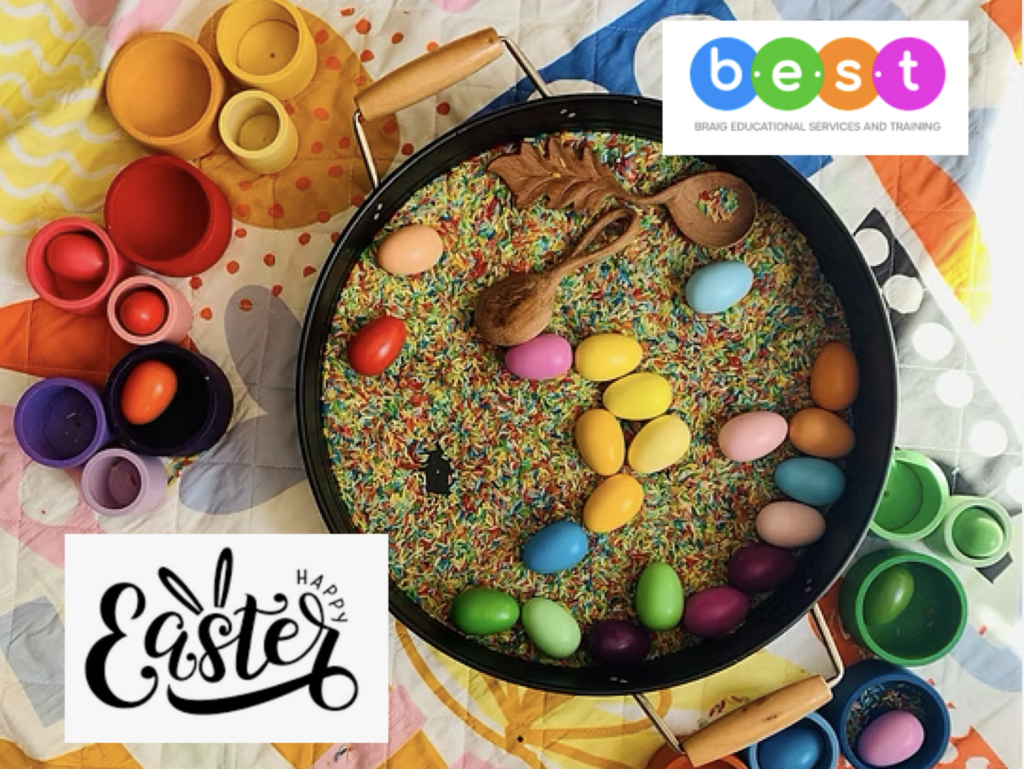
1. Easter Loose Parts Exploration
Provide open baskets containing:
• wooden eggs
• coloured eggs
• feathers
• baskets
• fabric pieces
• natural materials
Children may:
• sort eggs by colour or size
• build nests
• invent imaginative stories
• create patterns
• incorporate eggs into dramatic play
Educator role:
• observe children’s thinking
• document emerging interests
• extend learning through questions
Example educator language:
“I see you’ve made a nest with the feathers. What might live there?”
“You sorted the eggs by colour. What made you decide to do that?”
Learning links:
• early mathematics
• imaginative play
• classification and patterning
Resource inspiration
https://tinkerlab.com/loose-parts-play/
2. Natural Egg Decorating (Process Art)
Rather than pre-cut paper eggs, offer:
• wooden or boiled eggs
• flowers
• leaves
• herbs
• natural dyes
• paint
Children decide:
• colours
• patterns
• materials
• whether or not to decorate
Every egg will look different.
Educator prompts:
“What materials would you like to try?”
“Tell me about your egg design.”
Learning links:
• creativity
• decision-making
• sensory exploration
Resource inspiration
https://www.naeyc.org/resources/topics/process-art
3. “Where Do Eggs Come From?” Inquiry Project
Children often ask questions about eggs at Easter. These questions can become a science investigation.
Possible provocations:
• real eggs
• magnifying glasses
• books about chickens or birds
• images of animals that lay eggs
• toy animals
Children may explore:
• size and texture of eggs
• which animals lay eggs
• what might be inside an egg
Educator questions:
“Do all animals lay eggs?”
“Why do you think eggs have shells?”
Learning links:
• scientific inquiry
• observation
• curiosity and questioning
Resource inspiration
https://www.abc.net.au/education
4. Easter Garden and Life Cycles
Easter is closely connected with ideas of growth and new life.
Invite children to plant:
• herbs
• vegetables
• flowers
Children may:
• water plants
• observe growth
• record changes
• discuss life cycles
Educator prompts:
“What do you think plants need to grow?”
“What might this seed turn into?”
Learning links:
• sustainability
• science
• responsibility and care
Resource inspiration
https://www.kitchengardenfoundation.org.au
QIP write up
Quality Area 1 – Educational Program and Practice
Exceeding Theme 1 – Embedded practice
Child-led Easter experiences were embedded across the educational program through open-ended provocations such as loose parts exploration, life-cycle investigations and process-focused art activities.
Exceeding Theme 2 – Critical reflection
Educators critically reflected on previous template-based craft activities and intentionally shifted towards open-ended experiences that prioritised children’s agency and creativity.
Exceeding Theme 3 – Meaningful engagement
Families shared stories and traditions relating to Easter celebrations which influenced the program and discussions within the learning environment.
Quality Area 2 – Children’s Health and Safety
Exceeding Theme 1 – Embedded practice
Hygiene practices were embedded during Easter cooking and egg exploration activities, including handwashing routines and safe food handling.
Exceeding Theme 2 – Critical reflection
Educators reflected on risk management when using real eggs, ensuring safe supervision while still allowing meaningful exploration.
Exceeding Theme 3 – Meaningful engagement
Children participated in conversations about healthy foods, animal care and safe cooking practices.
Quality Area 3 – Physical Environment
Exceeding Theme 1 – Embedded practice
Learning environments were enriched with natural materials such as feathers, leaves and baskets to create engaging Easter-inspired exploration spaces.
Exceeding Theme 2 – Critical reflection
Educators reflected on how structured craft tables limited creativity and redesigned learning spaces to support open-ended discovery.
Exceeding Theme 3 – Meaningful engagement
Children collected natural materials during outdoor play to contribute to Easter learning areas.
Quality Area 4 – Staffing Arrangements
Exceeding Theme 1 – Embedded practice
Educators collaborated to create responsive learning environments and shared observations to extend children’s Easter inquiries.
Exceeding Theme 2 – Critical reflection
The team reflected on how educator interactions influence children’s engagement and adjusted practice to ensure educators were facilitating rather than directing learning.
Exceeding Theme 3 – Meaningful engagement
Professional discussions among educators supported consistent approaches to child-led learning experiences.
Quality Area 5 – Relationships with Children
Exceeding Theme 1 – Embedded practice
Educators followed children’s ideas during Easter investigations and supported collaborative play.
Exceeding Theme 2 – Critical reflection
The team reflected on the importance of allowing children to make decisions about materials and outcomes.
Exceeding Theme 3 – Meaningful engagement
Children were encouraged to share ideas about Easter celebrations at home and contribute their own knowledge to group discussions.
Quality Area 6 – Collaborative Partnerships with Families and Communities
Exceeding Theme 1 – Embedded practice
Families were invited to share cultural Easter traditions, enriching children’s understanding of different celebrations.
Exceeding Theme 2 – Critical reflection
Educators reflected on how family input strengthens programming and intentionally sought family perspectives.
Exceeding Theme 3 – Meaningful engagement
Families contributed materials, books and cultural experiences that supported Easter learning.
Quality Area 7 – Governance and Leadership
Exceeding Theme 1 – Embedded practice
Leadership supported educators to move beyond template activities and embed child-led practices across the service.
Exceeding Theme 2 – Critical reflection
Leaders facilitated reflective discussions about programming quality and encouraged educators to critically evaluate their teaching practices.
Exceeding Theme 3 – Meaningful engagement
Service leadership shared learning outcomes with families and the wider community, demonstrating commitment to continuous improvement.
Useful Links and Resources
Early Years Learning Framework V2.0
https://www.education.gov.au/early-years-learning-framework
ACECQA – National Quality Standard
https://www.acecqa.gov.au/nqf/national-quality-standard
Process Art in Early Childhood
https://www.naeyc.org/resources/topics/process-art
Loose Parts Play Inspiration
https://tinkerlab.com/loose-parts-play/
Kitchen Garden Foundation
https://www.kitchengardenfoundation.org.au
Final Thoughts
Easter programming does not need to rely on identical crafts or predetermined outcomes. When educators provide open materials, time and trust, children naturally transform seasonal ideas into meaningful learning experiences.
Authentic child-led learning demonstrates:
• strong educational practice
• genuine engagement
• reflective teaching
• responsive programming
These are exactly the kinds of practices regulatory authorities seek when assessing services against the National Quality Standard.
BEST Childcare Consultancy
Supporting services to move from Meeting to Exceeding through practical compliance guidance and educator-friendly strategies.
As always, use these inspirations to lead your service throughout the whole year in your everyday practices to truly earn an exceeding rating.
Contact us TODAY.