By BEST Childcare Consultancy
In the early years, health is not something children learn about through facts—it is something they experience through care, connection and trust. Every time a child washes their hands, rests when they are tired, or seeks comfort from a familiar educator, they are building an understanding of what it means to feel safe, supported and well.
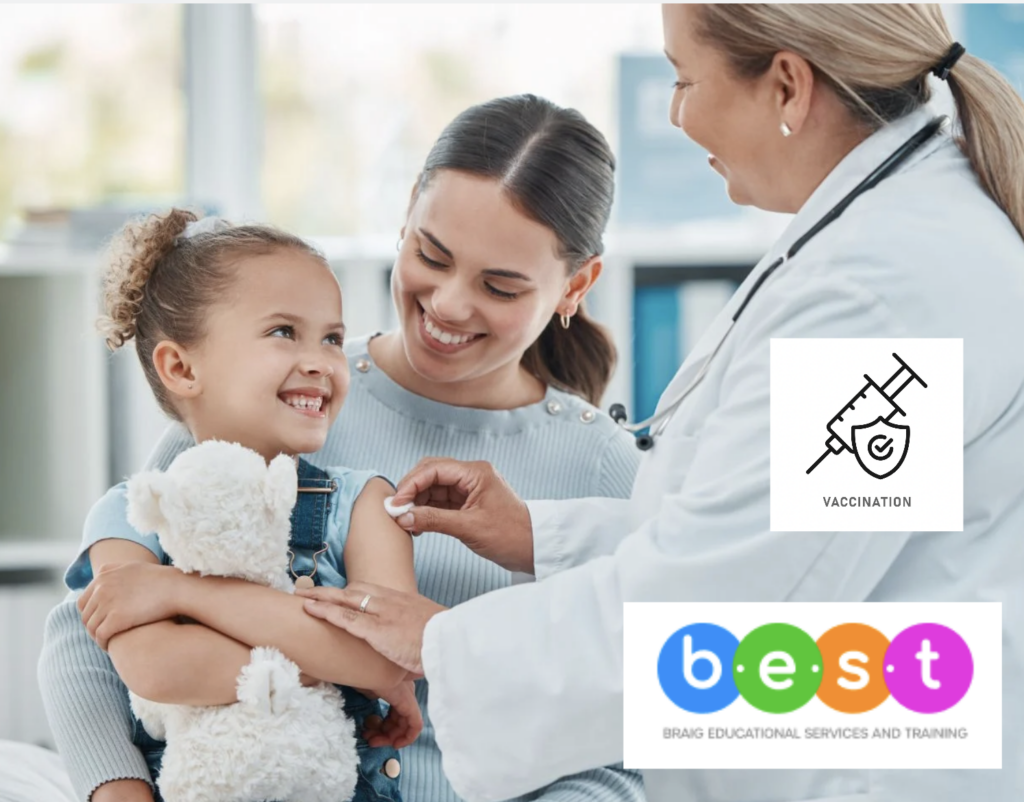
World Immunisation Week gently reminds us of the invisible ways we protect children every day. While vaccinations themselves sit beyond the daily practice of early learning settings, the values behind them—protection, prevention, and collective responsibility—are deeply embedded in what we do.
As educators, we are not teaching children about illness—we are teaching them about care.
Care for their bodies. Care for others. Care for their community.
Through simple, meaningful conversations and experiences, we help children begin to understand:
- “My body is important.”
- “There are people who help keep me safe and healthy.”
- “We can look after each other.”
These understandings form the foundation of lifelong wellbeing, resilience and belonging. This week is not about adding something extra to your program—it is about recognising that what you already do, with intention and heart, is shaping healthier futures for every child in your care.
Aligning with children’s rights
World Immunisation Week aligns strongly with children’s rights, reinforcing that health and wellbeing are not optional—they are fundamental.
Article 24 – Right to Health
Children have the right to access healthcare and to grow up in environments that support their physical and mental wellbeing. Everyday practices such as hygiene routines, rest, nutrition and emotional care directly uphold this right.
Article 3 – Best Interests of the Child
Every decision made within the service prioritised children’s safety, health and wellbeing, ensuring that protective practices were embedded across all aspects of the program.
Article 12 – Respect for the Views of the Child
Children were supported to express their ideas and understanding about their bodies, health and wellbeing, with educators actively listening and responding to their perspectives.
By embedding these rights into daily practice, services moved beyond compliance, creating environments where children’s health, dignity and agency were genuinely respected and upheld.
Ensuring healthy lives and promoting wellbeing
World Immunisation Week also connects to Sustainable Development Goal 3, which aims to ensure healthy lives and promote wellbeing for all at all ages.
Vaccination is recognised globally as one of the most effective and cost-efficient ways to prevent disease, saving an estimated 2–3 million lives each year. While early childhood services do not administer vaccines, they play a vital role in building the foundations that make lifelong health possible.
Through everyday practice, services contributed to this global goal by:
- Promoting hygiene and illness prevention through meaningful, hands-on learning
- Supporting children to understand their bodies and how to care for them
- Encouraging healthy eating habits using evidence-based frameworks
- Building partnerships with families to support consistent health practices
In doing so, early childhood education becomes part of something much bigger—a global commitment to ensuring every child has the opportunity to grow, thrive and live a healthy life.
Why is childhood immunisation important?
Immunisation in childhood is one of the most powerful ways we can protect children during their most vulnerable years. A child’s immune system is still developing, making them more susceptible to serious illnesses that can spread quickly and have long-term consequences. Vaccines work by safely strengthening the body’s natural defences, helping children build immunity before they are exposed to harmful diseases. Beyond individual protection, immunisation also safeguards the wider community—especially babies, elderly people, and those who cannot be vaccinated—by reducing the spread of illness. In this way, immunisation is not only about protecting one child, but about caring for all children, ensuring they have the opportunity to grow, learn and thrive in safe and healthy environments.
Educational Programming Ideas
“People Who Help Us Stay Healthy” Role Play
Create a dramatic play space with doctor kits, bandages, clipboards and dolls.
Intentional teaching opportunities:
- “Doctors help us when our bodies need support.”
- “We can take care of each other by being gentle and kind.”
Link:
https://raisingchildren.net.au/guides/a-z-health-reference/immunisation
Body Awareness Through Storytelling
Read books about the body, germs, and staying well.
Suggested online book/resource:
“Germs Are Not for Sharing” by Elizabeth Verdick (read-aloud)
https://www.youtube.com/watch?v=6Yg4Cz3W9nY
Intentional teaching opportunities:
- “Our bodies are strong and can fight germs.”
- “We can help our bodies stay healthy by washing hands and resting.”
Extend learning:
- Use puppets or felt boards to retell the story
- Encourage children to share their own ideas about staying healthy
Handwashing Experiments
Use glitter or coloured water to demonstrate how germs spread.
Extension with trusted campaign resource:
Palmolive – Good Hands, Good Health
https://www.goodhandsgoodhealth.com.au
Extend learning:
- Compare “quick wash” vs “thorough wash”
- Introduce visual timers or songs for correct handwashing duration
- Reflect with children: “What helped the germs go away?”
“Healthy Me” Project Work
A longer-term, child-led inquiry exploring what keeps our bodies strong and safe.
Evidence-based framework for educators:
Harvard University – Healthy Eating Plate (for children concepts)
https://www.hsph.harvard.edu/nutritionsource/healthy-eating-plate/
Extend learning:
- Sort foods into groups (vegetables, grains, protein, fruits)
- Create simple lunchbox discussions guided by children’s ideas
- Link food choices to energy, growth and feeling well
Child voice prompts:
- “What foods help your body grow strong?”
- “What makes you feel full of energy?”
QIP Write Up
Quality Area 1 – Educational Program and Practice
Exceeding Theme 1: Practice was embedded in service operations
Educators embedded intentional teaching about health, wellbeing and community responsibility across daily routines and play. Children engaged in sustained learning through body awareness experiences, including shared reading of texts such as Germs Are Not for Sharing, hands-on hygiene experiments, and project-based learning using the Healthy Eating Plate to explore nutrition and wellbeing.
Exceeding Theme 2: Practice was informed by critical reflection
Educators critically reflected on how to present complex concepts such as germs, illness prevention and immunisation in ways that were developmentally appropriate, strengths-based and non-threatening. Reflection led to the intentional inclusion of visual, hands-on and inquiry-based experiences such as the Palmolive “Good Hands, Good Health” campaign resources and interactive storytelling.
Exceeding Theme 3: Practice was shaped by meaningful engagement with families and community
Families contributed to discussions around children’s health, routines and wellbeing practices. Educators incorporated family knowledge and community resources, strengthening connections between home practices, health messaging and the service program.
Quality Area 2 – Children’s Health and Safety
Exceeding Theme 1
Health and hygiene practices were consistently embedded and understood by children. Educators extended learning beyond routine practices through intentional experiences, including handwashing experiments supported by recognised campaigns such as “Good Hands, Good Health,” enabling children to understand the purpose behind hygiene practices.
Exceeding Theme 2
Critical reflection informed continuous improvement of health practices, ensuring they aligned with current health advice and supported children’s understanding. Educators reflected on how experiences such as body awareness storytelling and discussions about germs supported both physical health and emotional safety.
Exceeding Theme 3
Strong partnerships with families supported consistent approaches to health, including nutrition, hygiene and wellbeing. Information sharing and conversations reinforced shared responsibility for children’s health across home and the service.
Quality Area 3 – Physical Environment
Exceeding Theme 1
The environment was intentionally designed to promote health, hygiene and wellbeing. Resources such as visual handwashing prompts, accessible hygiene stations, and materials supporting body awareness and nutrition learning (e.g. Healthy Eating Plate visuals) were embedded throughout the environment.
Exceeding Theme 2
Educators critically reflected on how the environment supported children’s independence and agency in managing their own health and wellbeing. Adjustments were made to ensure children could independently access resources and engage in self-care practices.
Exceeding Theme 3
Community and research-informed resources were incorporated into the environment, including evidence-based materials related to hygiene and nutrition, strengthening the authenticity and relevance of the learning space.
Quality Area 4 – Staffing Arrangements
Exceeding Theme 1
Educators consistently modelled positive health practices, including effective handwashing, healthy eating discussions and respectful care routines, reinforcing learning through everyday interactions.
Exceeding Theme 2
Ongoing professional dialogue and reflection supported a shared understanding of how to communicate health concepts such as germs, hygiene and body awareness in a calm, developmentally appropriate manner.
Exceeding Theme 3
Collaboration with families and engagement with health resources strengthened educator knowledge, ensuring practices were informed by current health recommendations and evidence-based approaches.
Quality Area 5 – Relationships with Children
Exceeding Theme 1
Educators fostered trusting, responsive relationships where children felt safe to ask questions and explore ideas about their bodies, health and wellbeing.
Exceeding Theme 2
Reflective practice ensured that discussions about germs, illness and health were guided by children’s interests, emotional responses and developmental readiness, supporting a sense of security and agency.
Exceeding Theme 3
Children’s voices were actively sought and valued. Their ideas about healthy foods, hygiene and wellbeing were documented and extended through projects such as the “Healthy Me” inquiry.
Quality Area 6 – Collaborative Partnerships with Families and Communities
Exceeding Theme 1
Educators engaged in open, respectful communication with families regarding children’s health, hygiene and wellbeing practices, ensuring alignment and consistency.
Exceeding Theme 2
Critical reflection supported inclusive practices that respected diverse family perspectives on health, nutrition and care routines.
Exceeding Theme 3
Partnerships with community organisations and use of trusted resources (e.g. health campaigns and evidence-based nutrition frameworks) strengthened the service’s approach to promoting children’s wellbeing.
Quality Area 7 – Governance and Leadership
Exceeding Theme 1
Leadership ensured that systems, policies and daily practices consistently prioritised children’s health, safety and wellbeing, with a clear focus on embedding these principles across the program.
Exceeding Theme 2
Ongoing critical reflection informed continuous improvement, including the intentional integration of health education initiatives such as hygiene campaigns and nutrition frameworks.
Exceeding Theme 3
Leaders fostered a culture of shared responsibility and professional growth, empowering educators to confidently embed meaningful, evidence-informed health education into everyday practice.
Links and Resources
World Immunisation Week overview:
https://sdgresources.relx.com/events/world-immunization-week
Australian Government – Immunisation information:
https://www.health.gov.au/health-topics/immunisation
Raising Children Network (Australia):
https://raisingchildren.net.au
Health Direct Australia:
https://www.healthdirect.gov.au
Germs Are Not for Sharing (read-aloud):
https://www.youtube.com/watch?v=6Yg4Cz3W9nY
Palmolive – Good Hands, Good Health campaign:
https://www.goodhandsgoodhealth.com.au
Harvard University – Healthy Eating Plate:
https://www.hsph.harvard.edu/nutritionsource/healthy-eating-plate/
BEST Childcare Consultancy
World Immunisation Week reminds us that protecting children’s health is not just a medical responsibility—it is a shared commitment across families, communities and early childhood services. By embedding conversations about wellbeing, care and community into everyday practice, we empower children to develop a strong sense of agency, safety and belonging.
These are the foundations of lifelong health.
As always, use these inspirations to lead your service throughout the whole year in your everyday practices to truly earn an exceeding rating.
Contact us TODAY.