
By BEST Childcare Consultancy
After recently connecting with the team at Neurominded, I was reminded of the importance of truly understanding the lived experiences of neurodiverse individuals. Their insights reinforced that inclusion is not simply about strategies or checklists, but about a shift in mindset—one grounded in respect, curiosity, and a willingness to see each child for who they are. It was a powerful reminder that the way we interpret and respond to children’s behaviour shapes their sense of belonging and identity.
Supporting autistic children in early childhood education calls for a thoughtful, compassionate approach that honours difference rather than trying to change it. When we adopt a neurodiversity-affirming lens, we begin to see behaviour as communication, and environments as something we can intentionally shape to better support each child. By creating spaces that are predictable, responsive, and inclusive, we give children the opportunity to feel safe, understood, and confident to engage with the world in their own unique way.
Understanding Neurodiversity in Early Childhood
Neurodiversity reminds us that every child experiences the world in their own unique way, and that these differences are not something to fix, but something to understand and honour. For autistic children, this may mean experiencing sounds more intensely, communicating differently, or engaging with the world in ways that don’t always fit traditional expectations. When we truly embrace a neurodiversity-affirming approach, we shift from trying to change the child, to thoughtfully adapting our environments, expectations, and interactions. This means slowing down, tuning in, and recognising that behaviour is a form of communication—an expression of need, feeling, or experience. Creating high-quality environments for neurodiverse children is about building predictability, offering sensory safety, and providing flexible ways for children to participate and express themselves. Most importantly, it is about ensuring every child feels seen, respected, and valued for who they are, so they can develop a strong sense of identity and belonging, and thrive in their own way.
Thriving Kids resource
The Thriving Kids Advisory Group Final Report outlines a national approach to better support children aged 0–8 with developmental differences, including autism, by shifting toward earlier, more accessible, and needs-based support systems. It emphasises that children and families should not have to wait for a formal diagnosis to receive help, and instead promotes timely, inclusive supports embedded within everyday settings such as early childhood education. The report highlights the importance of coordinated services, family-centred practice, and building the capability of educators and professionals to respond to diverse developmental needs. Ultimately, Thriving Kids advocates for a system where all children are supported to participate, belong, and thrive from the earliest years.
https://www.health.gov.au/resources/publications/thriving-kids-advisory-group-final-report
How does Thriving Kids report help us with inclusive practices?
The principles underpinning neurodiversity-affirming practice strongly align with the Australian Government’s Thriving Kids agenda, which emphasises that all children should experience inclusion, wellbeing, and equitable access to early learning environments that support their development. A key message within this work is that systems must move beyond reactive, deficit-based approaches and instead focus on early support, prevention, and environments that are responsive to diversity. This directly reflects the shift away from “waiting for a diagnosis” toward recognising and responding to children’s functional needs, strengths, and rights from the outset.
To truly include, services must embed inclusion as an everyday practice rather than an additional support. This means designing environments, routines, and interactions that are flexible and accessible for all children; recognising behaviour as communication; and ensuring educators are equipped with the knowledge, confidence, and support to respond effectively. Inclusion is also relational—it requires strong partnerships with families, respect for children’s identities, and a commitment to listening to children’s voices. When inclusion is embedded in this way, it becomes part of the culture of the service, rather than something that is only activated when additional needs are identified. This is how services move toward the vision of all children not just participating, but genuinely thriving.
Do you need a diagnosis?
You do not need a diagnosis to access or use the information provided through resources such as Neurominded. Educators can implement inclusive strategies, adapt environments, and respond to individual needs without formal diagnostic labels. In early childhood education, best practice is to focus on each child’s strengths, behaviours, and developmental needs rather than waiting for a diagnosis, ensuring that all children and educators are supported to participate, belong, and thrive.
Does this help everyone?
Using neurodiversity-affirming supports benefits everyone because it improves the overall quality, accessibility, and responsiveness of the environment—not just for one individual. Strategies such as clear routines, visual supports, flexible communication, and sensory-aware spaces reduce uncertainty and cognitive load for all children and educators. This creates calmer, more predictable environments where everyone can understand expectations, regulate more easily, and participate with greater confidence.
Importantly, these approaches strengthen relationships and inclusion at a whole-service level. When educators shift to seeing behaviour as communication and respond with empathy and flexibility, interactions become more respectful and attuned for all children—not just those who are neurodiverse. Similarly, when workplaces support diverse ways of thinking and working, all educators benefit from clearer systems, reduced stress, and a greater sense of belonging.
Ultimately, neurodiversity-affirming practice reflects high-quality early childhood education: it removes barriers, values differences, and creates environments where every person—child or adult—can engage, contribute, and thrive.
Educational Programming Ideas
1. Visual supports and structured routines
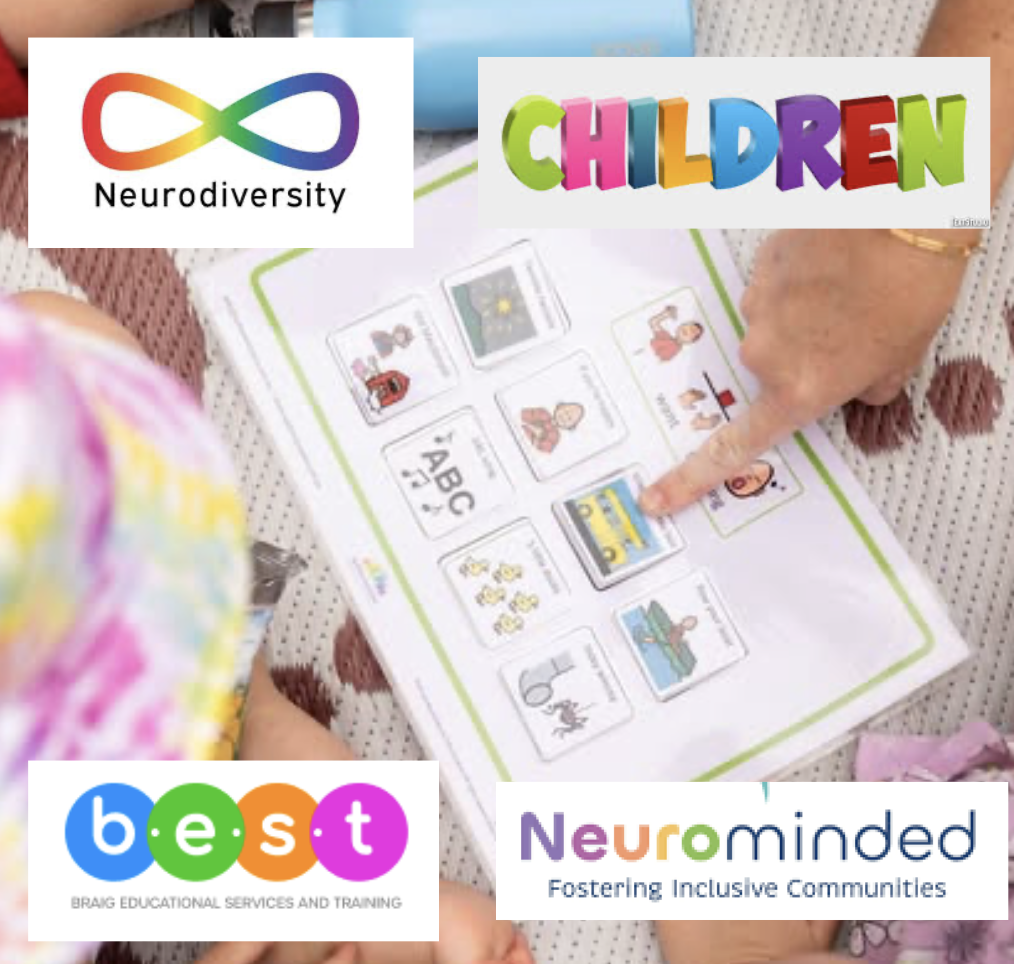
Use visual schedules, transition cards, and clear daily routines to support children’s understanding of what is happening next. This reduces anxiety, supports independence, and increases participation.
https://neurominded.com.au/resources/
2. Sensory-informed environments
Design environments that consider sensory needs by including calm spaces, sensory tools, and flexible seating options. This supports children to regulate and engage comfortably in learning experiences.
https://neurominded.com.au/our-services/
3. Functional behaviour support (behaviour as communication)
Understand that behaviour communicates a need, and focus on identifying triggers and teaching alternative skills. This shifts practice from reacting to behaviour toward proactively supporting children’s development.
https://neurominded.com.au/our-services/
4. Play-based social scaffolding
Use play as a natural context to support social development, including turn-taking, joint attention, and peer interaction. Educators intentionally scaffold interactions while respecting individual play styles.
https://www.inclusioned.edu.au
5. Co-regulation and emotional support
Prioritise responsive relationships where educators support children to regulate emotions through connection, calm presence, and guidance. Over time, this builds children’s capacity for self-regulation.
https://www.raisingchildren.net.au/autism
QIP Write-Up
QA1 – Educational Program and Practice
Embedded:
The service embedded inclusive programming by integrating visual supports, structured routines, and differentiated teaching strategies that supported participation for all children. These practices were consistently implemented across all learning environments.
Critical Reflection:
Critical reflection identified inconsistencies in supporting neurodiverse learners, particularly during transitions and group experiences. Strategies were refined to ensure greater predictability and accessibility.
Engagement:
Educators collaborated with families and allied professionals to co-design individualised supports, ensuring programs reflected each child’s strengths, needs, and preferences.
QA2 – Children’s Health and Safety
Embedded:
Proactive sensory and regulation strategies were embedded to support children’s wellbeing, reduce distress, and promote safe engagement in the environment.
Critical Reflection:
The service reflected on how environmental and relational factors contributed to dysregulation, leading to a shift toward preventative approaches.
Engagement:
Children’s cues, communication, and family insights informed the development of personalised strategies that supported safety and wellbeing.
QA3 – Physical Environment
Embedded:
The environment included calm spaces, sensory resources, and flexible layouts that supported diverse sensory needs and promoted independence.
Critical Reflection:
Reflection identified that some spaces were overstimulating and impacted children’s engagement. Adjustments were made to reduce noise, clutter, and unpredictability.
Engagement:
Children’s preferences and responses informed ongoing environmental adjustments, ensuring spaces remained responsive and inclusive.
QA4 – Staffing Arrangements
Embedded:
Educators were supported through targeted professional learning and coaching to implement neurodiversity-affirming practices consistently.
Critical Reflection:
The service identified a need for deeper understanding of autism and inclusive strategies, leading to ongoing professional development.
Engagement:
Collaboration with external specialists, including organisations such as Neurominded, strengthened educator capacity and confidence.
QA5 – Relationships with Children
Embedded:
Educators prioritised responsive, trusting relationships that supported co-regulation, communication, and emotional development.
Critical Reflection:
The service critically reflected on behaviour guidance approaches, moving away from compliance-based strategies toward relational and supportive practices.
Engagement:
Children’s individual communication styles and preferences guided interactions, ensuring each child felt heard, respected, and valued.
QA6 – Collaborative Partnerships with Families
Embedded:
Strong partnerships with families ensured consistent strategies and shared understanding across home and service environments.
Critical Reflection:
The service recognised the importance of aligning approaches and language when supporting neurodiverse children.
Engagement:
Families were actively involved in planning, goal setting, and reviewing strategies, strengthening collaboration and trust.
QA7 – Governance and Leadership
Embedded:
Leadership prioritised inclusive, neurodiversity-affirming practice through policies, professional learning, and ongoing review processes.
Critical Reflection:
Leaders reflected on service practices to ensure alignment with current research and ethical expectations in inclusive education.
Engagement:
Partnerships with organisations such as Neurominded supported continuous improvement and ensured access to current, evidence-informed strategies.
Useful links
1. Neurominded Resource Hub
https://neurominded.com.au/resources
What it teaches:
This resource hub offers downloadable tools designed to build educator confidence and capability in inclusive practice. Resources include behaviour observation tools (e.g. ABC STAR), inclusion planners, visual supports, and social skills tracking templates.
In practice, educators learn how to:
- Understand behaviour as communication
- Plan proactive, child-centred supports
- Use visual strategies to increase participation
- Create inclusive environments where all children can thrive
While not a formal course, these resources function as hands-on professional learning, directly applicable to everyday practice.
2. Autism Essentials (Reframing Autism)
What it teaches:
A free, self-paced online course that provides a neurodiversity-affirming understanding of autism, grounded in lived experience.
Educators will learn:
- What autism is from a strengths-based perspective
- Communication and social differences
- How autistic people think and process information
- Respectful, affirming language and approaches
This course is particularly powerful for shifting mindset—not just practice.
3. Emerging Minds – Free Online Training
https://emergingminds.com.au/training/online-training
What it teaches:
A suite of free courses focused on child development, mental health, and wellbeing for professionals working with children aged 0–12.
Educators will learn:
- How to support children’s emotional wellbeing
- Trauma-informed and responsive practice
- Working collaboratively with families
- Early intervention strategies
4. Positive Partnerships (Autism Training)
https://www.positivepartnerships.com.au
What it teaches:
Nationally recognised free autism training for educators and families, focused on evidence-based inclusive practice. (Also linked through Neurominded resources).
Educators will learn:
- Practical strategies for supporting autistic children
- Behaviour support approaches
- Communication and engagement strategies
- Building partnerships with families
5. Free Webcasts & Community Learning (Neurominded collaborations)
https://childaustralia.org.au/professional-development/free-tips-resources/webcasts-and-webinars
What it teaches:
Neurominded collaborates on free webcasts and community sessions that focus on real-world, practical strategies for inclusion.
Educators will learn:
- Creating calm and regulated environments
- Supporting neurodiverse children in group settings
- Building connection and confidence in practice
6. Thriving Kids Advisory Group Final Report (Australian Government)
https://www.health.gov.au/resources/publications/thriving-kids-advisory-group-final-report
What it teaches:
This national report outlines a reformed approach to supporting children aged 0–8 with developmental differences, including autism, by prioritising early, accessible, and needs-based supports within everyday settings such as early childhood education.
Educators will learn:
- The importance of not waiting for a diagnosis to provide support
- How to focus on children’s functional needs and strengths
- The role of early childhood services in early intervention and inclusion
- The importance of family-centred, coordinated approaches
💡 This report reinforces best practice in ECEC—shifting from reactive, diagnosis-driven models toward proactive, inclusive environments where all children are supported to participate, belong, and thrive.
BEST Childcare Consultancy
At BEST, we believe every child deserves to feel seen, heard, and valued exactly as they are. Supporting neurodiverse children is not about changing who they are, but about thoughtfully shaping our environments, expectations, and interactions so that every child has the opportunity to participate, connect, and flourish. It is in the small, everyday moments—how we respond, how we listen, how we adapt—that true inclusion is built.
When we slow down and take the time to understand each child’s unique way of experiencing the world, we create spaces where children feel safe to be themselves. From this place of safety and belonging, children build confidence, develop relationships, and engage more deeply in their learning. This is what it means for children to truly thrive.
At BEST, we are passionate about supporting services to move beyond compliance and toward deeply meaningful, inclusive practice that honours every child’s identity and potential.
As always, use these inspirations to lead your service throughout the whole year in your everyday practices to truly earn an exceeding rating.
Contact us TODAY.