
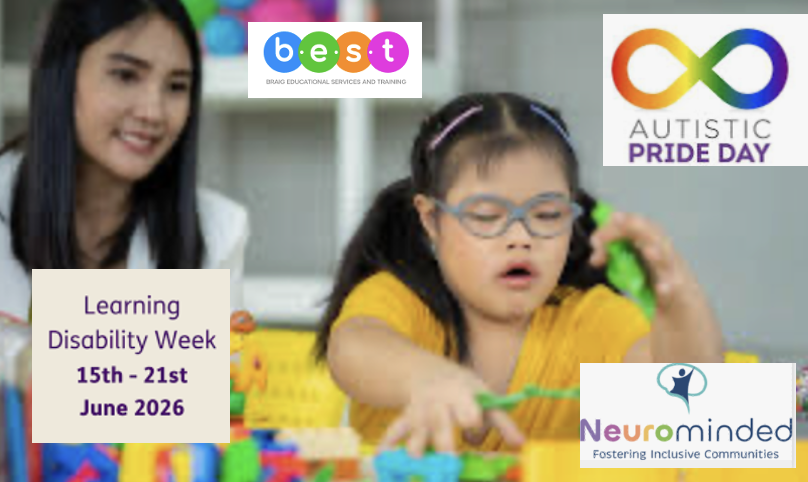
Perfect for Learning Disability Week (15–21 June 2026) & Autistic Pride Day (18 June 2026)
By BEST Childcare Consulting
Creating Neuroaffirming Early Childhood Environments That Support Every Child to Belong, Participate & Thrive
June brings an important opportunity for educators to reflect on what true inclusion looks like in early childhood settings. Learning Disability Week promotes visibility, understanding, rights and inclusion for people with learning disabilities, while Autistic Pride Day — led by autistic communities — celebrates autistic identity, strengths and neurodiversity.
These observances encourage educators to move beyond awareness and consider how environments, routines and relationships either support or create barriers for children. Neuroaffirming practice recognises that brains develop, process information, communicate and experience the world differently — and these differences should be respected rather than changed.
Australian organisation Neurominded describes neurodiversity-affirming practice as child-centred, strengths-based, rights-based and focused on increasing participation, learning and wellbeing for all children. Their work with early learning services emphasises reducing barriers and embedding inclusive practice into everyday environments.
Inclusion is not an extra activity completed during awareness weeks. It is reflected in how educators communicate, respond to behaviour, design environments, partner with families and support every child’s sense of safety and belonging.
What is Learning Disability Week?
Learning Disability Week is an annual awareness campaign that promotes visibility, inclusion, understanding and rights for people living with learning disabilities. The week encourages communities, organisations and educators to recognise the barriers individuals may experience and consider how environments can become more accessible, supportive and inclusive. In early childhood education, Learning Disability Week provides an opportunity to reflect on everyday practices that support participation, communication, belonging and child agency. It reminds educators that inclusive education is not about expecting children to adapt to systems, but about adapting environments, teaching approaches and relationships so all children can thrive. Celebrating strengths, recognising diverse ways of learning and embedding flexible, responsive practice helps create a culture where every child feels valued and capable.
What is Autistic Pride Day?
Autistic Pride Day, celebrated internationally on 18 June, is a community-led event created by autistic people to celebrate autistic identity, strengths and neurodiversity. Unlike traditional awareness campaigns that often focus on challenges or deficits, Autistic Pride Day recognises autism as a natural variation in human neurology and promotes acceptance, respect and belonging. The day encourages a shift away from asking how autistic children can fit existing expectations, towards considering how environments can become more inclusive, sensory-aware and supportive of different communication styles, interests and ways of engaging. For educators, Autistic Pride Day is an important reminder to adopt neuroaffirming practices that value individual strengths, reduce barriers and support all children to participate authentically as themselves.
Neurominded
For educators, understanding neurodiversity can sometimes feel overwhelming — particularly when trying to balance routines, behaviour guidance, inclusion requirements and the individual needs of children. Neurominded is a Western Australian organisation specialising in neurodiversity-affirming support for early childhood services, schools and educators. Originally founded as Autism Inclusion, Neurominded now provides professional learning, coaching, mentoring, visual supports and practical consultancy designed to build educator confidence in supporting neurodivergent children. Their approach focuses on increasing participation, reducing barriers and creating environments where children feel safe, understood and able to thrive. Services include training around sensory processing, emotional regulation, visual supports, inclusive practice and understanding behaviour through a child-centred lens. Importantly, Neurominded works alongside educators to turn theory into everyday practice, helping teams adapt routines, environments and interactions rather than expecting children to change. Many services can also access funding through the Australian Inclusion Support Program to support this professional development. For educators, this means gaining practical strategies that can immediately improve classroom inclusion, communication, wellbeing and engagement for all children — not only neurodivergent learners.
Educational Programming Ideas
1. Explore “Different Brains, Different Strengths”
Talk with children about how everyone learns, communicates and enjoys different things.
Discussion prompts:
- What are you really good at?
- What helps you learn?
- What makes you feel calm?
- What makes you excited?
Create a classroom “Strengths Wall” celebrating children’s interests and abilities.
Helpful reading:
Neurominded – Neurodiversity & Inclusion Approach
Neurominded promotes strengths-based and rights-based practices that support participation and learning.
2. Create Sensory-Friendly Learning Spaces
Offer:
- Quiet spaces
- Weighted items
- Flexible seating
- Noise-reducing headphones
- Sensory tools
- Predictable routines
Neurominded identifies sensory processing and self-regulation as key educator learning areas because sensory differences can significantly influence behaviour, participation and learning.
Useful resources:
Neurominded – Sensory Processing & Self-Regulation Training Topics
Raising Children Network – Sensory Processing Information
3. Investigate Different Ways We Communicate
Explore:
- Visual schedules
- Picture cards
- Drawing
- Gestures
- Signing
- AAC communication methods
- Body language
Children can help build a class communication board.
Useful resources:
Neurominded – Implementing Visual Supports
Neurominded notes visual supports can improve participation, communication, independence and learning.
Additional reading:
Raising Children Network – AAC Supports
4. Reflect on Behaviour Through a Needs-Based Lens
Instead of asking:
“Why is this behaviour happening?”
Explore:
“What might this child be communicating?”
“What support or adjustment may be needed?”
Neurominded promotes child-centred behaviour support focused on understanding underlying needs rather than viewing behaviours as problems.
Extension:
Discuss emotions and regulation strategies with children.
Resource:
Neurominded – Child-centred Behaviour Support Information
5. Support Divergent Play Styles
Children play differently.
Some prefer:
- Repetition
- Solitary play
- Deep interests
- Observation before participation
- Structured play
Neurominded highlights that recognising different play styles helps educators better support social participation and learning.
Resource:
Neurominded – Divergent Play & Social Skill Development
6. Review Your Environment for Inclusion
Walk through the service asking:
- Is communication accessible?
- Are sensory supports available?
- Can children participate in different ways?
- Are routines predictable?
- Is diversity reflected in resources?
This turns awareness into embedded inclusive practice.
Useful resource:
Neurominded – Embedded Inclusive Practice Information
Neurominded’s inclusion approach emphasises reducing barriers using proactive and preventative supports.
QIP write ups
Quality Area 1
.Exceeding Theme 1: Practice was embedded in service operations
Inclusive and neuroaffirming approaches consistently informed curriculum planning, intentional teaching and everyday routines. Educators provided multiple ways for children to participate, communicate and engage in experiences. Strengths-based language became embedded across interactions and documentation.
Exceeding Theme 2: Practice was informed by critical reflection
Educators reflected on whether learning experiences genuinely supported accessibility, inclusion and participation for all children. Reflection considered unconscious bias, assumptions about behaviour and whether program expectations created barriers. Adjustments were made to better support diverse learners.
Exceeding Theme 3: Practice was shaped by meaningful engagement with families/community
Families shared insights regarding children’s strengths, sensory preferences, communication methods and regulation strategies. Educators used this information to adapt experiences and strengthen continuity between home and the service environment.
Quality Area 2
Exceeding Theme 1: Practice was embedded in service operations
Calm spaces, regulation tools and visual supports became part of everyday environments. Educators consistently responded to distress or dysregulation using supportive and responsive approaches rather than punitive measures.
Exceeding Theme 2: Practice was informed by critical reflection
Staff critically reflected on environmental triggers including noise, transitions and expectations that may impact children differently. Reflection informed changes to routines, transitions and support strategies to improve wellbeing outcomes.
Exceeding Theme 3: Practice was shaped by meaningful engagement with families/community
Families contributed valuable information regarding sensory preferences, emotional regulation strategies and approaches that supported children at home. These insights strengthened consistency and safety for children across environments.
Quality Area 3
Exceeding Theme 1: Practice was embedded in service operations
Visual schedules, quiet spaces, flexible seating and sensory supports became embedded features of the environment rather than temporary adjustments. Environments were intentionally designed to support all children.
Exceeding Theme 2: Practice was informed by critical reflection
Educators reflected on whether physical spaces unintentionally created barriers to participation. Ongoing evaluation of room layouts, noise levels and accessibility informed environmental modifications.
Exceeding Theme 3: Practice was shaped by meaningful engagement with families/community
Families and external professionals contributed recommendations regarding environmental supports. Their feedback informed decisions around routines, spaces and resources that increased inclusion and comfort.
Quality Area 4
Exceeding Theme 1: Practice was embedded in service operations
Inclusive approaches consistently informed educator interactions, teamwork and decision making. Staff used shared language and strategies to support continuity for children across the service.
Exceeding Theme 2: Practice was informed by critical reflection
Educators critically reflected on assumptions surrounding disability, behaviour and participation. Reflection supported shifts towards strengths-based and child-centred practice.
Exceeding Theme 3: Practice was shaped by meaningful engagement with families/community
Family perspectives and lived experiences informed professional discussions and learning priorities. Educators sought external expertise to strengthen understanding and improve practice.
Quality Area 5
Exceeding Theme 1: Practice was embedded in service operations
Children were supported to participate and communicate in ways suited to their individual needs. Educators intentionally fostered trust, emotional safety and positive identity development.
Exceeding Theme 2: Practice was informed by critical reflection
Educators reflected on whose voices may have been unintentionally overlooked and considered whether expectations supported equitable participation. Reflection informed more responsive relationship-based practice.
Exceeding Theme 3: Practice was shaped by meaningful engagement with families/community
Families shared successful approaches supporting connection, emotional regulation and communication. These insights strengthened responsive interactions and continuity of care.
Quality Area 6
Exceeding Theme 1: Practice was embedded in service operations
Family input regularly informed inclusion strategies, goals and planning decisions. Collaboration became part of everyday practice rather than occurring only when concerns arose.
Exceeding Theme 2: Practice was informed by critical reflection
Educators reflected on whether all families experienced genuine opportunities for participation and voice. Reflection supported more inclusive and culturally responsive partnerships.
Exceeding Theme 3: Practice was shaped by meaningful engagement with families/community
Families, allied health professionals and community organisations contributed knowledge supporting inclusive practice. Engagement strengthened educator understanding and improved outcomes for children.
Quality Area 7
Exceeding Theme 1: Practice was embedded in service operations
Inclusive values informed service philosophy, policies and daily decision making. Leadership actively supported educators to implement and sustain neuroaffirming approaches.
Exceeding Theme 2: Practice was informed by critical reflection
Leaders reviewed whether service practices aligned with inclusion goals and reflected contemporary understandings of neurodiversity. Reflection informed ongoing improvement priorities and professional learning.
Exceeding Theme 3: Practice was shaped by meaningful engagement with families/community
Community consultation, family feedback and external expertise informed service improvement planning. Leadership sought opportunities to strengthen inclusion through collaborative partnerships and specialist support organisations such as Neurominded.
Links & Resources for Educators
Neuroaffirming Practice & Inclusion
Neurominded – Home & Inclusion Philosophy
Neurodiversity-affirming, strengths-based approaches supporting participation and learning.
Neurominded – Resources Page
Downloadable resources, external organisations and research links for educators and families.
Neurominded – Professional Learning Topics
Topics include sensory processing, behaviour support, visual supports and inclusive practice.
Early Childhood Australia – Inclusion Resources
Australian Government – Inclusion Support Program
Raising Children Network – Autism Information Hub
Reframing Autism – Neuroaffirming Autism Essentials Course
Autistic-led education supporting respectful, strengths-based understanding.
BEST Childcare Consulting
Creating inclusive environments starts with recognising that children do not all think, play, communicate, regulate emotions or learn in the same ways — and they should not need to. When educators intentionally reduce barriers and embed neuroaffirming practice, all children benefit.
As always, use these inspirations to lead your service throughout the whole year in your everyday practices to truly earn an exceeding rating.
Contact us TODAY.