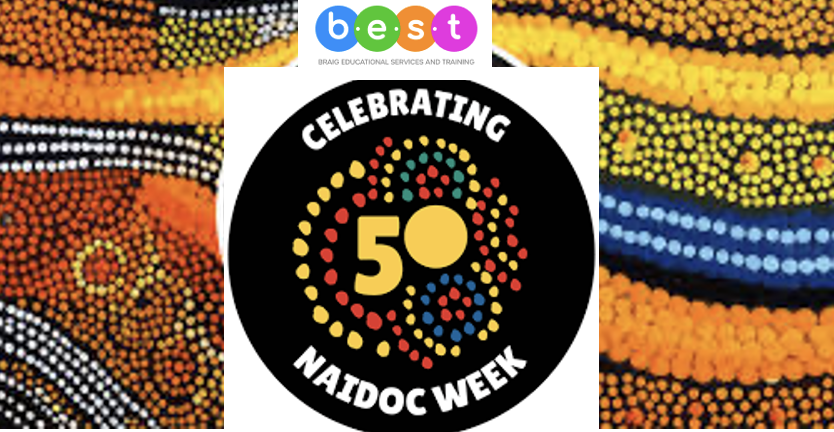
Perfect for NAIDOC Week 2026 (5–12 July) Celebrating 50 Years of Deadly
By BEST Childcare Consulting
NAIDOC Week is one of Australia’s most important annual celebrations, recognising and honouring the history, cultures, achievements and contributions of Aboriginal and Torres Strait Islander peoples.
The 2026 NAIDOC Week theme, “50 Years of Deadly”, marks a significant milestone. It celebrates 50 years of recognising and elevating Aboriginal and Torres Strait Islander voices, achievements, leadership and resilience. The word Deadly is widely used by Aboriginal and Torres Strait Islander peoples as a positive term meaning excellent, strong, inspiring and outstanding.
For early childhood education and care services, NAIDOC Week provides a meaningful opportunity to deepen children’s understanding of Australia’s First Peoples, foster respect for diverse cultures, strengthen cultural responsiveness and embed Aboriginal and Torres Strait Islander perspectives authentically throughout the year.
Importantly, NAIDOC Week is not simply a themed week. It is an opportunity to reflect on how services acknowledge Country, build genuine relationships with local communities, honour Aboriginal and Torres Strait Islander ways of knowing, being and doing, and create environments where every child develops a strong sense of belonging and respect for Australia’s rich cultural heritage.
Through play, storytelling, art, music, language, nature exploration and community connections, educators can help children develop appreciation for the world’s oldest continuing cultures while supporting the principles of the Early Years Learning Framework and the National Quality Standard.
What is NAIDOC Week?
NAIDOC stands for the National Aborigines and Islanders Day Observance Committee. NAIDOC Week has grown from its origins as a movement advocating for Aboriginal rights and recognition into a nationwide celebration of Aboriginal and Torres Strait Islander cultures, histories and achievements.
Each year, communities across Australia host events that celebrate culture, acknowledge achievements and promote reconciliation.
For educators, NAIDOC Week is an opportunity to move beyond tokenistic experiences and engage children in authentic learning that reflects local Aboriginal and Torres Strait Islander cultures, histories and connections to Country.
Educational Programming Ideas
1. Learn About Your Local Country
Explore the Traditional Custodians of your local area and discuss the significance of Country. Help children understand that Aboriginal and Torres Strait Islander peoples have maintained deep connections to Country for tens of thousands of years.
Resource:
https://aiatsis.gov.au/explore/map-indigenous-australia
Learning Extension:
Create a service map identifying the Traditional Custodians of the land where your service operates. Invite children to investigate local landmarks, waterways and natural features that are important to the local Aboriginal community.
2. Daily Acknowledgement of Country
Develop a child-friendly Acknowledgement of Country and encourage children to participate during group times, meetings and special events.
Resource:
https://www.reconciliation.org.au/reconciliation/acknowledgement-of-country-and-welcome-to-country/
Learning Extension:
Children can create collaborative artwork that reflects what Country means to them and display it alongside their Acknowledgement of Country.
3. Aboriginal Storytelling and Symbols
Explore how Aboriginal and Torres Strait Islander peoples have traditionally shared knowledge through storytelling, art and oral traditions.
Resource:
https://www.nma.gov.au/learn/schools/resources
Learning Extension:
Invite children to create their own visual stories using symbols, drawings and natural materials to communicate ideas and experiences.
4. Read Aboriginal and Torres Strait Islander Children’s Literature
Introduce authentic books written and illustrated by Aboriginal and Torres Strait Islander authors.
Resource:
https://www.magabala.com
Suggested Titles:
- Welcome to Country – Aunty Joy Murphy
- Baby Business – Jasmine Seymour
- Cooee Mittigar – Jasmine Seymour
- Respect – Aunty Fay Muir and Sue Lawson
Learning Extension:
Use stories as a starting point for discussions about identity, family, culture, belonging and respect.
5. Explore Indigenous Languages
Learn simple words from your local Aboriginal language and incorporate them into daily routines, songs and conversations.
Resource:
https://www.firstlanguages.org.au
Learning Extension:
Create visual language cards featuring local words for animals, weather, greetings and significant places.
6. Caring for Country Projects
Explore how Aboriginal and Torres Strait Islander peoples care for Country through sustainable practices, environmental stewardship and respect for the natural world.
Resource:
https://www.narragunnawali.org.au
Learning Extension:
Establish a bush tucker garden, participate in local environmental projects or create sustainability experiences that encourage children to care for their environment.
7. Aboriginal Art Exploration
Investigate the diversity of Aboriginal and Torres Strait Islander art forms, including traditional and contemporary styles.
Resource:
https://www.nga.gov.au/learn/
Learning Extension:
Children can experiment with natural materials, patterns and collaborative artworks while learning that Aboriginal art styles vary significantly across Australia.
8. Music, Dance and Movement
Explore storytelling, rhythm, music and movement experiences inspired by Aboriginal and Torres Strait Islander cultures.
Resource:
https://www.abc.net.au/abckids
Learning Extension:
Encourage children to express stories through movement, rhythm and creative dance while discussing the importance of respecting cultural traditions.
QIP write up
Quality Area 1 – Educational Program and Practice
Exceeding Theme 1: Practice was Embedded in Service Operations
Educators embedded Aboriginal and Torres Strait Islander perspectives throughout daily routines, experiences and intentional teaching opportunities rather than limiting learning to NAIDOC Week activities. Learning about Country, culture, language and community became part of everyday practice.
Exceeding Theme 2: Practice was Informed by Critical Reflection
The team critically reflected on how Aboriginal and Torres Strait Islander perspectives were represented within the program and learning environment. Educators evaluated whether experiences were authentic, respectful and connected to local community knowledge and children’s understanding.
Exceeding Theme 3: Practice was Shaped by Meaningful Engagement with Families and Community
Educators collaborated with families and community members to strengthen cultural learning opportunities. Feedback informed planning and ensured learning experiences reflected local perspectives and community connections.
Quality Area 2 – Children’s Health and Safety
Exceeding Theme 1: Practice was Embedded in Service Operations
Children regularly participated in outdoor experiences that promoted connection with nature and Country. Sustainable practices and caring for the environment were embedded throughout the service.
Exceeding Theme 2: Practice was Informed by Critical Reflection
Educators reflected on how cultural wellbeing contributes to children’s overall health, identity and sense of belonging. The service considered how environments supported emotional safety and cultural inclusion.
Exceeding Theme 3: Practice was Shaped by Meaningful Engagement with Families and Community
Families shared cultural knowledge and experiences that supported children’s wellbeing and strengthened connections between home, community and the service.
Quality Area 3 – Physical Environment
Exceeding Theme 1: Practice was Embedded in Service Operations
The environment reflected Aboriginal and Torres Strait Islander cultures through authentic resources, artwork, books, language displays and natural materials. Indigenous perspectives were visible throughout indoor and outdoor learning spaces.
Exceeding Theme 2: Practice was Informed by Critical Reflection
Educators evaluated the cultural appropriateness and authenticity of resources and displays. The team considered how environments promoted respect, inclusion and representation.
Exceeding Theme 3: Practice was Shaped by Meaningful Engagement with Families and Community
Community feedback informed environmental enhancements and resource selection. Partnerships helped ensure learning spaces reflected local cultural contexts.
Quality Area 4 – Staffing Arrangements
Exceeding Theme 1: Practice was Embedded in Service Operations
Educators demonstrated ongoing commitment to developing cultural competence through professional learning, reflection and collaborative practice discussions.
Exceeding Theme 2: Practice was Informed by Critical Reflection
The team regularly reflected on their confidence, knowledge and understanding of Aboriginal and Torres Strait Islander cultures and identified opportunities for continued growth.
Exceeding Theme 3: Practice was Shaped by Meaningful Engagement with Families and Community
Educators engaged with community organisations, cultural leaders and families to strengthen their understanding and ensure respectful practices were maintained.
Quality Area 5 – Relationships with Children
Exceeding Theme 1: Practice was Embedded in Service Operations
Children were supported to develop respect, empathy and appreciation for diverse cultures through everyday interactions, discussions and learning experiences.
Exceeding Theme 2: Practice was Informed by Critical Reflection
Educators reflected on how their interactions promoted inclusion, belonging and positive cultural identity for all children.
Exceeding Theme 3: Practice was Shaped by Meaningful Engagement with Families and Community
Families contributed stories, experiences and perspectives that enriched children’s understanding of Aboriginal and Torres Strait Islander cultures.
Quality Area 6 – Collaborative Partnerships with Families and Communities
Exceeding Theme 1: Practice was Embedded in Service Operations
Partnerships with families and community organisations were actively maintained to support authentic cultural learning and engagement.
Exceeding Theme 2: Practice was Informed by Critical Reflection
The service reflected on the effectiveness of community partnerships and identified ways to strengthen local cultural connections.
Exceeding Theme 3: Practice was Shaped by Meaningful Engagement with Families and Community
Families, Elders and community representatives contributed to planning, learning experiences and cultural celebrations, enhancing authenticity and shared understanding.
Quality Area 7 – Governance and Leadership
Exceeding Theme 1: Practice was Embedded in Service Operations
Service leaders prioritised reconciliation, inclusion and cultural responsiveness within policies, procedures, professional learning and strategic planning.
Exceeding Theme 2: Practice was Informed by Critical Reflection
Leadership teams reviewed service practices to ensure Aboriginal and Torres Strait Islander perspectives were meaningfully embedded throughout the year.
Exceeding Theme 3: Practice was Shaped by Meaningful Engagement with Families and Community
Leaders developed and maintained respectful relationships with families, local Aboriginal communities and cultural organisations to guide continuous improvement.
Links and Resources
Official NAIDOC Week Website
NAIDOC Education Resources
https://www.naidoc.org.au/resources
Narragunnawali – Reconciliation in Education
https://www.narragunnawali.org.au
Reconciliation Australia
AIATSIS Map of Indigenous Australia
https://aiatsis.gov.au/explore/map-indigenous-australia
First Languages Australia
https://www.firstlanguages.org.au
Magabala Books
National Museum of Australia – Learning Resources
National Gallery of Australia – Education Resources
ABC Kids
https://www.abc.net.au/abckids
ACECQA – Approved Learning Frameworks
https://www.acecqa.gov.au/nqf/national-law-regulations/approved-learning-frameworks
Australian Institute of Aboriginal and Torres Strait Islander Studies (AIATSIS)
Narragunnawali Reconciliation Action Plans
https://www.narragunnawali.org.au/raps
NAIDOC Poster Gallery
https://www.naidoc.org.au/posters/poster-gallery
Reconciliation Australia’s Narragunnawali Program
https://www.narragunnawali.org.au/about
BEST Childcare Consulting
NAIDOC Week is an opportunity to celebrate, learn, listen and reflect. By embedding Aboriginal and Torres Strait Islander perspectives throughout the year, services can foster genuine respect, cultural understanding and meaningful reconciliation. Every conversation, story, artwork, acknowledgement and community connection contributes to helping children grow into respectful and culturally responsive citizens.
As always, use these inspirations to lead your service throughout the whole year in your everyday practices to truly earn an exceeding rating.
Contact us TODAY.