
Understanding the levels of Anaphylaxis Training Requirements
By BEST Childcare Consultancy
Every educator hopes they will never have to respond to a child experiencing anaphylaxis. Yet if that moment comes, there is no time to hesitate. A child’s life may depend on calm thinking, confident action and educators who know exactly what to do.
While policies, medical management plans and ASCIA Action Plans are essential, they are only part of the picture. Educators also need current knowledge, practical skills and regular opportunities to build confidence through ongoing training and practice.
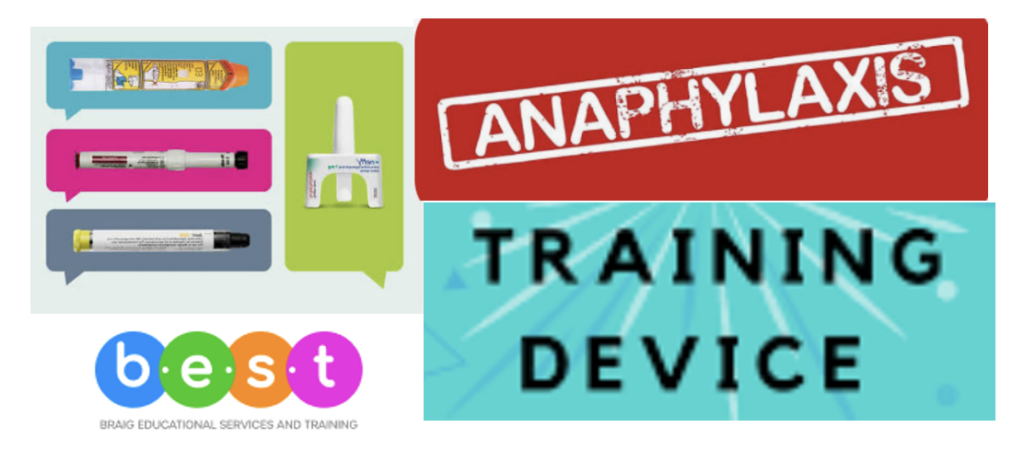
This article focuses exclusively on anaphylaxis training for early childhood education and care services. It explains the approved training pathways recognised by ACECQA, the difference between mandatory qualifications and best practice professional learning, and where services can access official refresher training and trainer devices for EpiPen®, Anapen®, Jext® and neffy®. With these resources, services can confidently implement the nationally recommended six-monthly practical refresher sessions and help ensure every educator is prepared to respond when it matters most.
What Does the Law Require?
Under the Education and Care Services National Regulations, approved services must ensure that at least one educator, or one nominated supervisor, who holds current approved anaphylaxis management training is immediately available whenever children are being educated and cared for.
Relevant legislation includes:
- Regulation 90 – Medical conditions policy
- Regulation 91 – Medical conditions policy to be provided to parents
- Regulation 92 – Medical conditions risk minimisation plans
- Regulation 93 – Communication plans
- Regulation 136 – First aid qualifications, anaphylaxis management training and emergency asthma management training
These requirements support:
- Quality Area 2 – Children’s Health and Safety
- Element 2.2.2 – Incident and emergency management
ACECQA Approved Initial Anaphylaxis Training
The nationally recognised online course specifically designed for education and care services is:
ASCIA Anaphylaxis e-training for Children’s Education and Care
Official Course
https://etraining.allergy.org.au
This course is:
- recognised by ACECQA
- specifically designed for early childhood education and care services
- approximately 60 minutes
- includes assessment
- provides a Certificate of Completion
- approved under Regulation 136.
ACECQA Approved Qualification Listing
Best Practice Refresher Training
Although the National Regulations do not prescribe a refresher interval, ACECQA promotes the National Allergy Council Best Practice Guidelines, which recommend:
Full approved anaphylaxis training at least every 2 years
Refresher training every 6 months
Practical hands-on trainer device practice every 6 months
Regular emergency response drills.
Recommended Online Refresher Training
ASCIA Anaphylaxis Refresher e-training
The updated 2026 refresher includes:
- EpiPen®
- Anapen®
- Jext®
- neffy®
- updated ASCIA Action Plans
- current emergency procedures.
Official course:
https://etraining.allergy.org.au
This refresher takes approximately 20 minutes and is ideal for staff meetings and professional development between full approved courses.
ASCIA Anaphylaxis Refresher Video
The official refresher video demonstrates:
- recognising anaphylaxis
- administering adrenaline
- using all currently available adrenaline devices
- following ASCIA Action Plans.
Available through:
Practical Training Is Essential
ACECQA advises that online learning should always be accompanied by hands-on practice using trainer devices.
Educators should have opportunities to practise:
- recognising anaphylaxis
- locating emergency medication
- administering adrenaline
- following the ASCIA Action Plan
- calling emergency services
- communicating with families and emergency responders.
Many Exceeding-rated services schedule practical refresher sessions every six months during staff meetings and document attendance as evidence of continuous professional learning.
Trainer Devices Available in Australia
With four adrenaline devices now available, services should be familiar with each one.
1. EpiPen® Trainer (Viatris)
Free trainer devices are available for many education settings.
Register:
Alternative enquiries:
2. Anapen® Trainer
Available through:
- Allergy & Anaphylaxis Australia
- authorised Australian suppliers
Information:
3. Jext® Trainer
Reusable trainer containing no medication or needle.
Available from:
- Allergy & Anaphylaxis Australia
- Australian pharmacies (via pharmacist ordering)
- larger orders through the Australian distributor.
4. neffy® Trainer
The new adrenaline nasal spray trainer contains no medication and allows educators to practise administration without injections.
Available through:
Allergy & Anaphylaxis Australia.
One Place to Purchase All Trainer Devices
For most childcare services, the easiest option is:
Allergy & Anaphylaxis Australia Shop
www.allergyfacts.org.au
Trainer devices available include:
- EpiPen®
- Anapen®
- Jext®
- neffy®
BEST Practice Tip
Services should ensure they have at least one trainer device for every adrenaline device currently available in Australia.
Children may present with different prescribed devices, and educators should feel confident using whichever device is provided during an emergency.
Regular practice also helps educators:
- respond more confidently
- reduce hesitation during emergencies
- improve team communication
- strengthen emergency response procedures
- demonstrate embedded professional practice during Assessment and Rating.
Helpful Resources
ACECQA – Anaphylaxis and Food Allergen Management
ASCIA
ASCIA e-training
https://etraining.allergy.org.au
Allergy & Anaphylaxis Australia
MyEpiPen Australia
BEST Childcare Consultancy
Compliance is about far more than holding a current certificate. It is about ensuring every educator can recognise anaphylaxis, act immediately, administer the correct device confidently and work together to protect children’s lives.
Regular refresher learning, documented practical training and familiarity with all currently available adrenaline devices help build educator confidence while providing strong evidence of continuous improvement and best practice under the National Quality Framework.
At BEST Childcare Consultancy, we encourage services to move beyond minimum compliance by embedding practical emergency preparedness into everyday practice—because when an anaphylactic emergency occurs, confidence, competence and preparation can save a child’s life.
Contact us TODAY.
More Than Compliance: Embedding ASCIA Action Plans to Achieve Exceeding Practice and Protect Every Child (2026 Update)
Perfect for ASCIA allergy updates 2026
By BEST Childcare Consulting
Every morning, families place their children into our arms with complete trust. They trust that we will notice the small things. They trust that we will act quickly if something is wrong. And for children living with allergies and anaphylaxis, that trust carries life-saving weight. In early childhood education and care, an ASCIA Action Plan is not just a document — it is a child’s safety, a family’s reassurance, and an educator’s guide in moments where every second matters.
With ASCIA releasing updated Action Plans, introducing new devices such as Jext and Neffy, and confirming important changes around review requirements, it is essential that services understand exactly what this means for their practice, their compliance, and their responsibility to children.
This article provides a complete guide for Western Australian childcare services, including:
- What ASCIA is and why its Action Plans are critical in childcare
- What has changed in the latest ASCIA updates
- The legal requirements under the National Quality Framework and ECRU
- What paperwork is required, where to access official templates, and how often they must be reviewed
- Staff training requirements and where to access approved training and trainer devices
- Incident notification requirements and decision-making guidance
- What families must provide, including medication and action plans
- Other medical action plans childcare services may need, including asthma, epilepsy, diabetes, and eczema
- Guidance on stock adrenaline and new device availability in Australia
Most importantly, this article explains how to ensure your service is not only compliant — but prepared, confident, and ready to protect every child in your care.
Because when it comes to anaphylaxis, preparation is not paperwork.
It is protection.
For full article