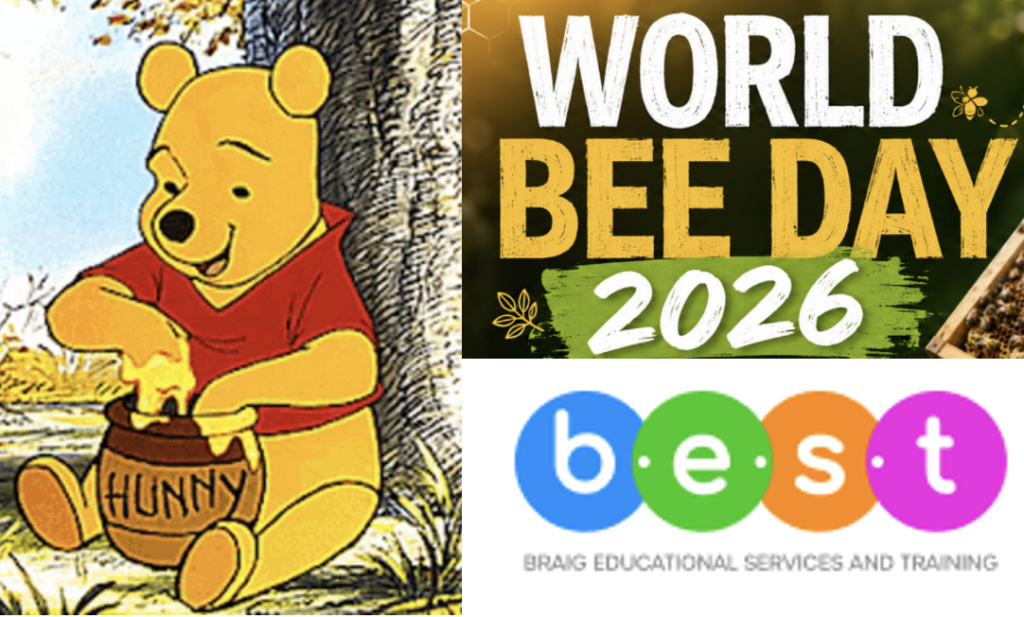
Perfect for Honey Bee Day 15 August 2026, sustainability learning and exploring how we can protect bees in Western Australia
By BEST Childcare Consulting
Few storybook characters are as loved as Winnie the Pooh, whose endless search for honey has delighted generations of children. Honey Bee Day is the perfect opportunity to build on that familiar story and help children discover the remarkable little creatures behind every pot of honey. Through play, investigation and hands-on learning, educators can inspire curiosity about bees, pollination, sustainability and caring for the natural world, while introducing children to the important role bees play in growing our food, supporting biodiversity and protecting healthy ecosystems. For services in Western Australia, it is also an opportunity to explore how our State protects its unique bee populations through strong biosecurity measures, helping children understand that even the smallest creatures can make an enormous difference to our future.
“Sometimes the smallest things take up the most room in your heart.” — Winnie the Pooh
Honey bee day
Honey Bee Day provides endless opportunities for children to learn through wonder, play and discovery. They can explore how bees collect nectar and pollen, make honey, communicate with one another through their famous “waggle dance,” and work together in highly organised colonies where every bee has an important role. Children can discover why bees are among our most important pollinators, helping flowers, fruits and vegetables grow, while also learning about biodiversity, life cycles and the interconnectedness of living things. Through gardening, observing insects, creating bee-friendly habitats and discussing how Western Australia protects its bee populations through biosecurity measures, children begin to understand that caring for bees also means caring for our food, our environment and the future of our planet. These experiences naturally foster curiosity, scientific thinking, empathy, environmental stewardship and an appreciation that even the smallest creatures can make an extraordinary difference. As Pooh might say, every small act of kindness matters—and planting one flower, protecting one bee or learning one new fact can help make a very big difference.
Connecting Honey Bee Day to the United Nations Sustainable Development Goals
Honey Bee Day provides a meaningful opportunity to introduce children to the United Nations Sustainable Development Goals (SDGs) through authentic, hands-on learning. As children discover how bees pollinate plants, support food production and maintain healthy ecosystems, they also begin to understand how caring for the environment helps create a more sustainable future. Gardening, protecting habitats, reducing waste, exploring biodiversity and learning about Western Australia’s bee biosecurity all encourage children to become active environmental stewards. These experiences align particularly well with SDG 2 – Zero Hunger, SDG 12 – Responsible Consumption and Production, SDG 13 – Climate Action, SDG 15 – Life on Land, and SDG 17 – Partnerships for the Goals, demonstrating how even the smallest actions can contribute to positive global change.
Book a Bee themed incursion
Bee Educated – Perth School and Early Childhood Incursions
Bee Educated offers interactive bee incursions designed specifically for schools and early childhood education services across Perth. Sessions may include a live observation hive, age-appropriate discussions about bee life cycles, pollination, honey production, sustainability and the important role bees play in our food supply and ecosystems. Honey tasting may also be included where appropriate, and supporting risk assessments and curriculum-linked resources are available to assist educators with planning and documentation.
Sticky Prick Bee Haven
Sticky Prick Bee Haven, operated by registered beekeeper Roy Murphy, provides engaging educational experiences that help children learn about bees, beekeeping, honey and pollination. Working alongside Bee Educated, the business delivers incursions across Perth and surrounding areas, giving children the opportunity to learn directly from an experienced beekeeper and develop a greater appreciation for bees, biodiversity and environmental care.
Educational Programming ideas
1. Pooh’s Honey Hunt
Create a treasure hunt where children search for bees, flowers and honey pots hidden throughout the learning environment while discussing where bees find nectar and how they make honey.
Ideas and inspiration
- Museum of Australian Democracy – World Bee Day activities (includes bee-themed games and family activities)
- Australian Pollinator Week
2. Busy Bee Pollination Game
Children become bees carrying “pollen” (pom-poms or coloured powder) between flowers to demonstrate how pollination helps plants grow.
Ideas and resources
- Australian National Botanic Gardens – Pollination Learning Hub
- Australian Pollinator Week – Waggle Dance Challenge
3. Plant a Bee-Friendly Garden
Create a pollinator-friendly garden using native flowering plants and observe visiting insects throughout the year.
Resources
4. Winnie the Pooh Story Time
Read favourite Winnie the Pooh stories before discussing honey, bees, friendship, caring for nature and where honey comes from.
Extension ideas
- Create a class book titled “How We Can Help Bees.”
- Make Pooh Bear story stones.
- Retell the story using puppets.
5. Bee Art Studio
Create bees using fingerprints, recycled materials, bubble-wrap honeycomb printing, loose parts or collaborative murals.
Ideas
- Museum of Australian Democracy – Bee Hand Puppets and Bee Crafts
- Cool.org – Observing Native Bees Activity
6. Bee Scientists
Children investigate flowers using magnifying glasses, compare insects, record observations and learn about pollination.
Resources
7. Western Australia Bee Biosecurity Investigation
Introduce children to the idea that Western Australia protects bees through strong biosecurity measures.
Official resources
8. Honey Taste Investigation
Compare different Australian honeys (where appropriate for children over 12 months) and discuss colours, flavours, textures and where they come from.
Extension
- Map where Jarrah, Marri and Karri honey are produced in Western Australia.
- Invite a local beekeeper to explain honey extraction.
9. Busy Bee Music and Movement
Children buzz, fly and perform their own waggle dances to communicate where flowers are growing.
Ideas
- Australian Pollinator Week – Global Waggle Dance Challenge
- The Wheen Bee Foundation – Waggle Dance Project
- The Wheen Bee Foundation – How Bees Communicate Activity Guide
10. “Bee Kind” Kindness Project
Inspired by Winnie the Pooh, encourage children to record acts of kindness on bee-shaped notes to create a collaborative kindness hive.
Extension ideas
- Create a “Bee Kind” pledge.
- Link kindness to caring for nature and living things.
- Connect with children’s rights, empathy and respectful relationships.
QIP write up
Quality Area 1 – Educational Program and Practice
Embedded Practice
Educators intentionally embedded Honey Bee Day throughout the educational program using the familiar story of Winnie the Pooh as a catalyst for inquiry-based learning. Children explored bee life cycles, pollination, honey production, biodiversity, sustainability and Western Australian bee biosecurity through storytelling, scientific investigations, dramatic play, gardening, creative arts, music and movement, sensory experiences and visits from local beekeepers. Learning was intentionally linked to the Early Years Learning Framework and the United Nations Sustainable Development Goals, particularlySDG 2 (Zero Hunger), SDG 12 (Responsible Consumption and Production), SDG 13 (Climate Action), SDG 15 (Life on Land) andSDG 17 (Partnerships for the Goals).
Critical Reflection
The team critically reflected on how a familiar storybook character encouraged deep engagement across all age groups while naturally integrating literacy, science, sustainability and environmental education. Reflection identified that children’s understanding developed most effectively through authentic experiences including gardening, observing pollinators, participating in bee-themed investigations and connecting learning to their own environment and food sources.
Meaningful Engagement with Families and/or the Community
Families contributed books, gardening knowledge, honey products and discussions about sustainable gardening and protecting pollinators. Community partnerships were strengthened through local beekeeping resources and opportunities to participate in educational bee incursions. Official Western Australian bee biosecurity information was shared with families to build awareness of protecting the State’s unique bee populations.
Quality Area 2 – Children’s Health and Safety
Embedded Practice
Educators intentionally taught children how to safely observe bees and other insects while respecting living creatures and their habitats. Discussions explored why bees should never be disturbed, how pollinators contribute to healthy ecosystems and food production, and how Western Australia’s biosecurity measures help protect bee populations from harmful pests and diseases. Experiences also incorporated allergy awareness and safe interactions with insects.
Critical Reflection
Educators reflected on balancing children’s curiosity with opportunities to develop confidence, environmental awareness and safe decision-making. Learning experiences demonstrated that respecting wildlife contributes to both environmental sustainability and personal safety.
Meaningful Engagement with Families and/or the Community
Families shared experiences of gardening, beekeeping, allergies and observing pollinators within their local communities. Conversations extended children’s understanding of caring for bees safely both at home and within the wider community.
Quality Area 3 – Physical Environment
Embedded Practice
The physical environment reflected the service’s commitment to sustainability through the establishment of bee-friendly gardens, flowering native plants and opportunities for children to regularly observe pollinators within natural environments. Children actively participated in planting, composting, recycling, water conservation, creating bee habitats and caring for gardens that support biodiversity. Sustainable practices intentionally reflected SDG 12, SDG 13 and SDG 15, demonstrating that everyday environmental decisions contribute to healthier ecosystems.
Critical Reflection
The team critically reflected on how thoughtfully designed indoor and outdoor environments encouraged children to become environmental stewards. Educators reviewed planting choices, biodiversity opportunities and sustainable practices to ensure the learning environment continued to support children’s curiosity, scientific inquiry and connection with nature throughout the year.
Meaningful Engagement with Families and/or the Community
Families contributed plants, gardening knowledge and sustainability ideas while participating in garden projects and environmental initiatives. Collaborative experiences strengthened children’s understanding that caring for the environment is a shared responsibility that extends beyond the service.
Quality Area 4 – Staffing Arrangements
Embedded Practice
Educators collaborated to intentionally integrate literacy, science, STEM, sustainability, creative arts and environmental education across the curriculum. Staff shared research, programming ideas and local resources, including official bee biosecurity information and educational materials, ensuring consistent and responsive learning experiences across all age groups.
Critical Reflection
The team reflected on how collaborative planning created richer learning opportunities and recognised that children’s curiosity about Winnie the Pooh naturally expanded into investigations about pollination, biodiversity, ecosystems, food production and environmental responsibility.
Meaningful Engagement with Families and/or the Community
Educators worked collaboratively with families, local experts and educational providers to extend children’s learning beyond the service. Community knowledge enriched programming and strengthened children’s understanding of bees within their local environment.
Quality Area 5 – Relationships with Children
Embedded Practice
Educators used Winnie the Pooh’s stories to explore friendship, kindness, cooperation and caring for both people and the natural world. Experiences such as the “Bee Kind” project encouraged children to recognise that every living thing has an important role within healthy ecosystems and that even small acts of kindness can make a meaningful difference.
Critical Reflection
The team reflected on how familiar characters and imaginative play supported children’s emotional literacy while encouraging empathy, respect for living things and environmental responsibility. Children’s ideas and questions guided the direction of investigations, ensuring learning remained meaningful and responsive.
Meaningful Engagement with Families and/or the Community
Children shared their discoveries with families through artwork, investigations, gardening projects and discussions about how everyone can help protect bees and care for the environment. Families celebrated children’s learning by extending conversations and sustainability practices at home.
Quality Area 6 – Collaborative Partnerships with Families and Communities
Embedded Practice
Families and community members actively contributed to Honey Bee Day learning by sharing books, gardening knowledge, honey products, sustainability practices and local environmental experiences. The service established connections with educational bee providers and shared official resources from the Department of Primary Industries and Regional Development to strengthen understanding of Western Australian bee biosecurity. These partnerships reflected SDG 17 – Partnerships for the Goals, demonstrating that environmental sustainability is achieved through collaboration.
Critical Reflection
The team reflected on how community expertise enriched children’s understanding of biodiversity, food production and pollinator conservation. Educators considered how partnerships with families, beekeepers and environmental organisations strengthened authentic learning and connected children with their local community.
Meaningful Engagement with Families and/or the Community
Families participated in gardening experiences, bee-friendly planting projects and sustainability initiatives while engaging with information about protecting pollinators. Educational incursions and community resources further strengthened children’s understanding of the important role bees play in healthy ecosystems and food security.
Quality Area 7 – Governance and Leadership
Embedded Practice
Leadership supported the integration of Honey Bee Day into the service’s ongoing sustainability strategy rather than as a one-day celebration. Environmental education was intentionally embedded within curriculum planning, the Quality Improvement Plan, sustainable purchasing practices, garden development and community partnerships. Continuous improvement reflected the principles of the Early Years Learning Framework, the National Quality Standard and the United Nations Sustainable Development Goals,particularlySDG 2, SDG 12, SDG 13, SDG 15 and SDG 17.
Critical Reflection
Leadership critically reflected on how sustainability was demonstrated across all aspects of the service, including curriculum design, environmental stewardship, community engagement and governance. Reflection identified opportunities to continue strengthening children’s understanding of biodiversity, climate action, food systems and environmental responsibility through everyday practice.
Meaningful Engagement with Families and/or the Community
Leadership actively promoted partnerships with families, local beekeepers, educational incursion providers and community organisations to enrich children’s learning. The service regularly shared official Western Australian bee biosecurity resources and sustainability information, reinforcing that protecting bees, biodiversity and healthy ecosystems is a shared responsibility that benefits both present and future generations.
Links and Resources
Western Australian Bee Information and Biosecurity
Department of Primary Industries and Regional Development (DPIRD)
- Beekeeping information and resources
https://www.dpird.wa.gov.au/businesses/beekeeping/ - Beekeeper registration and responsibilities
https://www.dpird.wa.gov.au/businesses/beekeeping/beekeeper-registration-and-responsibilities/
Western Australian Government
- Western Australia’s unique bees and World Bee Day
https://www.wa.gov.au/government/announcements/was-unique-bees-celebrated-part-of-world-bee-day
Educational Bee Incursions (Western Australia)
Bee Educated
Interactive incursions for early childhood services and schools featuring live observation hives, pollination, bee life cycles, honey production, sustainability and curriculum-linked learning.
Sticky Prick Bee Haven
Educational bee experiences presented by registered beekeeper Roy Murphy, including incursions and opportunities for children to learn about bees, beekeeping, honey production and pollination.
Pollinator Education
Australian Pollinator Week
Educational resources, pollinator information and the Waggle Dance Challenge.
Australian National Botanic Gardens
Learning resources about pollination, native plants and biodiversity.
https://learn.anbg.gov.au/pollination
Wheen Bee Foundation
Australia’s leading bee charity providing educational resources, teacher activities and information about protecting pollinators.
How Bees Communicate – Teacher Resource
Sustainability and Environmental Learning
Cool.org
Free Australian sustainability lessons and activities, including observing native bees.
Nearer to Nature – Department of Biodiversity, Conservation and Attractions
Environmental education programs, incursions and excursions across Western Australia.
https://www.dbca.wa.gov.au/get-involved/education/nearer-nature-schools
Creative Learning Ideas
Museum of Australian Democracy
Free bee-themed craft activities including bee puppets suitable for younger children.
https://www.moadoph.gov.au/play/play-at-home/make-bee-hand-puppets
United Nations Sustainable Development Goals
United Nations Sustainable Development Goals
Relevant goals for Honey Bee Day:
- SDG 2 – Zero Hunger
https://sdgs.un.org/goals/goal2 - SDG 12 – Responsible Consumption and Production
https://sdgs.un.org/goals/goal12 - SDG 13 – Climate Action
https://sdgs.un.org/goals/goal13 - SDG 15 – Life on Land
https://sdgs.un.org/goals/goal15 - SDG 17 – Partnerships for the Goals
https://sdgs.un.org/goals/goal17
Winnie the Pooh
A.A. Milne’s timeless Winnie the Pooh stories continue to inspire children’s learning about friendship, kindness, curiosity and a love of nature through imaginative storytelling and play.
BEST Childcare Consulting
Honey Bee Day reminds us that extraordinary things often come in very small packages. By combining children’s love of Winnie the Pooh with meaningful environmental education, educators can nurture curiosity, scientific thinking, sustainability and respect for all living things. Every flower planted, every bee observed and every conversation about caring for nature helps children understand that they can make a positive difference in the world around them.
As always, use these inspirations to lead your service throughout the whole year in your everyday practices to truly earn an Exceeding rating.
Contact us TODAY