Perfect for Childcare Directors: Food Safety, Allergy Risks and NEW National Guidance
By BEST Childcare Consulting
Australian Food Safety Week 2026 highlights the importance of safe food practices across childcare services, not just in the kitchen. This year’s theme, “Raw Food – Know the Risk,”focuses on the dangers of raw and undercooked foods.
With the release of the NEW National Best Practice Guide for Early Childhood Food Environments on 22 September 2026 and recent ECRU warnings about preventable allergy incidents requiring urgent medical treatment, now is an important time for services to review their practices.
Three key areas for childcare directors to consider:
- Food safety: Safe storage, preparation, cooking and serving.
- Allergy management: Following medical management plans and dietary requirements.
- Quality food environments: Supporting children’s independence, wellbeing, inclusion and learning.
Our latest BEST article brings together regulatory requirements, practical advice, new national guidance and FREE resources to help childcare services strengthen everyday food safety practices.
1. Australian Food Safety Week 2026: Raw Food – Know the Risk
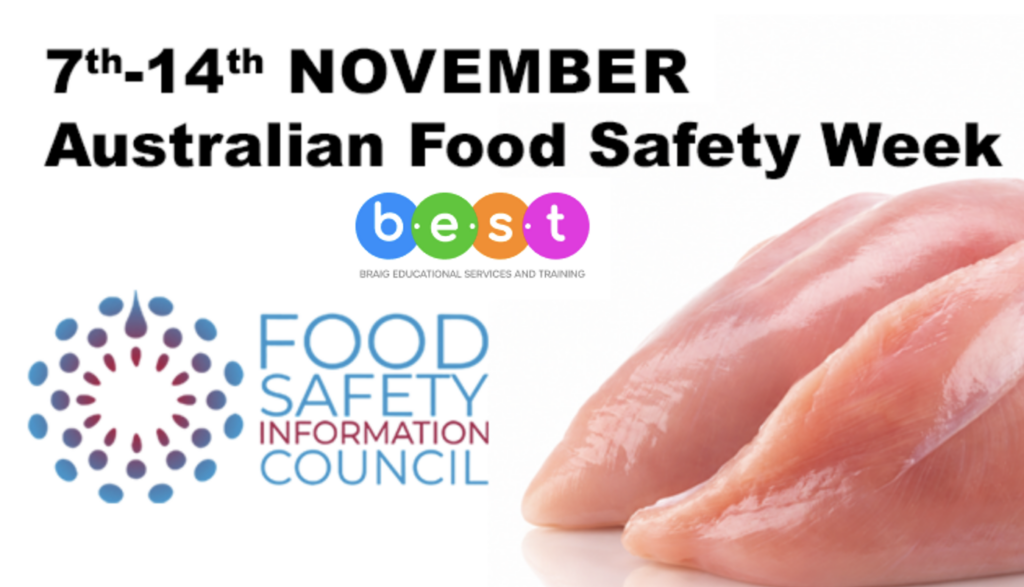
Australian Food Safety Week runs from 7–14 November 2026 and focuses on understanding the risks associated with raw and undercooked foods.
Young children are particularly vulnerable to foodborne illness because their immune systems are still developing. Foods that may present a higher risk include undercooked poultry, raw or undercooked eggs, unpasteurised dairy products and foods contaminated through unsafe preparation or storage.
In childcare, these risks can arise during ordinary routines:
- Preparing raw chicken near fruit or vegetables.
- Using the same utensils for raw and cooked foods.
- Allowing children to taste uncooked cake batter containing raw eggs or flour.
- Failing to check cooking temperatures.
- Leaving potentially hazardous foods unrefrigerated.
- Reheating food without appropriate temperature controls.
- Preparing meals without checking individual dietary requirements.
Food safety requires more than a clean kitchen. It involves effective systems, staff knowledge, appropriate supervision and consistent practices throughout the service.
Free campaign resources: Australian Food Safety Week 2026 – Food Safety Information Council
2. What Are Childcare Services Legally Required to Do?
Food safety in early childhood education and care is supported by the Education and Care Services National Regulations, the National Quality Standard and applicable food safety legislation.
National Regulations
Regulation 77 – Health, hygiene and safe food practices
Approved providers, nominated supervisors and family day care educators must ensure adequate health and hygiene practices and safe practices for handling, preparing and storing food are implemented.
Regulation 78 – Food and beverages
Children must have access to safe drinking water and be offered food and beverages regularly throughout the day.
Regulation 79 – Service providing food and beverages
Where a service provides food, it must be nutritious, adequate in quantity and appropriate to children’s growth, development and individual dietary requirements.
Regulation 80 – Weekly menu
Services providing food must display an accurate weekly menu that is accessible to families.
Regulation 168 – Education and care service policies and procedures
Services must have policies and procedures covering health and safety, nutrition, food and beverages, dietary requirements and related matters.
These requirements connect directly with Quality Area 2 – Children’s Health and Safety, particularly Element 2.1.2, Health Practices and Procedures.
However, food safety also contributes to Quality Area 1 through intentional teaching and learning experiences, Quality Area 5 through respectful and responsive mealtimes, and Quality Area 6 through communication with families.
The new National Best Practice Guide reinforces these broader connections, encouraging services to view food environments as part of children’s overall education, health and wellbeing.
Resource: ACECQA – Quality Area 2
3. WA Food Safety Legislation: What Directors Need to Understand
Western Australian childcare services may have food safety obligations beyond those contained in the National Quality Framework. Depending on the service’s food activities, these may include requirements under the Food Act 2008 (WA) and the Australia New Zealand Food Standards Code.
Standard 3.3.1 – Food Safety Programs for Food Service to Vulnerable Persons
This standard applies to certain food businesses preparing or serving food to vulnerable populations, including childcare services that fall within its scope. Where applicable, services must implement a documented food safety program and comply with regulatory auditing requirements.
Standard 3.2.2A – Food Safety Management Tools
Depending on the service’s classification and activities, additional requirements may apply concerning:
- Food Safety Supervisors.
- Food handler training, skills and knowledge.
- Evidence of safe food handling and temperature controls.
Not every childcare service has identical obligations. A centre preparing meals on site may have different requirements from a service using externally catered meals or relying on family-supplied lunchboxes. Directors should confirm their service’s specific food business requirements with their local government environmental health team.
This is also an important distinction highlighted by the new National Best Practice Guide. Food safety responsibilities may involve several authorities, and ECRU Assessment and Rating does not replace food business compliance obligations.
Resources:
WA Health – Food Safety Management Tools
Food Standards Australia New Zealand – Food Safety Standards
Food Safety Supervisor Requirements for Childcare Centres
Under Food Safety Standard 3.2.2A – Food Safety Management Tools, childcare centres that prepare and serve unpackaged, potentially hazardous, ready-to-eat foods are generally required to appoint a qualified Food Safety Supervisor (FSS). This requirement has applied in Western Australia since 8 December 2023. The Food Safety Supervisor may be the centre cook, director or another appropriately trained staff member who has the knowledge, authority and availability to oversee safe food handling practices. They must hold recognised Food Safety Supervisor certification obtained within the previous five years, with refresher certification required every five years. The supervisor must be reasonably available to advise and supervise food handlers, although they do not necessarily need to be physically present throughout every operating hour. Importantly, appointing a Food Safety Supervisor does not remove the responsibility of other educators and staff to follow safe food handling procedures. Directors should also ensure that staff involved in food preparation and serving have appropriate food safety training and knowledge. Services that only provide pre-packaged foods or rely on family-supplied lunchboxes may have different requirements and should confirm their obligations with their local government Environmental Health Officer.
Useful official resources:
- WA Health – Food Safety Supervisor Requirements and Training
- WA Health – Food Safety Management Tools
Food Safety Training Requirements for All Childcare Staff
Under Food Safety Standard 3.2.2A – Food Safety Management Tools, childcare services covered by the standard must ensure that all staff who handle unpackaged, potentially hazardous, ready-to-eat food have completed appropriate food safety training or can demonstrate adequate food safety skills and knowledge. This requirement is not limited to the centre cook or designated Food Safety Supervisor. It can also apply to educators who prepare morning tea, serve lunches, handle children’s meals, reheat food or assist with food preparation. Training should cover safe food handling, personal hygiene, cleaning and sanitising, prevention of cross-contamination and temperature control. Staff do not necessarily need a formal qualification, but they must be able to demonstrate the knowledge and skills relevant to their duties. Directors should ensure new, casual and relief educators receive appropriate induction and that training records are maintained. Importantly, Regulation 77 of the Education and Care Services National Regulations requires safe food handling practices across all services, even where Standard 3.2.2A does not apply. Having one qualified Food Safety Supervisor does not replace the need for all educators handling food to understand and consistently implement safe practices.
FREE Food Safety Training: The Australian Government’s DoFoodSafely online training is a useful resource for educators and food handlers. It provides a free certificate of completion, although it does not replace formal Food Safety Supervisor certification where that is required.
WA regulatory information: WA Health – Food Safety Management Tools
4. The NEW National Best Practice Guide: Food Safety Is Only Part of the Picture
Released on 22 September 2026, the National Best Practice Guide for Early Childhood Food Environments provides a broader approach to food practices in early childhood education and care. Developed by Edith Cowan University, the guide includes six modules and guidance for eight professional groups, including educators, cooks, educational leaders, service management and regulatory and quality staff. It explores how food environments influence children’s health, learning, independence, emotional wellbeing, relationships, cultural identity and inclusion. This is important because a childcare service may meet its basic food safety obligations while still having opportunities to improve the quality of children’s mealtime experiences.
For example, a meal might be safely prepared and nutritionally appropriate, but educators may still need to reflect on whether children are rushed, pressured to eat, excluded from serving themselves or given limited opportunities to develop independence. The guide encourages services to consider food safety alongside respectful relationships, intentional teaching, inclusion and quality improvement.
Where Should Directors Start?
We recommend beginning with the guide’s Quality, Leadership and Governance content, followed by its guidance on mealtime environments and practices. These sections are particularly useful when reviewing policies, staff responsibilities, food safety procedures, everyday mealtime routines and Quality Improvement Plans.
Free resource: National Best Practice Guide for Early Childhood Food Environments
5. Food Preparation, Storage and Temperature Control
Safe food handling begins when food arrives at the service and continues until it is served or safely discarded.
Receiving and storing food
Services should check that food deliveries are received at appropriate temperatures, packaging is intact, use-by dates are monitored and potentially hazardous foods are stored promptly. Raw meat and poultry should be stored separately from ready-to-eat foods, preferably on lower refrigerator shelves to prevent drips and cross-contamination. Potentially hazardous foods generally need to be kept at 5°C or below or 60°C or above, unless a permitted alternative time or temperature control is being used. Temperature records are useful, but educators and cooks must also understand what action to take if a fridge, freezer or food delivery falls outside safe limits.
Preparing and cooking food
Raw and ready-to-eat foods should be kept separate, with equipment appropriately cleaned and sanitised between uses. Food thermometers should be used where needed to verify safe cooking temperatures, particularly for poultry and minced meats. Poultry should be thoroughly cooked to an internal temperature of at least 75°C.
Cooling and reheating food
Potentially hazardous cooked food must be cooled safely. The general two-stage cooling requirement is: from 60°C to 21°C within two hours and from 21°C to 5°C within a further four hours. Food being reheated for hot holding must be reheated rapidly in accordance with applicable food safety requirements. Directors should ensure these procedures are understood by all staff involved in food preparation and service, including those covering the cook’s absence.
Cleaning and sanitising
Cleaning removes visible food residues and contamination. Sanitising reduces microorganisms to safer levels. Both processes are necessary for appropriate food-contact surfaces and equipment. The new National Best Practice Guide provides an opportunity to reflect on whether food preparation environments are safe, well organised and supported by effective leadership and staff training.
6. ECRU’s Urgent Warning: Preventable Food Allergy Incidents in Childcare
Food allergy management is a particularly important area for WA childcare services to review. ECRU recently (19 October 2026) reported receiving six notifications within a 24-hour period involving children being exposed to known allergens, with three children requiring urgent medical care. These incidents involved children being exposed to foods containing allergens already identified in enrolment records, medical management plans or service documentation. This is especially concerning for children under three years of age, who may be unable to recognise or communicate the early signs of an allergic reaction.
ECRU Is Urging ALL Services to Immediately Review Their Allergy Management Practices
ECRU has specifically highlighted the need to review:
- Allergy and anaphylaxis policies and procedures: Are they current, understood and consistently implemented?
- Medical management and risk minimisation plans: Are plans current, accessible and reflected in daily routines?
- Food preparation, labelling and meal sign-off procedures: Are meals checked before reaching children?
- Communication between educators, cooks and relief staff: Does every person handling or serving food know the relevant dietary restrictions?
- Staff induction, training and supervision: Are new, casual and relief staff adequately prepared?
- Processes for checking children’s dietary requirements before serving food: Is there a reliable final check before food is given to a child?
Having policies and medical plans in place is not enough. Every educator and staff member must understand and consistently follow these procedures in everyday practice.
ECRU has made clear that incidents involving known allergens will face close regulatory scrutiny, with compliance and enforcement action where appropriate.
What Does This Mean in Everyday Practice?
Consider a typical lunchtime situation. The cook has prepared a meal and checked the ingredients. The food is delivered to the room, where an educator begins serving several children. A relief educator has also joined the room and may not be familiar with every child’s dietary requirements. Who is responsible for confirming that each child receives the correct meal? Is there a documented meal sign-off process? Are meals clearly identified? Does the relief educator understand the allergy management procedures? What happens if a meal is substituted at the last minute? These are the practical situations that directors should be reviewing. A reliable system should not depend on one experienced educator remembering which child has an allergy.
Two Important Resources Shared by ECRU
1. Food Allergy Training Hub
A useful resource for strengthening staff knowledge of food allergies, allergen avoidance and appropriate responses.
Access the Food Allergy Training Hub
2. Meal Sign-Off Form for Allergies and Special Dietary Needs
A practical resource to help services strengthen meal checking and communication before food is served.
These resources should be reviewed alongside the service’s medical conditions policy, individual medical management plans, risk minimisation plans and communication plans.
Connecting ECRU’s Advice with the New National Best Practice Guide
The new guide reinforces the importance of inclusive food environments and strong communication between cooks, educators, management and families. However, inclusion must always be supported by effective safety systems. Respecting a child’s dietary requirements involves more than providing an alternative meal. It requires safe ingredient selection, food preparation, labelling, communication and checking procedures. This is an excellent opportunity for directors to review whether their food safety systems support both children’s physical safety and their inclusion in everyday mealtime experiences.
7. Food Safety Beyond the Kitchen: What Educators Need to Know
Food safety does not end when meals leave the kitchen. Many risks occur during everyday routines in children’s rooms, particularly when educators are managing multiple responsibilities.
Mealtimes and serving food
Educators should understand safe food handling, appropriate handwashing, preventing food sharing and checking individual dietary requirements. Services should also review how food is transported between rooms, how serving utensils are managed and how leftovers are handled. The new National Best Practice Guide encourages educators to create calm, respectful mealtimes where children can develop independence and positive relationships with food. Children can be encouraged to serve themselves and participate in mealtime routines where developmentally appropriate, provided hygiene, allergen management and supervision requirements are maintained.
Toileting, nappy changing and food handling
Educators working with babies and toddlers frequently move between toileting, nappy changing, cleaning, supervising and serving food. These transitions create opportunities for contamination if appropriate hygiene procedures are not followed. The NHMRC’s Staying Healthy guidance provides practical recommendations for reducing infection risks in early childhood settings. Where possible, services should organise routines so that educators preparing or serving food are not simultaneously responsible for nappy changing or toileting. Where duties overlap, thorough hand hygiene and other infection prevention measures are essential.
Resource: NHMRC – Staying Healthy
8. Family Lunchboxes, Infant Feeding and Cooking Experiences
Family-supplied lunchboxes
Even when families provide food, services retain responsibilities for safe food handling and storage. Lunchboxes containing potentially hazardous foods such as yoghurt, cheese, meat and eggs may require refrigeration or effective insulated storage. Directors should ensure families understand the service’s food safety arrangements, particularly during Western Australia’s warmer months. The new National Best Practice Guide also encourages services to work collaboratively with families around nutritious foods, cultural preferences, food inclusion and positive mealtime experiences.
Infant formula, expressed breast milk and first foods
Infant feeding requires particular care. Services should have clear procedures for preparing, identifying, storing and warming infant formula and expressed breast milk. Bottles must be correctly labelled and never shared between children. Educators should also understand safe food preparation when introducing solids, including appropriate textures, allergy management and choking prevention.
Cooking experiences with children
Cooking experiences provide valuable opportunities for learning, independence, language development, early numeracy and cultural exploration. However, they must be planned with appropriate food safety precautions. Children should not taste uncooked cake batter containing raw eggs or flour. Educators should also consider safe ingredient handling, handwashing, equipment, allergies and cleaning procedures. The new guide encourages meaningful food education, including cooking, gardening and food exploration, while maintaining safe and inclusive practices.
9. Mealtimes Are About More Than Nutrition and Hygiene
One of the most valuable messages from the new National Best Practice Guide is that food environments influence children’s social and emotional development. Mealtimes provide opportunities for children to develop independence, practise communication, build relationships and learn about different cultures. Educators should reflect on whether children are supported to recognise their own hunger and fullness cues, participate in food routines and experience mealtimes without unnecessary pressure.
For example, rather than insisting that a child finishes everything on their plate, educators can encourage exploration and respect the child’s appetite while continuing to provide appropriate food and support. Cultural responsiveness is also important. Food practices should respect children’s family backgrounds, cultural identities, dietary requirements and individual needs. These approaches connect with the EYLF v2.0 and National Quality Standard, particularly Quality Areas 1, 2, 5 and 6.
Food safety and positive mealtime experiences are not competing priorities. Both are essential components of a high-quality early childhood food environment.
10. Food Safety Week: A Practical Checklist for Directors
Australian Food Safety Week provides an ideal opportunity to review everyday practices rather than simply distribute information to staff.
Consider the following questions:
Food safety and regulatory requirements
- Have we confirmed our food business obligations with our local government?
- Are our food safety policies, procedures and training current?
- Are food temperatures monitored and appropriate corrective actions understood?
- Are cleaning and sanitising procedures consistently followed?
Allergy management
- Have we acted on ECRU’s latest allergy management advice?
- Are medical management and risk minimisation plans current?
- Do we have reliable meal identification and sign-off procedures?
- Are relief and casual educators informed of children’s allergies?
- Do cooks and educators communicate effectively about dietary requirements?
Everyday educator practices
- Are handwashing and hygiene procedures followed during mealtimes?
- Are food handling responsibilities clearly allocated?
- Are infant feeding and lunchbox procedures safe?
- Are cooking experiences appropriately risk assessed?
Quality food environments
- Have we explored the new National Best Practice Guide?
- Are mealtimes calm, inclusive and supportive of children’s independence?
- Do our practices respect children’s cultural and individual dietary needs?
- Are families involved in decisions about food and mealtimes?
- Are educators encouraged to critically reflect on food-related practices?
Directors may wish to allocate different areas of this review to their cook, educational leader, room leaders and nominated supervisor, bringing their findings together for discussion and quality improvement planning.
11. Linking Food Safety to Exceeding Practice
Food safety is a fundamental requirement of Quality Area 2, but the way services approach food environments can also contribute to Exceeding practice.
Theme 1 – Practice is embedded in service operations
Safe food handling, allergy management and positive mealtime practices are consistently implemented throughout the service. This includes busy transitions, staff absences, relief educators, family-supplied food and children’s cooking experiences.
Theme 2 – Practice is informed by critical reflection
Educators and management regularly review food safety procedures, mealtime routines, incidents, near misses and current research. The new National Best Practice Guide provides an excellent foundation for critical reflection, encouraging services to consider both safety and the broader quality of children’s food experiences.
Theme 3 – Practice is shaped by meaningful engagement with families and the community
Families contribute to decisions about dietary requirements, cultural food practices, allergies, infant feeding and children’s individual needs. Services also draw on guidance from ECRU, local government environmental health officers, food safety authorities and health professionals.
Exceeding practice is not about having more documentation. It is about demonstrating that high-quality practices are embedded, critically reflected upon and shaped by meaningful engagement.
12. Free Resources for Childcare Directors and Educators
Australian Food Safety Week 2026
Theme: “Raw Food – Know the Risk” | 7–14 November 2026
Campaign materials, information and resources about raw food safety, including downloadable posters, social media graphics and educational resources.
Australian Food Safety Week 2026 – Official Campaign Resources
National Best Practice Guide for Early Childhood Food Environments
Released 22 September 2026 – Edith Cowan University
Free evidence-based guidance covering food safety, nutrition, mealtime environments, inclusion, food education, sustainability and quality improvement. Includes six modules and downloadable resources specifically for childcare services.
National Best Practice Guide – Official Website and Downloads
Additional useful link for directors:
ACECQA – Introduction to the New National Food Environments Guide
ECRU – Food Allergy Training Hub
https://ecru.cmail19.com/t/d-l-wtyjjdy-duhyhdyutt-y
ECRU – Meal Sign-Off Form for Allergies and Special Dietary Needs
https://ecru.cmail19.com/t/d-l-wtyjjdy-duhyhdyutt-j
Food Standards Australia New Zealand
National food safety standards and information for food businesses.
https://www.foodstandards.gov.au
WA Health – Food Safety Management Tools
https://www.health.wa.gov.au/FSMT
NHMRC – Staying Healthy
Infection prevention and control guidance for early childhood education and care services.
https://www.nhmrc.gov.au/about-us/publications/staying-healthy-guidelines
ACECQA – Quality Area 2
https://www.acecqa.gov.au/quality-area-2-childrens-health-and-safety-1
13. How BEST Childcare Consulting Can Support Your Service
At BEST Childcare Consulting, we understand that maintaining safe food handling practices in a busy childcare service involves much more than having the correct policies and procedures.
Through our mock compliance visits, Quality Area 2 reviews, tailored professional development and educator mentoring, we can help services examine how food safety, hygiene and allergy management procedures are implemented throughout the day.
Our approach focuses on bringing policies out of the cupboard and onto the floor, where they need to work in everyday practice.
This includes observing mealtimes, transitions, hygiene routines, food handling and communication between educators and cooks, and supporting staff to understand what ECRU authorised officers may look for during an Assessment and Rating visit or compliance inspection.
We can also assist services to use the new National Best Practice Guide to strengthen critical reflection, improve mealtime environments and identify meaningful Quality Improvement Plan goals.
Where specialist food safety auditing, certification or regulatory food business advice is required, services should seek guidance from their local government environmental health team or an appropriately qualified food safety professional.
Contact us TODAY.