Rethinking Christmas Concerts, Graduations and Festive Traditions to Support Children’s Rights, Educator Wellbeing and Cultural Inclusion
By BEST Childcare Consulting
As another busy year draws to a close, early childhood education and care services across Australia are preparing for the festive season. Traditionally, this means Christmas concerts, graduation ceremonies, handmade gifts, decorations, special events and an endless list of activities to organise.
But this year, BEST Childcare Consulting is encouraging services to consider a different approach. What if Christmas 2026 was about doing less, but making it mean more?
After another demanding year of regulatory changes, workforce pressures, professional development requirements and increasing responsibilities, many educators and directors are approaching December already exhausted. Yet this should also be a wonderful time for children, filled with excitement, imagination, laughter, friendship and anticipation.
Perhaps the answer isn’t another Christmas concert, another elaborate craft project or another event for families to attend. Perhaps it’s simply slowing down and remembering what this time of year can represent: kindness, generosity, belonging, gratitude, friendship, compassion and connection.
But there is another important consideration. Are our festive traditions genuinely respecting children’s rights, or are we sometimes prioritising adult expectations over children’s needs?
With Western Australia’s new child safety reforms commencing on 1 November 2026, this is a particularly relevant time for services to reflect on children’s voices, wellbeing, safety and participation in decisions that affect them.
This Christmas, let’s put children’s rights at the centre of our celebrations, while giving educators permission to slow down and enjoy the season alongside the children.
1. Christmas Through the Eyes of a Child – What Do Children’s Rights Tell Us?
The United Nations Convention on the Rights of the Child (UNCRC) recognises that children are individuals with rights, opinions, identities and needs that must be respected. These rights apply every day, including during Christmas celebrations, graduation ceremonies and end-of-year activities. Several articles are particularly relevant to how early childhood services approach the festive season.
Article 3 – The Best Interests of the Child
Children’s best interests must be a primary consideration in decisions affecting them. When planning concerts, graduations or festive events, services should consider whether these experiences genuinely support children’s wellbeing, interests and developmental needs.
Article 12 – The Right to Be Heard
Children have the right to express their views about matters that affect them and have those views given due weight. This includes having opportunities to contribute to decisions about celebrations, activities and participation.
Article 14 – Freedom of Thought, Conscience and Religion
Children’s freedom of thought, conscience and religion must be respected. Not every child or family celebrates Christmas, and families may hold different religious and cultural beliefs.
Article 30 – The Right to Culture
Children from cultural, religious and linguistic minorities, and Aboriginal and Torres Strait Islander children, have the right to enjoy their culture, practise their religion and use their language.
Article 31 – The Right to Play, Rest and Leisure
Children have the right to play, rest and enjoy leisure and recreational activities. Weeks of rehearsals, structured activities and adult-directed preparations should not replace opportunities for spontaneous play, relaxation and enjoyment.
Article 2 – The Right to Non-Discrimination
Every child has the right to be treated fairly, regardless of their culture, religion, family circumstances, abilities or background.
BEST Reflection: Before organising an event, ask whether it is something children genuinely want and benefit from, or something adults have simply come to expect.
2. Give Educators the Gift of Less Stress
December is often one of the busiest and most exhausting months in childcare services. Educators are completing learning documentation, preparing transitions, welcoming new children, supporting families, managing holiday staffing arrangements and maintaining the same high standards of supervision, safety and care expected throughout the year. Then we add Christmas. Concert rehearsals, costumes, graduation preparations, gifts, decorations, displays, parties and family events can turn an already demanding month into an overwhelming one.
But who decided that all these activities were necessary? A beautiful Christmas experience does not need to come at the expense of educator wellbeing. Directors and educational leaders could consider cancelling large productions, reducing elaborate craft expectations, avoiding unnecessary after-hours events and simplifying celebrations. Ask educators which traditions they genuinely enjoy and which create additional workload without meaningful benefits for children.
Importantly, reducing unnecessary festive tasks does not mean compromising educational documentation, supervision, safety or regulatory responsibilities. It means reviewing additional expectations that services have created for themselves. There is also an important connection between educator wellbeing and children’s rights. When educators are exhausted, overwhelmed or rushing between activities, they may have fewer opportunities to listen carefully to children, respond sensitively to their needs or engage in meaningful interactions. By reducing unnecessary pressures, services can create more opportunities for educators to be emotionally available, responsive and genuinely present with children.
BEST Advice: Ask your team: “What could we stop doing this December that would make your working day easier without taking anything meaningful away from the children?”
3. Do Children Really Need a Christmas Concert?
Christmas concerts have been a tradition in many childcare services for decades. They can be enjoyable, but they can also create enormous pressure. Weeks of rehearsals, learning songs, organising costumes, arranging seating, coordinating families and managing children’s expectations can consume valuable time and energy. For some children, performing in front of a large audience is exciting. For others, particularly younger children, children experiencing anxiety or those with sensory sensitivities, it can be overwhelming. And while families may enjoy watching their children perform, we should ask ourselves whether the experience is genuinely designed around children’s needs or adult expectations.
What if we replaced the big concert with smaller, more relaxed experiences? Children could sing favourite songs spontaneously, dance with friends, share stories, enjoy a picnic or invite families into the service for a relaxed afternoon. There would be no pressure to perform, no costumes to organise and no expectation that every child must participate in the same way. This approach supports Article 12, recognising children’s right to express their preferences, and Article 31, protecting opportunities for play, rest and enjoyment. It also respects children’s right to feel emotionally safe and included. Importantly, children’s participation should be genuinely voluntary. A child who chooses not to perform should not be made to feel that they have disappointed their educators or family.
The magic is in the experience, not the performance.
4. Rethinking Graduation – Celebrate Growth, Not a Production
Graduation ceremonies have also become increasingly elaborate in some early childhood settings. Gowns, mortarboards, certificates, elaborate decorations, rehearsals, photographs, performances and catering can create significant workloads for educators. While recognising children’s transition to school is important, a large formal ceremony is not the only way to celebrate this milestone. Consider a quieter, more personal approach.
Children could revisit photographs of their time at the service, share favourite memories, talk about friendships, reflect on what they have learned and express their feelings about starting school.
Families might be invited to a relaxed afternoon tea, a shared story session or a simple celebration where children receive a meaningful message from their educators.
A personal letter describing a child’s growth, friendships, strengths and achievements may become a far more treasured keepsake than an elaborate graduation production.
Most importantly, children should have a genuine voice in how they would like to mark their transition.
Some children may love wearing a graduation gown and receiving a certificate. Others may prefer a quiet celebration with friends. Both preferences deserve respect.
BEST Reflection: Are we celebrating children’s achievements, or creating an event that adults feel obliged to deliver?
5. Less Santa, Less Presents – More Humanity and Kindness
Christmas is frequently associated with Santa Claus, presents, shopping and receiving gifts. These traditions can be exciting for children and important to many families. There is no need to remove them from services that choose to celebrate Christmas. However, they do not need to dominate the educational program. This year, consider placing greater emphasis on the human values that make the festive season meaningful.
Kindness: How can we help someone feel happy, safe or included?
Generosity: What can we give that doesn’t cost money?
Gratitude: Who are the people who help us, care for us and make our lives better?
Friendship: How can we make sure everyone feels welcome and has someone to play with?
Compassion: How do we recognise when someone needs help or comfort?
Connection: How can we spend meaningful time with the people who matter to us?
These are concepts that even very young children can begin to understand through everyday relationships and experiences. An educator comforting a child, two toddlers sharing a favourite book, preschoolers welcoming a new friend or school-aged children helping younger children are all meaningful examples of kindness in action. Rather than counting down the days until Santa arrives, imagine spending December noticing and celebrating the kindness children experience in their everyday lives. Importantly, kindness should never become a competition or reward system. Children do not need to earn recognition for being kind, and generosity should never become an obligation.
The goal is to nurture genuine care for others, not simply encourage children to complete another Christmas activity.
6. Cultural Inclusion – A Celebration Where Every Child Belongs
Australia’s early childhood services reflect wonderfully diverse communities. Some families celebrate Christmas as an important religious occasion. Others enjoy its cultural traditions without religious significance. Some celebrate different religious or cultural festivals, while others do not celebrate Christmas at all. A genuinely inclusive service does not assume that every child celebrates Christmas or that every family shares the same beliefs and traditions. Nor does inclusion mean that services must avoid Christmas altogether. It means creating an environment where every child’s identity, family beliefs and cultural background are respected.
Educators can begin by talking with families about their preferences and traditions rather than making assumptions. For example, services might invite families to share how they celebrate special occasions, what togetherness means to them or the ways they show kindness and gratitude within their family. Some families may wish to share Christmas traditions. Others might share celebrations such as Hanukkah, Bodhi Day, Lunar New Year, Eid, Diwali or important cultural and community gatherings at other times of the year. These occasions should be explored respectfully and when relevant, rather than being treated as interchangeable December festivals. Aboriginal and Torres Strait Islander families should also have genuine opportunities to share their perspectives, cultural knowledge and connections to Country in ways they choose. Children who do not celebrate Christmas should never feel excluded, pressured to participate or made to explain their family’s beliefs. This directly supports Articles 2, 14 and 30 of the UNCRC, recognising children’s rights to non-discrimination, freedom of religion and cultural identity. An inclusive end-of-year celebration might focus on friendship, belonging, kindness and community rather than expecting every child to participate in Christmas-specific traditions.
BEST Advice: Inclusion is not about everyone doing the same thing. It is about ensuring every child feels respected, valued and able to participate in ways that are meaningful to them.
7. Simple Programming Ideas – Less Preparation, More Meaning
The best festive experiences are not necessarily the most elaborate. Often, the simplest experiences provide the richest opportunities for learning, connection and enjoyment.
Babies – The Gift of Connection
Create calm, sensory-friendly experiences through familiar songs, gentle music, shared picture books and warm interactions with trusted educators. Babies can explore safe, age-appropriate materials and enjoy the excitement of watching and listening to others, without being overwhelmed by excessive decorations, noise or unfamiliar activities.
Children’s Rights Connection: Articles 3 and 31 – Best interests, play and rest.
Learning Focus: Secure relationships, emotional wellbeing, communication and belonging.
Toddlers – Little Acts of Kindness
Use everyday moments to model kindness and caring. Toddlers might help comfort a friend, assist with simple routines, offer a toy or help care for the environment. Read picture books about friendship and helping others, and recognise spontaneous acts of care throughout the day.
Children’s Rights Connection: Articles 12 and 31 – Respecting children’s communication, choices and play.
Learning Focus: Empathy, relationships, social development and emotional understanding.
3 Year Kindy – Our Kindness Garden
Invite children to create a simple kindness garden using drawings, leaves or flowers to represent ways people help one another. Rather than producing identical Christmas decorations, children can contribute their own ideas and artwork. Educators might record children’s comments about kindness and display them alongside their creations.
Children’s Rights Connection: Articles 12 and 13 – Children’s right to express their views, ideas and feelings.
Learning Focus: Children’s voices, creativity, relationships and community participation.
4 Year Kindy – Gifts That Don’t Cost Money
Ask children: “What can we give someone that doesn’t come from a shop?” Their ideas might include a hug when welcomed, a kind word, a picture, helping someone, spending time together or inviting someone to play. Children could create a collaborative book titled “The Best Gifts Are Free”, filled with their drawings and ideas. Share the book with families as a meaningful end-of-year reflection.
Children’s Rights Connection: Articles 12, 13 and 31 – Children’s voices, expression and creativity.
Learning Focus: Critical thinking, gratitude, generosity, language and emotional literacy.
Outside School Hours Care – Children Lead the Celebration
Invite school-aged children to plan a relaxed end-of-year celebration that reflects their interests and ideas. They might organise cooperative games, create a kindness challenge, prepare messages of appreciation for community helpers or suggest a simple community project. Older children could also explore consumerism, sustainability, advertising and the difference between wanting something and needing something.
Children’s Rights Connection: Articles 12, 13 and 31 – Participation, freedom of expression and leisure.
Learning Focus: Agency, leadership, social responsibility, sustainability and community engagement.
8. Sustainability – Less Waste, More Purpose
Christmas can also be a time of considerable waste. Glitter-covered decorations, disposable party supplies, plastic gifts, excessive packaging and craft projects that are quickly discarded can create unnecessary environmental impacts. This year, services could take a more sustainable approach. Reuse decorations from previous years, incorporate natural and recycled materials, avoid disposable gifts and encourage children to think about the environmental impact of celebrations. Rather than producing identical Christmas craft items for every child to take home, provide open-ended creative experiences where children decide what they want to make, whether they wish to make something at all and what materials they would like to use. Consider whether every child really needs a gift from the service or whether a meaningful shared experience would be more valuable.
Less waste, less expense and less preparation can create more opportunities for authentic learning.
9. Supporting Families – Taking the Pressure Off Christmas
Educators are not the only ones who may experience additional stress during December. Families can face financial pressures, work commitments, complicated family arrangements, social expectations and the emotional demands associated with the festive season. For some, Christmas is a joyful time. For others, it can bring grief, loneliness, financial hardship or difficult memories. Childcare services should be sensitive to these different experiences. Avoid placing expectations on families to purchase costumes, contribute gifts, provide special food or attend multiple events during working hours. Where services choose to organise family celebrations, keep them simple, accessible and affordable. Rather than organising a gift exchange, consider inviting families to share a favourite story, song, family tradition or message of kindness. And remember that not every family has the same financial resources or support networks. This is also a children’s rights issue. Article 2 of the UNCRC reminds us that children must not experience discrimination because of their family’s circumstances. A child should never feel embarrassed because their family cannot afford a costume, gift or special contribution.
A truly inclusive celebration should never make a child or family feel that they cannot afford to belong.
10. Quality Improvement – Embedding Children’s Rights into Everyday Practice
Choosing a simpler festive season does not mean reducing the quality of the educational program. In fact, a thoughtful, child-centred approach to December can provide valuable opportunities for critical reflection and continuous improvement across the National Quality Standard.
Quality Area 1 – Educational Program and Practice
Educators reflected on whether traditional Christmas activities genuinely supported children’s learning, interests and agency. Programming was adjusted to prioritise meaningful experiences, children’s choices and spontaneous learning rather than adult-directed performances and products.
Quality Area 2 – Children’s Health and Safety
The service reviewed the impact of busy festive schedules on children’s emotional wellbeing, rest, routines and sensory needs. Celebrations were planned to maintain predictable routines, appropriate supervision and safe, supportive environments.
Quality Area 3 – Physical Environment
Educators reduced disposable decorations and unnecessary craft materials, reusing existing resources and involving children in sustainable decisions about their environment.
Quality Area 4 – Staffing Arrangements
Leaders consulted educators about end-of-year workloads and removed unnecessary tasks and events. Staff wellbeing, workload management and opportunities for collaboration were prioritised.
Quality Area 5 – Relationships with Children
Educators focused on responsive interactions, recognising children’s individual preferences and ensuring participation in festive experiences remained voluntary and respectful.
Quality Area 6 – Collaborative Partnerships with Families and Communities
Families were consulted about cultural beliefs, traditions and celebration preferences. The service provided inclusive opportunities for participation without creating additional financial or time pressures.
Quality Area 7 – Governance and Leadership
The leadership team critically reflected on longstanding Christmas and graduation traditions, consulting educators, children and families before making changes that supported wellbeing, inclusion and educational quality.
11. A Christmas Gift for Educators – Permission to Slow Down
Perhaps one of the most meaningful things directors can offer their teams this December is permission to do less. Permission to stop preparing elaborate activities after hours. Permission to replace rehearsals with play. Permission to enjoy spontaneous moments rather than following a packed festive timetable. Permission to focus on relationships rather than producing displays and gifts. And permission to finish the year feeling appreciated rather than exhausted. This does not mean removing the excitement of Christmas or denying children the joy of traditions that are important to them and their families. It simply means recognising that children do not need exhausted educators working harder to make Christmas magical. They need educators who have the time, energy and emotional capacity to laugh with them, listen to them, play alongside them and share in their excitement.
And perhaps that is the most valuable gift we can offer.
Links and Resources
United Nations Convention on the Rights of the Child – UNICEF Australia
Understanding children’s rights and the responsibilities of adults to respect, protect and promote them.
https://www.unicef.org.au/united-nations-convention-on-the-rights-of-the-child
Australian Children’s Education and Care Quality Authority (ACECQA)
National Quality Framework, National Quality Standard and guidance on children’s agency, participation, inclusion and wellbeing.
Early Years Learning Framework – Belonging, Being and Becoming
The national approved learning framework supporting children’s identity, agency, wellbeing, relationships and learning.
https://www.acecqa.gov.au/nqf/national-law-regulations/approved-learning-frameworks
Western Australia – Education and Care Regulatory Unit
Information about the National Quality Framework and recent child safety legislative changes.
BEST Final Thoughts: What Will Children Remember?
Years from now, will children remember the perfectly coordinated Christmas concert, the elaborate decorations or the expensive gifts?
Or will they remember the educator who sat beside them reading their favourite story, the laughter shared with friends, the excitement of a spontaneous dance, the feeling of being included and the joy of doing something kind for someone else?
The festive season provides a wonderful opportunity to remind children that happiness does not have to come from presents, shopping or material things. It can come from friendship, compassion, gratitude, generosity and simply spending time together. And most importantly, it can come from knowing that their voices matter, their choices are respected and their rights are valued.
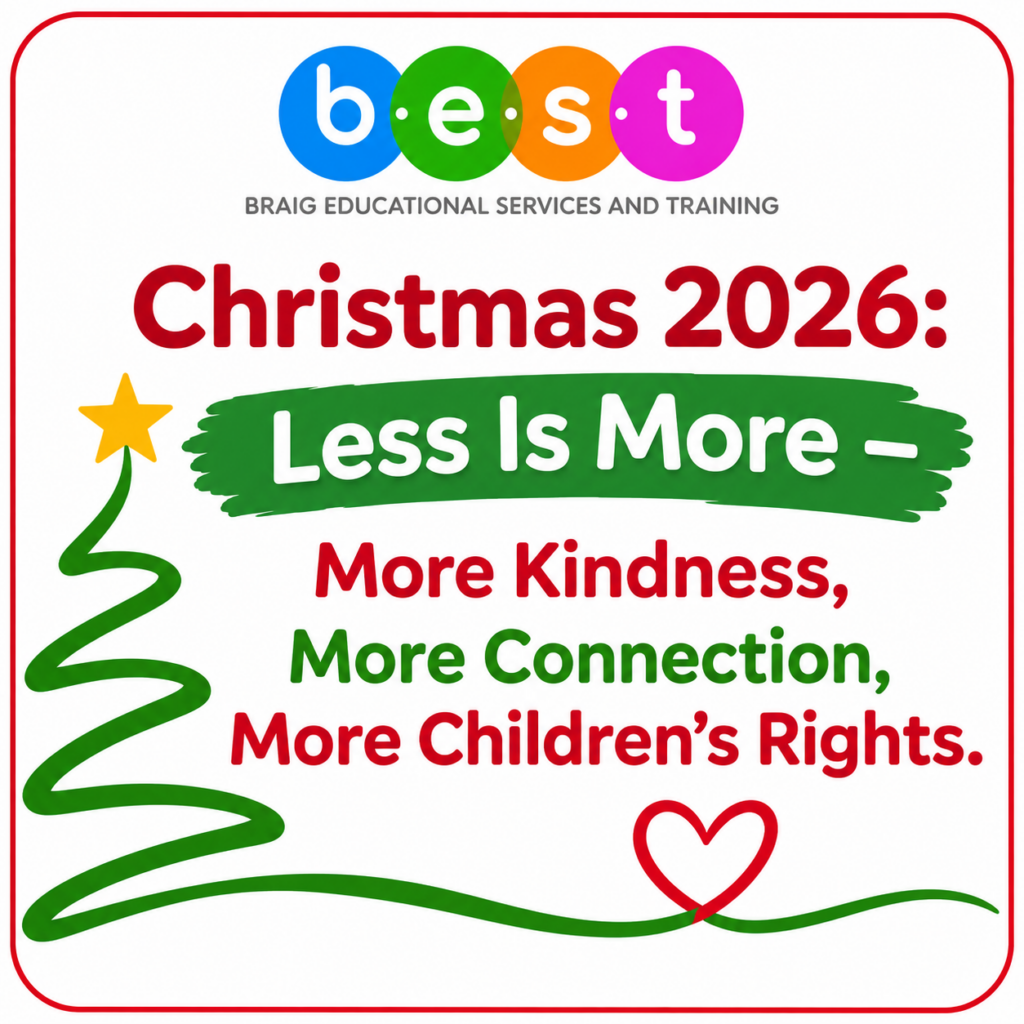
For Christmas 2026, BEST Childcare Consulting encourages services to embrace a simple message: Less pressure. Less preparation. Less waste. Less expectation. More kindness. More connection. More inclusion. More children’s rights. Let’s make this Christmas memorable for the right reasons — for children, families and the educators who care for them. And as always, use these inspirations to strengthen your service’s everyday practices throughout the whole year, not just during the festive season. Genuine quality improvement comes from embedding these values into daily experiences, relationships and decision-making.
Contact us TODAY!