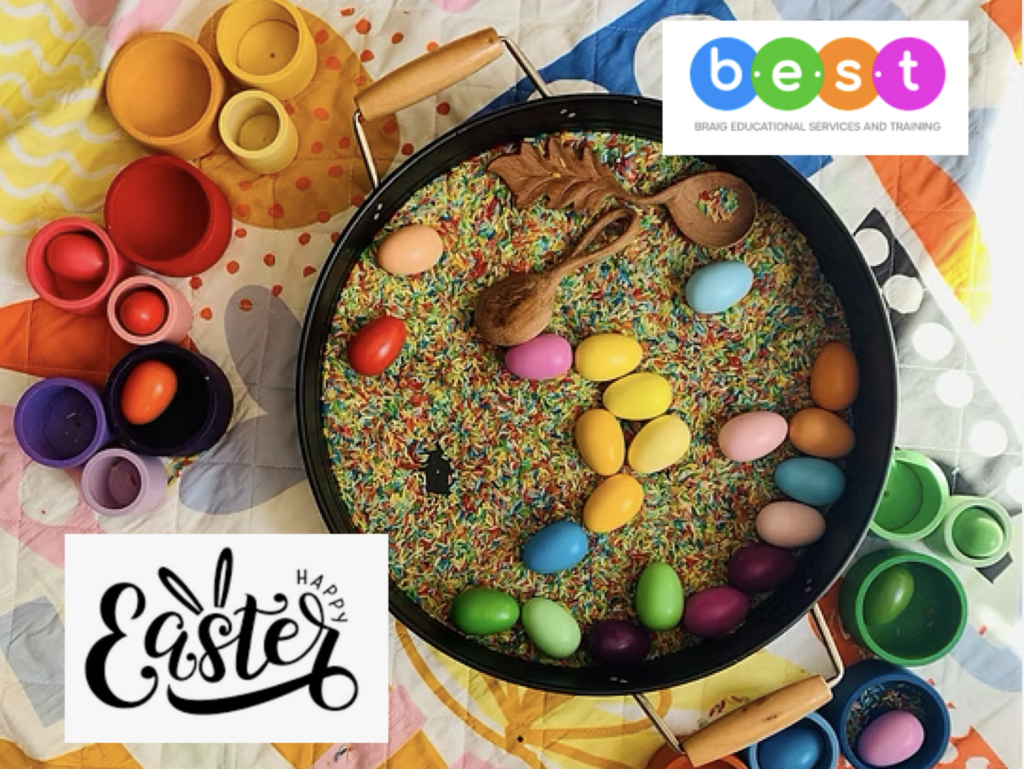
Easter can provide rich opportunities for learning in early childhood settings. However, traditional Easter activities in education and care services often rely on templates, identical crafts and teacher-directed outcomes. When every bunny, chick or egg looks the same, it can suggest that the adult controlled the experience rather than the child’s learning process.
High-quality practice under the National Quality Framework and the Early Years Learning Framework V2.0 requires educators to design learning experiences that respond to children’s interests, agency and curiosity.
Instead of asking: “What Easter craft will children make?”
Educators can ask: “What investigations, play opportunities and conversations might Easter inspire?”
When children are provided with open-ended materials, time, and genuine choice, Easter becomes a catalyst for creativity, inquiry, collaboration and meaningful learning.