By BEST Childcare Consulting
National Reconciliation Week invites us to pause—not just to acknowledge history, but to feel it, honour it, and walk forward together with purpose. It is a time to recognise the strength, resilience, and enduring cultures of Aboriginal and Torres Strait Islander peoples, while also holding space for the truths of our shared history. The significance of the 1967 Referendum and the Mabo Decision reminds us that change is possible when people come together—but also that the journey is ongoing.
In early childhood education, this responsibility sits gently, yet powerfully, in our hands. Every conversation, every story shared, every moment of respect we model becomes part of how children understand the world and their place within it. Reconciliation is not about having all the answers—it is about showing up with openness, humility, and a willingness to learn alongside children.
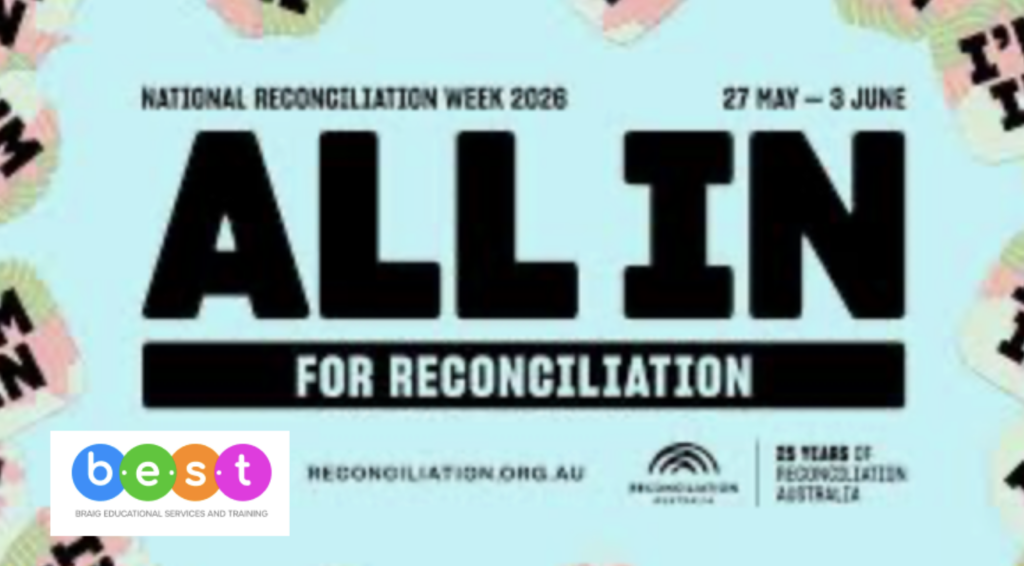
When we say we are “ALL IN for Reconciliation,” we are committing to more than a week of activities. We are committing to creating spaces where every child feels a deep sense of belonging, where cultures are honoured authentically, and where respect is lived—not just spoken. It is in the small, everyday moments—listening deeply, valuing each voice, caring for the land—that reconciliation truly begins.
Talking to Young Children About Reconciliation
Talking to young children about reconciliation begins with what they already understand—kindness, fairness, belonging, and respect. Rather than focusing on complex historical detail, educators can gently introduce ideas such as “Aboriginal and Torres Strait Islander peoples are the First Peoples of Australia” and “we show respect by listening, learning, and caring for Country and each other.” Using stories, visuals, and everyday language helps children connect meaningfully. For example, you might say, “We are learning how to take care of the land, just like Aboriginal people have done for a very long time.” Books, songs, and shared discussions create safe opportunities for children to ask questions and express their thoughts. It is also important to model honesty—acknowledging that Australia’s history includes both pride and hurt—while keeping explanations age-appropriate and grounded in hope, respect, and working together. Through this, children begin to understand reconciliation as building friendships and fairness for everyone.
Embedding Reconciliation in Everyday Practice
Reconciliation is most powerful when it is visible in the everyday, not just during a specific week or event. As early childhood educators, this means embedding Aboriginal and Torres Strait Islander perspectives into routines, environments, and interactions in genuine and consistent ways. This might include beginning each day with an Acknowledgement of Country, using inclusive and respectful language, incorporating Indigenous perspectives into play and learning experiences, and ensuring resources reflect authentic cultures rather than stereotypes. It also means engaging in ongoing critical reflection—questioning whose voices are represented, how perspectives are shared, and whether practices are culturally respectful. Building relationships with families and local communities strengthens this work, ensuring it is informed, relevant, and meaningful. Importantly, reconciliation is also demonstrated through how educators model values—listening deeply, showing respect, valuing diversity, and standing up for fairness—so children see these principles in action every day.
Educational Programming Ideas
1. Acknowledgement of Country (Daily Practice)
- Embed a meaningful, child-friendly Acknowledgement of Country into your daily routine.
- Use visuals, gestures, and simple language to support understanding.
- Invite children to contribute their own words over time.
Learn more:
- Reconciliation Australia – Narragunnawali: https://www.narragunnawali.org.au
2. Storytelling & Indigenous Literature
- Read stories by Aboriginal and Torres Strait Islander authors.
- Use storytelling to explore connection to land, family, and culture.
- Suggested books:
- Welcome to Country – Aunty Joy Murphy
- My Country – Ezekiel & Sally Morgan
- Somebody’s Land – Adam Goodes
Find resources:
- Indigenous Literacy Foundation: https://www.indigenousliteracyfoundation.org.au
3. Art Inspired by Country
- Explore natural materials (leaves, sand, ochre tones).
- Focus on connection to land rather than copying cultural symbols.
- Discuss respect for cultural ownership and meaning.
Guidance:
- Early Childhood Australia Reconciliation resources: https://www.earlychildhoodaustralia.org.au
4. Music, Movement & Language
- Introduce songs or simple words from local Aboriginal languages (where appropriate).
- Use movement and rhythm to explore storytelling and connection.
Explore:
- AIATSIS Map of Indigenous Australia: https://aiatsis.gov.au
5. Yarning Circles
- Create a safe, respectful space for children to share thoughts and feelings.
- Use a talking object to support turn-taking and listening.
- Build understanding of respect, voice, and community.
6. Community Connections
- Invite local Aboriginal Elders or community members (where appropriate and respectful).
- Engage in authentic partnerships rather than one-off experiences.
- Participate in local community events during the week.
Support:
- Reconciliation Australia: https://www.reconciliation.org.au
QIP write up
Quality Area 1 – Educational Program and Practice
Exceeding Theme 1: Practice is embedded in service operations
Reconciliation was consistently embedded within the educational program, with Aboriginal and Torres Strait Islander perspectives integrated into daily experiences, intentional teaching, and spontaneous learning opportunities. Educators ensured that cultural learning was not isolated to specific events but was part of ongoing curriculum planning. Daily practices, such as Acknowledgement of Country and inclusive storytelling, reflected a strong and consistent commitment to reconciliation.
Exceeding Theme 2: Practice is informed by critical reflection
Educators engaged in regular critical reflection to evaluate how authentically Indigenous perspectives were represented within the program. Discussions focused on moving beyond tokenistic experiences and ensuring cultural learning was respectful, accurate, and meaningful. Reflection also informed adjustments to teaching strategies, strengthening educator confidence and cultural responsiveness.
Exceeding Theme 3: Practice is shaped by meaningful engagement with families and community
The program was shaped through active engagement with families and, where possible, local Aboriginal and Torres Strait Islander community members. Educators sought input to ensure cultural perspectives were relevant and respectfully shared. These partnerships strengthened the authenticity of the program and supported a deeper understanding of reconciliation within the service.
Quality Area 2 – Children’s Health and Safety
Exceeding Theme 1: Practice is embedded in service operations
A culturally safe environment was embedded in daily practice, supporting children’s emotional wellbeing and sense of belonging. Educators consistently promoted respect, inclusion, and identity, recognising that wellbeing is strengthened when children feel seen and valued. Practices ensured all children experienced a safe and supportive environment.
Exceeding Theme 2: Practice is informed by critical reflection
Educators critically reflected on how cultural safety contributes to children’s overall health and wellbeing. This included reviewing routines, interactions, and environments to ensure they were inclusive and respectful of diverse identities. Reflection supported continuous improvement in creating environments where all children felt secure.
Exceeding Theme 3: Practice is shaped by meaningful engagement with families and community
Families contributed to conversations about cultural safety and wellbeing, sharing perspectives that informed practice. These insights supported educators to better understand children’s backgrounds and needs. Collaboration ensured that health and safety practices were inclusive and responsive.
Quality Area 3 – Physical Environment
Exceeding Theme 1: Practice is embedded in service operations
The physical environment consistently reflected Aboriginal and Torres Strait Islander cultures through the use of authentic resources, natural materials, and respectful displays. Educators ensured that the environment supported children’s connection to land, culture, and community. These elements were thoughtfully integrated into both indoor and outdoor spaces.
Exceeding Theme 2: Practice is informed by critical reflection
Educators regularly reviewed the environment to ensure cultural representations were accurate and meaningful. Reflection focused on avoiding stereotypes and ensuring resources were used respectfully. This process supported ongoing improvements to the learning environment.
Exceeding Theme 3: Practice is shaped by meaningful engagement with families and community
Input from families and community members informed the selection and use of cultural resources within the environment. Educators sought guidance to ensure representations were appropriate and respectful. These partnerships strengthened the authenticity and relevance of the environment.
Quality Area 4 – Staffing Arrangements
Exceeding Theme 1: Practice is embedded in service operations
A shared commitment to reconciliation was embedded across the staff team, with educators consistently demonstrating inclusive and respectful practices. Reconciliation principles were evident in daily interactions, collaboration, and professional conduct. This created a unified approach across the service.
Exceeding Theme 2: Practice is informed by critical reflection
Educators engaged in reflective discussions to build their understanding of reconciliation and cultural responsiveness. Professional learning opportunities supported the development of knowledge and confidence. Reflection informed improvements in practice and strengthened team alignment.
Exceeding Theme 3: Practice is shaped by meaningful engagement with families and community
Collaboration with families and community members supported educators to deepen their cultural understanding. These relationships informed staff practices and strengthened the service’s approach to reconciliation. Educators valued and incorporated community perspectives into their work.
Quality Area 5 – Relationships with Children
Exceeding Theme 1: Practice is embedded in service operations
Respectful and inclusive relationships were consistently embedded in daily interactions with children. Educators supported each child’s identity, culture, and sense of belonging. Practices ensured children felt safe, valued, and connected.
Exceeding Theme 2: Practice is informed by critical reflection
Educators reflected on their interactions to ensure they upheld equity, respect, and cultural responsiveness. Reflection supported educators to recognise and address any unconscious bias. This strengthened the quality of relationships and interactions.
Exceeding Theme 3: Practice is shaped by meaningful engagement with families and community
Children’s learning and relationships were enriched through connections with families and community. Educators incorporated family knowledge and cultural perspectives into their interactions with children. This supported stronger, more meaningful relationships.
Quality Area 6 – Collaborative Partnerships with Families and Communities
Exceeding Theme 1: Practice is embedded in service operations
Strong partnerships with families were embedded in daily practice, with open communication and collaboration consistently demonstrated. Families were actively involved in reconciliation initiatives and cultural experiences. This created a shared sense of purpose and belonging.
Exceeding Theme 2: Practice is informed by critical reflection
Educators critically reflected on how effectively they engaged with families and community. Reflection identified opportunities to strengthen inclusivity and ensure all voices were heard. This informed improvements in communication and engagement strategies.
Exceeding Theme 3: Practice is shaped by meaningful engagement with families and community
Ongoing collaboration with families and community members shaped the service’s approach to reconciliation. Educators sought input, feedback, and participation to ensure practices were meaningful and respectful. These partnerships strengthened community connections.
Quality Area 7 – Governance and Leadership
Exceeding Theme 1: Practice is embedded in service operations
Leadership embedded reconciliation into the service philosophy, policies, and daily operations. Clear expectations and consistent practices ensured reconciliation was prioritised across all areas of the service. This created a strong foundation for ongoing commitment.
Exceeding Theme 2: Practice is informed by critical reflection
Leaders engaged in ongoing critical reflection to evaluate the service’s approach to reconciliation. Reflection informed strategic planning and continuous improvement. This ensured reconciliation remained a meaningful and evolving focus.
Exceeding Theme 3: Practice is shaped by meaningful engagement with families and community
Leadership fostered strong connections with families and community to guide the service’s reconciliation journey. Input from these partnerships informed decision-making and practice. This ensured the service’s approach was authentic, respectful, and responsive.
Links and Resources
- Reconciliation Australia: https://www.reconciliation.org.au
- Narragunnawali (Reconciliation in Education): https://www.narragunnawali.org.au
- AIATSIS Map of Indigenous Australia: https://aiatsis.gov.au
- Indigenous Literacy Foundation: https://www.indigenousliteracyfoundation.org.au
- Early Childhood Australia: https://www.earlychildhoodaustralia.org.au
- Australians Together https://australianstogether.org.au
BEST Childcare Consulting
Reconciliation is not a destination—it is a journey we walk every day, alongside children, families, and community. In early childhood, we hold a powerful opportunity to shape future generations who value respect, equity, and truth. When we embed these principles authentically, we are not just meeting standards—we are creating lasting change.
As always, use these inspirations to lead your service throughout the whole year in your everyday practices to truly earn an exceeding rating.
Contact us TODAY.