By BEST Childcare Consulting
Every child deserves to feel seen, heard, safe, and valued—not just occasionally, but in every moment of their day. When we intentionally teach children about their rights, we are not introducing something new—we are giving language to what they already feel and deserve.
The United Nations Convention on the Rights of the Child (UNCRC) reminds us that children are not passive participants in their world; they are capable, competent individuals with voices that matter.
Through your intentional teaching, learning stories, and adult action guides, it is evident that children are not only learning about their rights—they are living them. Whether expressing identity, contributing to decisions, using rights-based language, or setting personal boundaries, these experiences create the foundation for lifelong wellbeing, respect, and agency.
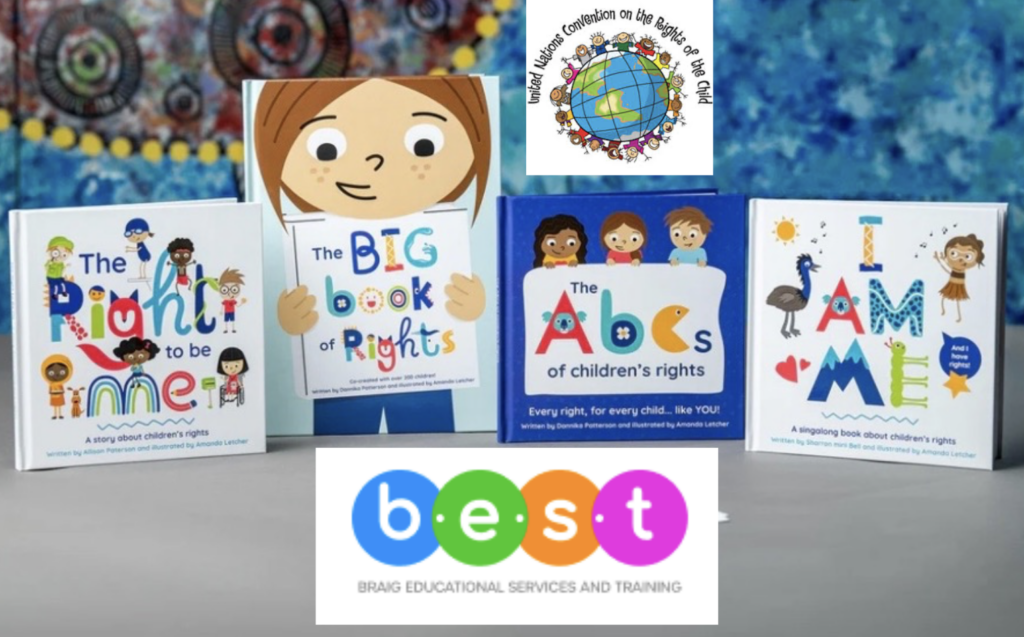
Four main rights books that have been selected to be best resources for teaching children. I Am Me, The Big Book of Rights, The ABCs of Children’s Rights, and The Right to Be Me. If you are looking to get started or strengthen your practice, you are warmly invited to reach out—emailjennifer@braig.com.au and you will receive a starter learning story and an Adult Actions Guide for each book, supporting you to confidently implement children’s rights in your program from day one.
Bringing Children’s Rights to Life: Recommended Books and Getting Started
These books, I Am Me, The Big Book of Rights, The ABCs of Children’s Rights, and The Right to Be Me, are powerful, intentionally designed resources that translate the principles of children’s rights into language and experiences that young children can genuinely understand and connect with. Developed by Children’s Rights Queensland, these books support children to explore identity, voice, safety, fairness, and belonging through engaging stories, illustrations, and relatable scenarios. For example, The Big Book of Rights presents all 54 rights in a child-friendly and accessible way, encouraging meaningful conversations between children, educators, and families. Together, this collection forms a strong foundation for embedding rights-based practice in early childhood settings, helping children not only learn about their rights but actively live them in everyday interactions.
These books can be purchased directly through the Children’s Rights Shop at this link Shop Children’s Rights Books
BEST freebie for you
I Am Me, The Big Book of Rights, The ABCs of Children’s Rights, and The Right to Be Me
If you are looking to get started or strengthen your practice, you are warmly invited to reach out—emailjennifer@braig.com.au and you will receive a starter learning story and an Adult Actions Guide for each book, supporting you to confidently implement children’s rights in your program from day one.
What are the Rights of the Child?
The rights of the child are a set of fundamental entitlements outlined in the United Nations Convention on the Rights of the Child, a global agreement that sets out what children need to grow, learn, and live safely with dignity and respect. These rights cover all aspects of a child’s life—including their right to be safe, to be heard, to learn, to play, to have their identity respected, and to express their thoughts and feelings. The Convention includes 54 articles that recognise children as individuals with their own rights, not just as passive recipients of care. Importantly, these rights apply to every child, everywhere, without discrimination, ensuring that all children have equal opportunities to thrive.
Why Do We Teach Children About Their Rights?
Teaching children about their rights is essential practice within both the Early Years Learning Framework and the National Quality Standard, as these frameworks position children as capable, active participants with agency, identity, and voice. The United Nations highlights that children’s rights are necessary for them to “develop to their full potential” and be recognised as individuals within their families and communities. By embedding rights-based teaching, educators support children to build confidence, understand fairness, develop respectful relationships, and advocate for themselves and others. This approach also strengthens protective behaviours, emotional wellbeing, and inclusion—key elements of quality practice required across the NQS. Ultimately, teaching children about their rights ensures they don’t just experience care, but experience respect, belonging, and genuine participation every day.
Educational Programming Ideas
1. Identity & Belonging (Article 8)
Activity: “All About Me” collage using photos, drawings, and cultural symbols
Extend: Mirror play, family photo discussions, and identity conversations
Use this simple, child-friendly activity to support children to explore who they are and what makes them unique.
Link: https://www.education.com/activity/article/all-about-me-collage/
2. Voice & Participation (Article 12)
Activity: Children’s meeting circle with voting (e.g., choosing play spaces or resources)
Extend: Create a “Children’s Ideas Board” where children contribute ideas daily
This resource supports understanding of children’s participation and voice in decision-making.
Link: https://www.unicef.org/child-rights-convention/child-participation
3. Rights Language in Everyday Play
Activity: Create a “Rights Wall” using simple phrases (e.g., “I have the right to feel safe”)
Extend: Use visual cards and revisit during conflict resolution and group discussions
This Australian resource supports teaching sharing, fairness, and respectful interactions.
Link: https://raisingchildren.net.au/preschoolers/behaviour/sharing
4. Feelings, Consent & Boundaries (Articles 13 & 16)
Activity: Role play using puppets to practise saying “yes” and “no”
Extend: Use emotion cards, calming spaces, and discussions about personal boundaries
This evidence-based Australian resource supports emotional literacy and wellbeing.
Link: https://beyou.edu.au/early-learning/educators/practice/learning-about-emotions
5. Fairness & Inclusion (Article 2)
Activity: Group discussions about fairness using real-life scenarios
Extend: Cooperative games that require sharing, turn-taking, and teamwork
This resource supports teaching children about fairness, inclusion, and social skills.
Link: https://raisingchildren.net.au/preschoolers/behaviour/friends-friendship/sharing-learning-to-share
QIP Write-Up
QA1 – Educational Program and Practice
Practice was informed by critical reflection
Educators critically reflected on the accessibility and relevance of resources used to support rights-based learning, identifying the need to utilise current, free, and evidence-based materials. This reflection strengthened intentional teaching practices, ensuring children’s rights were embedded in meaningful and developmentally appropriate ways.
Practice was shaped by meaningful engagement with families and/or community
Families were provided with updated, accessible resources to support continuity of rights-based learning at home. This enabled shared understanding of concepts such as identity, participation, fairness, and emotional wellbeing.
Practice was embedded in service operations
Rights-based programming was consistently embedded through daily experiences such as identity exploration, children’s meeting circles, and rights language displays, ensuring alignment between planning, implementation, and reflection.
QA2 – Children’s Health and Safety
Practice was informed by critical reflection
Educators reflected on how to better support children’s emotional safety and wellbeing through contemporary frameworks, strengthening teaching around feelings, consent, and boundaries.
Practice was shaped by meaningful engagement with families and/or community
Families were supported with practical strategies and shared language around emotional regulation, personal safety, and children’s rights, ensuring consistent approaches across home and care environments.
Practice was embedded in service operations
Children’s rights to feel safe, express emotions, and set boundaries were embedded through responsive interactions, role play, and daily teaching moments using consistent rights-based language.
QA3 – Physical Environment
Practice was informed by critical reflection
Educators reflected on how the environment could better promote children’s agency and participation, leading to the inclusion of visual supports such as rights displays and accessible documentation of children’s ideas.
Practice was shaped by meaningful engagement with families and/or community
Family input was incorporated into the environment through identity displays, photos, and cultural materials, strengthening children’s sense of belonging and connection.
Practice was embedded in service operations
Learning environments were intentionally designed to support choice, collaboration, quiet spaces, and inclusive play, reflecting children’s rights to participate and feel safe.
QA4 – Staffing Arrangements
Practice was informed by critical reflection
Educators engaged in collaborative discussions to ensure consistent understanding and implementation of rights-based approaches, particularly when introducing updated and accessible resources.
Practice was shaped by meaningful engagement with families and/or community
Ongoing communication with families supported a shared commitment to respectful, rights-focused interactions and strengthened educator confidence in discussing children’s rights.
Practice was embedded in service operations
A consistent, team-wide approach to using rights-based language and strategies was embedded across all educator interactions and routines.
QA5 – Relationships with Children
Practice was informed by critical reflection
Educators reflected on how their interactions supported children’s voice, agency, and emotional expression, strengthening practices that prioritise listening and respectful communication.
Practice was shaped by meaningful engagement with families and/or community
Family insights informed educators’ understanding of each child’s preferences, identity, and emotional needs, enhancing responsive and respectful relationships.
Practice was embedded in service operations
Children’s rights to be heard, respected, and included were consistently upheld through practices such as group discussions, collaborative decision-making, and conflict resolution strategies.
QA6 – Collaborative Partnerships with Families and Communities
Practice was informed by critical reflection
Educators reflected on the importance of providing families with accessible, high-quality information, leading to the intentional sharing of trusted resources.
Practice was shaped by meaningful engagement with families and/or community
Families were actively engaged in conversations about children’s rights, with opportunities to extend learning at home using shared strategies and resources.
Practice was embedded in service operations
Strong partnerships were maintained through regular communication, resource sharing, and collaborative approaches to supporting children’s rights and wellbeing.
QA7 – Governance and Leadership
Practice was informed by critical reflection
Leadership critically reflected on the importance of using current, credible, and accessible resources to support best practice and continuous improvement.
Practice was shaped by meaningful engagement with families and/or community
Community resources and national frameworks were utilised to strengthen the service’s commitment to advocacy, inclusion, and children’s rights.
Practice was embedded in service operations
Children’s rights were embedded into service philosophy, policies, and continuous improvement processes, ensuring alignment with the United Nations Convention on the Rights of the Child and national quality expectations.
Links and Resources
All About Me collage activity: https://www.education.com/activity/article/all-about-me-collage/
Child participation and voice: https://www.unicef.org/child-rights-convention/child-participation
Sharing and social skills (Raising Children Network): https://raisingchildren.net.au/preschoolers/behaviour/sharing
Learning about emotions (Be You): https://beyou.edu.au/early-learning/educators/practice/learning-about-emotions
Sharing and fairness strategies: https://raisingchildren.net.au/preschoolers/behaviour/friends-friendship/sharing-learning-to-share
United Nations Convention on the Rights of the Child overview: https://www.unicef.org/child-rights-convention
BEST Childcare Consulting
Teaching children about their rights is not an “add-on”—it is at the heart of quality early childhood practice. Through intentional teaching, respectful relationships, and meaningful engagement with families, we empower children to understand themselves, respect others, and confidently navigate their world.
Your learning stories and adult guides demonstrate this beautifully—children are not just learning about rights, they are living them every day.
By embedding children’s rights into every interaction, every space, and every experience, we are shaping a generation of confident, capable, and compassionate individuals.
As always, use these inspirations to lead your service throughout the whole year in your everyday practices to truly earn an exceeding rating.
Contact us TODAY.