
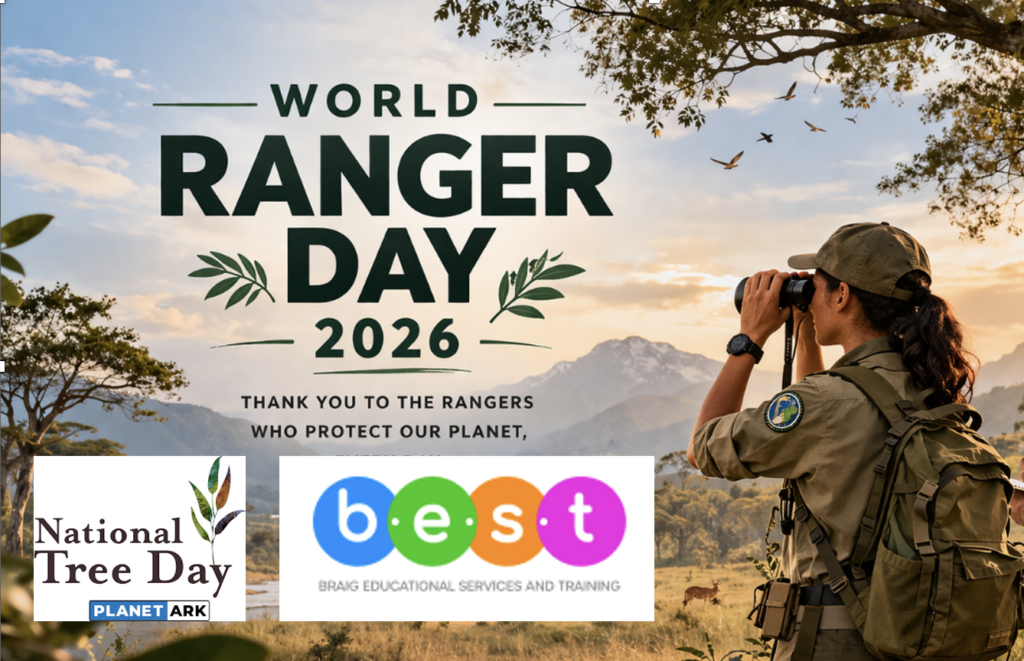
Perfect for National Tree Day (26 July 2026) & World Ranger Day (31 July 2026)
By BEST Childcare Consulting
There is something special about watching a child discover a tiny seedling, spot a bird in a tree, or carefully care for a living plant. These simple moments often become the foundation for a lifelong respect for nature and the environment.
National Tree Day and World Ranger Day provide wonderful opportunities for early childhood services to foster children’s connection with the natural world while supporting the principles of sustainability, environmental responsibility and caring for Country.
National Tree Day is Australia’s largest community tree-planting and nature care event, encouraging people of all ages to improve their local environment through planting and conservation activities. World Ranger Day recognises the dedicated park rangers and conservation workers who protect wildlife, cultural heritage, national parks and natural environments around Australia and across the globe.
Together, these events help children develop an understanding that every person has a role in caring for our planet. They also provide rich opportunities to explore Aboriginal and Torres Strait Islander perspectives, biodiversity, sustainability, community responsibility and the importance of protecting the natural environments we all share.
What is National Tree Day?
National Tree Day is coordinated by Planet Ark and encourages Australians to plant trees, restore habitats, improve biodiversity and care for local environments. Since its inception, millions of native trees, shrubs and grasses have been planted across Australia.
For young children, National Tree Day provides hands-on opportunities to learn about plant life cycles, habitats, sustainability and environmental responsibility.
What is World Ranger Day?
World Ranger Day is celebrated internationally on 31 July and honours the work of rangers who protect natural environments, wildlife, cultural heritage sites and national parks.
Rangers play a vital role in conservation, environmental education, cultural heritage protection, fire management and supporting healthy ecosystems. Their work helps ensure future generations can enjoy Australia’s unique landscapes, wildlife and cultural sites.
Why Caring for Country Matters
Aboriginal and Torres Strait Islander peoples have cared for Country for tens of thousands of years through deep cultural knowledge, sustainable practices and respectful relationships with land, water, plants, animals and people.
Early childhood services have an important role in helping children understand that caring for Country means respecting, protecting and nurturing the environment. These understandings align strongly with EYLF Outcome 2: Children are connected with and contribute to their world.
Educational Programming Ideas
Plant a Native Tree Project
Invite children to plant a native tree, shrub or flowering plant within the service grounds. Children can participate in preparing soil, watering plants and monitoring growth over time.
Learning opportunities include:
• Life cycles of plants
• Sustainability
• Responsibility and care
• Scientific observation
Resource:
https://treeday.planetark.org
Create a Children’s Ranger Station
Transform a learning area into a ranger headquarters complete with:
• Maps
• Binoculars
• Clipboards
• Animal identification cards
• Nature journals
Children can role-play protecting wildlife, monitoring habitats and caring for the environment.
Resource:
https://parksaustralia.gov.au
Explore Local Trees
Become tree detectives and investigate trees around the service.
Children can:
• Compare leaves
• Observe bark textures
• Measure tree trunks
• Observe wildlife habitats
• Create nature drawings
Resource:
https://australian.museum/learn
Create a Wildlife Habitat
Work with children to establish a wildlife-friendly area through:
• Native plants
• Bird water stations
• Insect hotels
• Pollinator gardens
Discuss how habitats support biodiversity and healthy ecosystems.
Resource:
https://www.earlychildhoodaustralia.org.au/our-work/sustainability-in-early-childhood/
National Park Discovery
Explore local national parks through excursions, photographs, videos and investigations.
Children can learn about:
• Native animals
• Ecosystems
• Conservation
• Ranger responsibilities
Resource:
https://exploreparks.dbca.wa.gov.au
Caring for Country Experiences
Investigate local Aboriginal perspectives about seasons, native plants and caring for Country.
Children can learn about:
• Respect for Country
• Sustainable land management
• Native species
• Community responsibility
Resource:
https://www.noongarculture.org.au
Kings Park Nature Investigations
Explore native Western Australian plants through virtual learning experiences, photographs and research projects.
Resource:
https://www.bgpa.wa.gov.au/kings-park/education
Environmental Action Projects
Invite children to become environmental leaders through:
• Litter collection projects
• Water conservation activities
• Garden care routines
• Wildlife observations
Resource:
https://www.coolaustralia.org
QIP write up
Quality Area 1 – Educational Program and Practice
Exceeding Theme 1: Practice was Embedded in Service Operations
Environmental education was consistently embedded throughout daily routines, play experiences and investigations. Children regularly engaged in authentic sustainability projects that encouraged responsibility, inquiry and environmental stewardship.
Exceeding Theme 2: Practice was Informed by Critical Reflection
Educators critically reflected on how environmental concepts were introduced and explored opportunities to deepen children’s understanding of conservation, biodiversity and caring for Country. These reflections strengthened inquiry-based learning experiences and sustainability outcomes.
Exceeding Theme 3: Practice was Shaped by Meaningful Engagement with Families and Community
Families contributed environmental knowledge, gardening expertise and sustainability ideas. Community connections strengthened children’s understanding of conservation and environmental responsibility.
Quality Area 2 – Children’s Health and Safety
Exceeding Theme 1: Practice was Embedded in Service Operations
Children actively participated in caring for gardens and outdoor environments while learning safe practices for interacting with nature. Educators supported wellbeing through regular outdoor experiences and connections with the natural environment.
Exceeding Theme 2: Practice was Informed by Critical Reflection
The team reflected on how outdoor learning environments promoted physical activity, wellbeing and environmental awareness. Improvements were implemented to strengthen children’s engagement with natural spaces.
Exceeding Theme 3: Practice was Shaped by Meaningful Engagement with Families and Community
Families shared ideas and resources that supported healthy outdoor learning environments. Community partnerships enhanced opportunities for nature-based experiences.
Quality Area 3 – Physical Environment
Exceeding Theme 1: Practice was Embedded in Service Operations
Natural environments, gardens and sustainability practices were embedded throughout the service. Children actively contributed to caring for plants, outdoor spaces and wildlife habitats.
Exceeding Theme 2: Practice was Informed by Critical Reflection
Educators reflected on how the environment could better support biodiversity, sustainability and nature play. Changes were implemented to increase children’s access to meaningful environmental experiences.
Exceeding Theme 3: Practice was Shaped by Meaningful Engagement with Families and Community
Families and community members contributed plants, resources and environmental expertise. These partnerships enhanced sustainability initiatives across the service.
Quality Area 4 – Staffing Arrangements
Exceeding Theme 1: Practice was Embedded in Service Operations
Educators consistently modelled sustainable practices and environmental responsibility. Team members worked collaboratively to support children’s investigations into nature, conservation and caring for Country.
Exceeding Theme 2: Practice was Informed by Critical Reflection
The team reflected on educator knowledge relating to sustainability and environmental education. Professional learning strengthened confidence and capability in delivering environmental programs.
Exceeding Theme 3: Practice was Shaped by Meaningful Engagement with Families and Community
Educators collaborated with community organisations, environmental groups and local experts to strengthen environmental learning opportunities for children.
Quality Area 5 – Relationships with Children
Exceeding Theme 1: Practice was Embedded in Service Operations
Children were empowered to become active participants in caring for their environment. Educators encouraged children’s ideas, leadership and decision-making throughout sustainability projects.
Exceeding Theme 2: Practice was Informed by Critical Reflection
Educators reflected on children’s interests and emerging understandings about nature and conservation. These reflections informed future investigations and learning experiences.
Exceeding Theme 3: Practice was Shaped by Meaningful Engagement with Families and Community
Children’s environmental interests were extended through family participation, community projects and local environmental initiatives.
Quality Area 6 – Collaborative Partnerships with Families and Communities
Exceeding Theme 1: Practice was Embedded in Service Operations
Environmental projects became a shared focus for children, families and educators. Sustainability practices were consistently promoted throughout the service community.
Exceeding Theme 2: Practice was Informed by Critical Reflection
The service reflected on opportunities to strengthen family engagement and community involvement in environmental initiatives. These reflections informed ongoing partnerships and projects.
Exceeding Theme 3: Practice was Shaped by Meaningful Engagement with Families and Community
Meaningful partnerships with environmental organisations, community groups and local experts enriched children’s understanding of conservation and sustainability.
Quality Area 7 – Governance and Leadership
Exceeding Theme 1: Practice was Embedded in Service Operations
Leadership actively promoted sustainability and environmental responsibility through policies, procedures and strategic planning. Environmental education was embedded within the service philosophy and everyday practice.
Exceeding Theme 2: Practice was Informed by Critical Reflection
Leaders regularly reviewed environmental goals, sustainability projects and community partnerships to ensure continuous improvement and meaningful outcomes for children.
Exceeding Theme 3: Practice was Shaped by Meaningful Engagement with Families and Community
Leadership fostered strong relationships with environmental organisations, Aboriginal community representatives and conservation groups to strengthen environmental education across the service.
Links and Resources
Planet Ark National Tree Day
https://treeday.planetark.org
Parks Australia
https://parksaustralia.gov.au
Explore Parks WA (Department of Biodiversity, Conservation and Attractions)
https://exploreparks.dbca.wa.gov.au
Kings Park Education Programs
https://www.bgpa.wa.gov.au/kings-park/education
Noongar Culture
https://www.noongarculture.org.au
Australian Museum Learning Resources
https://australian.museum/learn
Cool Australia Sustainability Resources
https://www.coolaustralia.org
Early Childhood Australia – Sustainability in Early Childhood
https://www.earlychildhoodaustralia.org.au/our-work/sustainability-in-early-childhood/
Early Years Learning Framework v2.0
https://www.acecqa.gov.au/nqf/national-law-regulations/approved-learning-frameworks
BEST Childcare Consulting
National Tree Day and World Ranger Day remind us that every child can become a protector of nature. Through meaningful experiences in gardens, outdoor environments and sustainability projects, children develop respect for Country, appreciation for biodiversity and an understanding that their actions can positively impact the world around them.
At BEST, we believe environmental education helps children develop a sense of belonging, responsibility and hope for the future. By nurturing children’s connection with nature today, we help create environmentally responsible citizens for tomorrow.
As always, use these inspirations to lead your service throughout the whole year in your everyday practices to truly earn an exceeding rating.
Contact us TODAY.