Category Archives: Childcare Compliance

What Changed in NQS 7.1.2 Management Systems — Practical Guide to What Services Must Do Now
In January 2026, further significant changes came into effect under the National Quality Standard, with Element 7.1.2 – Management Systems strengthened to clearly embed child safety as a governance and leadership responsibility. Systems are in place to manage risk and enable the effective management and operation of a quality service, included now is the phrase ‘that is child safe’.
These changes confirm that child safety must be intentionally designed, governed, monitored and continuously improved through management systems — not left to informal practices or individual judgement.
With the Guide to the National Quality Standard now spanning 692 pages, it is neither practical nor necessary for busy educators and leaders to digest every detail. What matters most is understanding what has changed, what assessors are now looking for, and what services need to do differently in practice.
BEST Childcare Consulting was proud to be part of the consultation group for the new national child protection training, providing sector-informed input into how these requirements translate into real, workable practice for early childhood services
This article provides a clear, assessment-ready breakdown of the strengthened wording in Element 7.1.2, translating each requirement into:
• practical actions services can implement immediately, and
• targeted training options to strengthen practice and evidence.

What Changed in NQS 2.2.3 Child Safety and Protection — Practical Guide to What Services Must Do Now
In January 2026, significant changes came into effect under the National Quality Standard, with the most prominent and far-reaching update occurring in Element 2.2.3 – Child Safety and Protection. These changes reflect a stronger national commitment to child safe cultures, clearer accountability for adults, and more explicit expectations around how services identify, prevent and respond to harm.

With the Guide to the National Quality Standard now spanning 692 pages, it is neither practical nor necessary for busy educators and leaders to digest every detail. What matters most is understanding what has changed, what assessors are now looking for, and what services need to do differently in practice.

BEST Childcare Consulting was proud to be part of the consultation group for the new national child protection training, providing sector-informed input into how these requirements translate into real, workable practice for early childhood services.

This article provides a clear, assessment-ready breakdown of the exact new and strengthened wording in Element 2.2.3, with each phrase explained through:

practical actions services can implement immediately, and

guidance on where to access appropriate training, if required.

At the core of these changes is a clear expectation that services maintain a consolidated, intentional approach to child safety training, where all educators, staff, relief educators, students and volunteers complete the National Child Safety Training as a baseline, supported by WA-specific mandatory reporting obligations and ongoing learning in protective behaviours, online safety, trauma-informed practice and cultural safety.

This summary is designed to help services move beyond compliance — and confidently demonstrate embedded, consistent and Exceeding-level practice under the upd

What you need to know about the Gender Undervaluation Determination (10 December 2025)

On 10 December 2025, the Fair Work Commission handed down a decision that deeply resonated across the early childhood education and care sector. It formally acknowledged what educators, leaders and families have known—and lived—for decades: the work of caring for, educating and protecting young children has been systematically undervalued, in large part because it is a female-dominated profession.

Known as the Gender Undervaluation Determination, this landmark decision brings long-overdue recognition to the skill, responsibility, emotional labour and professional judgement embedded in children’s services. It introduces formal changes to the Children’s Services Award 2010, reshaping classification structures and increasing minimum pay rates over time.

For early learning services, this moment represents far more than a pay rise. It is a meaningful step toward fair recognition, workforce sustainability, and the professional respect that educators deserve for the vital role they play in shaping children’s lives, families’ trust, and our broader community.

This article contains and explains all you need to do to get ready for the changes next year and QIP write ups you can use to demonstrate your exceeding practices.

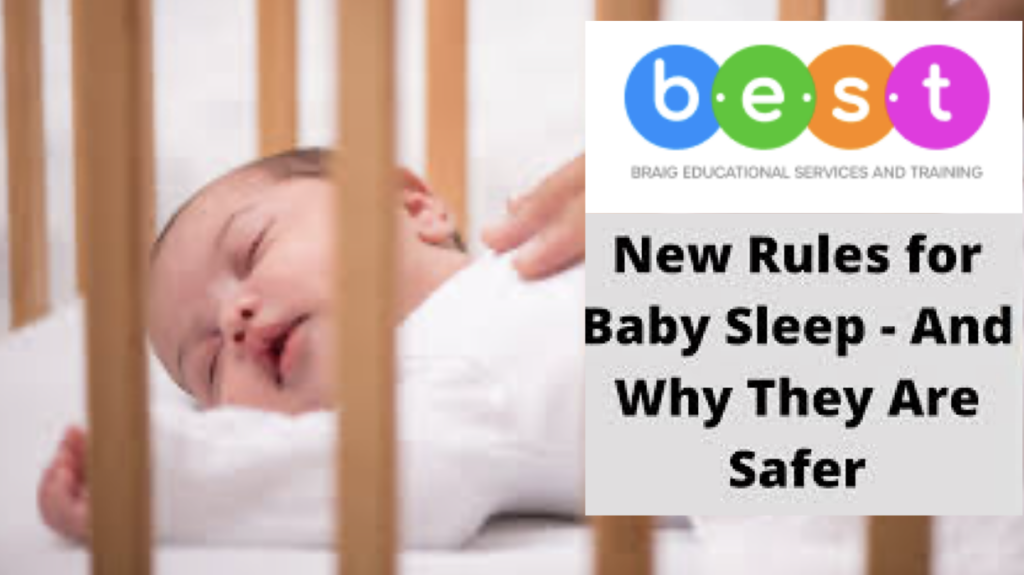
What Childcare Centres Need to Know About the New Infant Sleep Safety Standards Before 19 January 2026

Every baby deserves to drift into sleep in a space that is safe, stable, and carefully designed to protect them. In childcare, families trust us with their child during their most vulnerable moments—when they are resting, sleeping, and unable to advocate for themselves. As educators and leaders, we do not simply provide sleep environments; we provide reassurance, confidence, and peace of mind to families.

From 19 January 2026, all infant sleep equipment used within education and care services must meet new national safety requirements. These changes are not minor—they are about preventing suffocation, entrapment, overheating, falls and other tragic outcomes.

Moving early, planning with intention, and training our teams ensures that we honour the responsibility families place in us. By upgrading equipment, updating policies, and embedding safe-sleep practice into everyday routines, we do more than meet compliance—we actively protect children.

This article explains what has changed, what your service must do, and how to prepare confidently.

The 3 Day CCS Guarantee — Supporting Families, Educators, and Services for January 2026

From 5 January 2026, the Australian Government will introduce the 3 Day Guarantee, giving all CCS-eligible families access to a minimum of 72 hours of subsidised early childhood education and care (ECEC) per fortnight, regardless of their activity-test hours.
This is one of the most significant CCS reforms in years — and it will affect families, educators, operations, finances, CCS processing, session structures and occupancy.
This comprehensive BEST article explains everything childcare services need to know about the 3 Day Guarantee starting 5 January 2026. It covers:
• What the changes mean for families, educators and services
• What families must do before January 2026
• What services need to do now and in January
• How to prepare your childcare software for CCS changes
• Whether new CWAs are required (yes, for most families)
• How to use these reforms to increase occupancy
• Full QIP entries for QA6 and QA7, already written and ready to insert into your service’s QIP

Promoting eSafety in Early Childhood Education to Earn Exceeding Rating

In today’s connected world, even our youngest children are growing up surrounded by digital devices, streaming content, and interactive toys. For children under five, technology can open doors to creativity, connection, and discovery — but only when guided by safe, respectful, and intentional practices.

As educators, we hold a powerful role in shaping children’s early experiences with technology. By modelling balanced, mindful, and secure digital use, we help children build lifelong habits of safety, kindness, and confidence online. The eSafety Commissioner’s Early Years program is an invaluable national resource supporting this journey (www.esafety.gov.au).

For services striving for an Exceeding rating under the National Quality Framework (NQF), embedding proactive and reflective online-safety practices is not only a compliance measure — it’s a statement of care, leadership, and excellence. When we nurture digital wellbeing alongside emotional, physical, and cultural safety, we empower children to explore their world — both online and offline — with curiosity and confidence.

Promoting Psychosocial Safety to Earn an Exceeding rating

Do Childcare Centres Need to Consider Psychosocial Safety?
Absolutely — and it’s now both a legal obligation and a marker of high-quality care.
Psychosocial safety refers to creating a workplace and learning environment that protects everyone’s mental, emotional, and social wellbeing. It ensures educators, children, and families feel respected, supported, and free from bullying, overwork, or emotional harm.
Under the Work Health and Safety (General) Regulations 2022 (WA) and WorkSafe WA’s Code of Practice: Psychosocial Hazards in the Workplace, all early childhood education and care (ECEC) services must identify, assess, and manage psychosocial risks. These requirements sit alongside your obligations under the Education and Care Services National Law and Regulations.
A psychosocially safe service isn’t just compliant — it’s calm, consistent, and connected. When educators feel valued and supported, children thrive in emotionally secure environments that foster learning and belonging.

How do I prepare for a CCS Spot Check?

In August 2025, the Australian Government released the Strengthening Regulation of Early Childhood Education and Care Safety through the Child Care Subsidy (CCS) – Provider Guidelines, marking a major shift in how safety, quality, and funding integrity are regulated across the early childhood education and care (ECEC) sector.

Under this strengthened framework, CCS approval is no longer just about meeting administrative requirements — it’s about demonstrating a whole-of-service commitment to safety, quality assurance, and governance accountability. The Guidelines empower the Department of Education to use data analytics, risk profiling, and unannounced CCS spot checks to verify that services receiving federal funding are operating safely, ethically, and transparently.

For approved providers and nominated supervisors, this framework acts as both a compliance roadmap and a reflection tool. It encourages services to regularly self-assess their systems — reviewing incident management, staff suitability, documentation accuracy, and financial integrity before any issues arise.

A practical way to prepare is through the Commonwealth’s free Geccko online training platform (Get Early Childhood Compliance Knowledge Online). Geccko helps educators, leaders, and administrators understand their obligations under the Family Assistance Law (FAL) — covering topics such as enrolment integrity, session reporting, gap-fee requirements, and governance responsibilities. Completion certificates can also serve as evidence of staff competence and proactive compliance during a CCS spot check.

Embedding both the CCS Provider Guidelines and Geccko training outcomes into your Quality Improvement Plan (QIP) demonstrates Exceeding-level practice across multiple Quality Areas — particularly QA2 (Children’s Health and Safety), QA4 (Staffing), and QA7 (Governance and Leadership). It shows your service is not only compliant but continually reflecting, improving, and modelling a culture of safety and integrity at every level.

What you need to know about the New National Education Register, becoming mandatory from February 2026

Australia’s early childhood education and care (ECEC) sector is entering a new chapter in workforce accountability and child safety. Education Ministers have commissioned ACECQA to establish a National Educator Register—a landmark initiative designed to bring greater transparency, oversight, and consistency across the sector.

For the first time, every educator, teacher, coordinator, volunteer, and support worker in ECEC services will be recorded in a single national system. This foundational register, integrated into the National Quality Agenda IT System (NQA ITS), will provide regulators, providers, and families with confidence that the people caring for children are qualified, checked, and accountable.

More than just a compliance measure, the register represents a cultural shift. It is about lifting professional standards, closing gaps in child safety protections, and giving governments the data needed to better plan and support the workforce. While challenges exist—including privacy, workload, and consistency across states—the register is an opportunity for services to show leadership and commitment to exceeding practice.

Testing will begin in December 2025, with full mandatory use from February 2026. Now is the time for services to prepare, so that when the register launches, they are not only compliant but also positioned as leaders in child safety and professional excellence.

What you need to know about the changes to ECRU spot checks 

Starting November 2025, the Federal Government will significantly step up compliance monitoring, introducing an additional 1,600 unannounced spot checks every year across early childhood education and care (ECEC) services. This forms part of the Department of Education’s Joint Action on Child Safety, aimed at ensuring every service is meeting safety, quality, and governance requirements under the National Quality Framework (NQF).

For providers, this means being “audit ready” at all times — with current policies, staff records, attendance data, and safety procedures available for immediate inspection. The Education and Care Regulatory Unit (ECRU) has released updated compliance monitoring checklists (1 September 2025) for Long Day Care, OSHC, and Family Day Care services to help you prepare.