Category Archives: Childcare Compliance

World Children’s Day 20 November 2026: Are We Really Listening to Children? What WA’s New Child Safety Reforms Mean for Your service

With WA’s new child safety reforms commencing on 1 November 2026, World Children’s Day on 20 November is a timely reminder that children’s rights, voices and safety must be reflected in everyday childcare practice.

UNICEF’s 2026 campaign, “My Day. My Rights. My Future.”, encourages us to reflect on whether we are genuinely listening to children, respecting their personal boundaries and involving them in decisions that affect them.

Children’s rights go beyond policies and posters. From recognising babies’ non-verbal communication to responding to school-aged children’s concerns, every interaction provides an opportunity to strengthen children’s agency, safety and wellbeing.

Our latest BEST article explores practical programming ideas from Babies through to OSHC, children’s rights books and resources, connections to WA’s new child safety reforms, and QIP examples across all seven Quality Areas incorporating the three Exceeding themes.

A valuable opportunity for directors and educators to reflect on how children’s rights and Protective Behaviours are genuinely embedded in everyday practice.
Australian Food Safety Week 7 – 14 November 2026: Is Your Childcare Service Getting Food Safety Right?

Australian Food Safety Week 2026 highlights the importance of safe food practices across childcare services, not just in the kitchen. This year’s theme, “Raw Food – Know the Risk,”focuses on the dangers of raw and undercooked foods.

With the release of the NEW National Best Practice Guide for Early Childhood Food Environments on 22 September 2026 and recent ECRU warnings about preventable allergy incidents requiring urgent medical treatment, now is an important time for services to review their practices.

Three key areas for childcare directors to consider:

Food safety: Safe storage, preparation, cooking and serving.

Allergy management: Following medical management plans and dietary requirements.

Quality food environments: Supporting children’s independence, wellbeing, inclusion and learning.

Our latest BEST article brings together regulatory requirements, practical advice, new national guidance and FREE resources to help childcare services strengthen everyday food safety practices.

WA Child Safety Reforms Commence 1 November 2026: What Every Childcare Service Needs to Know

BEST Childcare Consulting attended the Department of Communities webinar on 21 October 2026, outlining the significant changes coming to WA’s Education and Care Services National Law and Regulations. The Department confirmed that the amendments will commence in WA on 1 November 2026, bringing WA into alignment with the national child safety reforms already introduced in other Australian jurisdictions.

For those who missed the webinar, we have compiled a comprehensive article covering the 15 key reform topics, important compliance deadlines, practical implications for WA services and links to official resources available NOW.

BEST has taken the information presented during the webinar, researched the relevant ACECQA and government resources currently available, and done our best to explain what these changes mean for WA services in clear, practical terms.

For those unable to attend, we have compiled a summary of the 15 key reform topics discussed, including important dates, practical implications and links to resources available NOW. 

We have also included other legislative changes mentioned during the webinar, particularly those affecting early childhood teacher requirements and educator-to-child ratios.

Some WA-specific details are still being finalised, so this article reflects information available as at 21 October 2026. Services should check the updated WA legislation once published.

BEST Childcare Consulting will continue sharing updates as new information becomes available to help WA services stay informed, prepared and compliant.

Please note: This article reflects the information presented by the Department of Communities on 21 October 2026, together with supporting ACECQA resources. It should not be interpreted as a complete explanation of the legislation. WA specific provisions and transitional arrangements must be checked against the updated legislation once published.

NEW National Best Practice Guide for Early Childhood Food Environments – Released 22 September 2026: What Childcare Services Need to Know

Developed by Edith Cowan University, this FREE national guide goes well beyond healthy eating and encouraging children to eat fruit and vegetables. It explores how mealtimes influence children’s emotional wellbeing, independence, relationships, cultural identity, inclusion and learning.

Why is this guide particularly important?

ECRU was involved in its development, and the guide includes dedicated information for regulatory and quality staff.

It connects with the National Quality Standard and EYLF, making it relevant to Assessment and Rating, critical reflection and quality improvement.

It contains six comprehensive modules and guidance for eight professional groups, including educators, cooks, directors and approved providers.

It provides FREE posters, family factsheets and practical professional development resources.

It is also relevant to educator training as the sector reviews and updates Certificate III and Diploma qualifications.

Importantly, this is not another regulation or compliance requirement. It is an evidence-informed resource that can help services understand and strengthen the quality of their everyday practices.

BEST encourages every childcare service to explore this guide and share it with their team. Even small changes to the language educators use around food and how they support children during mealtimes can make a meaningful difference.

Our latest BEST article explains what the guide contains, why ECRU’s involvement matters, how it complements existing resources such as Staying Healthy and Get Up & Grow, and practical starting points for different staff members.

ECRU’s Top 10 Childcare Non-Compliances in WA: What Services Need to Know Now (Oct 2026) 

ECRU has released its Top 10 non-compliances identified across WA education and care services from 1 July to 30 September 2026 — and there are some important messages for Approved Providers, Nominated Supervisors and Directors.

Our latest BEST article explains what each of the Top 10 means in practice, what ECRU may look at during a spot check, and what can happen when non-compliance is identified. We also explain WA’s move to the Applied National Law, how to know when the latest child-safety reforms actually commence in WA, and which of ECRU’s current Top 10 have links to Quality Area 2.

With QA2 becoming a condition of the Worker Retention Payment from 1 July 2027, and quality and safety also playing an increasing role in Commonwealth CCS oversight, understanding how these different systems fit together is becoming increasingly important.

Most importantly, an ECRU non-compliance does not automatically mean a Working Towards rating or loss of funding. This article separates the different processes and explains what they mean for WA services, so you can focus on the areas that are actually being identified and make informed decisions about your service’s compliance and quality improvement.

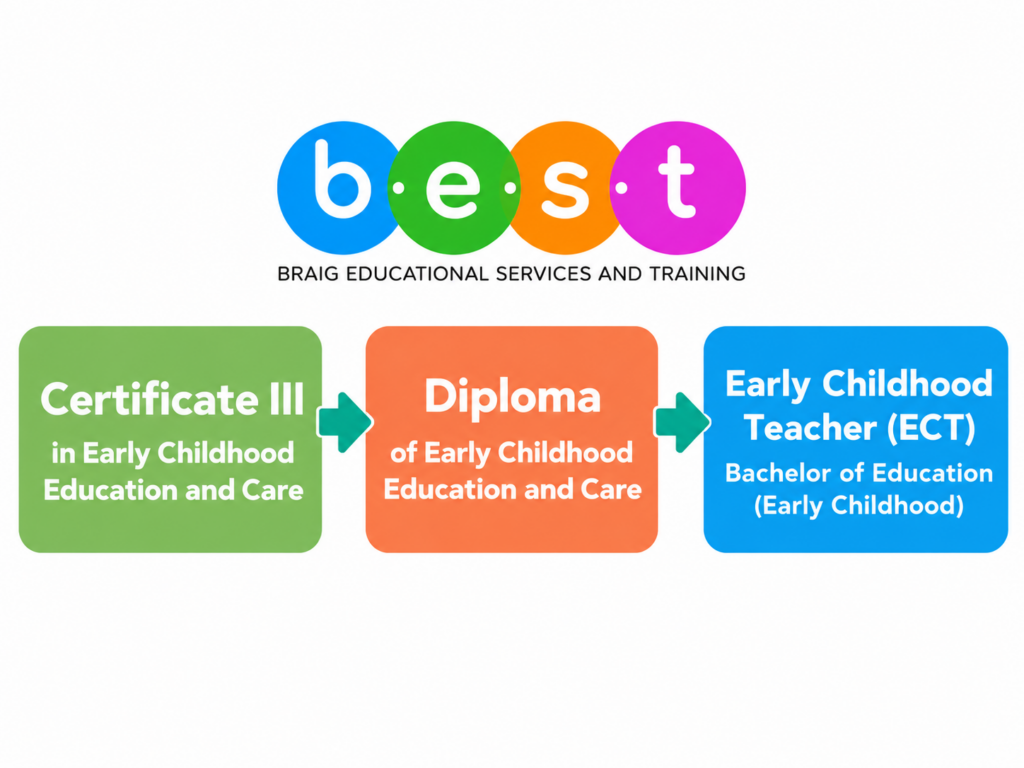
Childcare Qualification Requirements: How to Build Your Own Qualified Workforce from Certificate III to Diploma and ECT

Struggling to find enough qualified educators? There may be another option, grow your own. Our latest BEST article explains how childcare services can use the Certificate III to Diploma to a University Degree as an Early Childhood Teacher pathway facilitates a practical workforce and qualification compliance strategy.

We cover Fee Free Cert III and Diploma training in WA, traineeships and employer incentives, “actively working towards” qualification rules, Diploma ratio requirements, online/flexible study, Diploma-to-university advanced standing, recent pay improvements and the Worker Retention Payment (WRP).

Importantly, we look at this from a Director and Approved Provider perspective. How supporting staff to gain their next qualification can help meet qualification requirements, retain good educators, develop Room Leaders and build your future ECT workforce. Instead of continually asking “Where will we find qualified educators?”, consider who you can help become one. Certificate III to Diploma qualified and becoming a Room Leader, to enrolling in a university degree to become a qualified Early Childhood Teacher.

Read the full article for the pathway, compliance information and links to government resources.

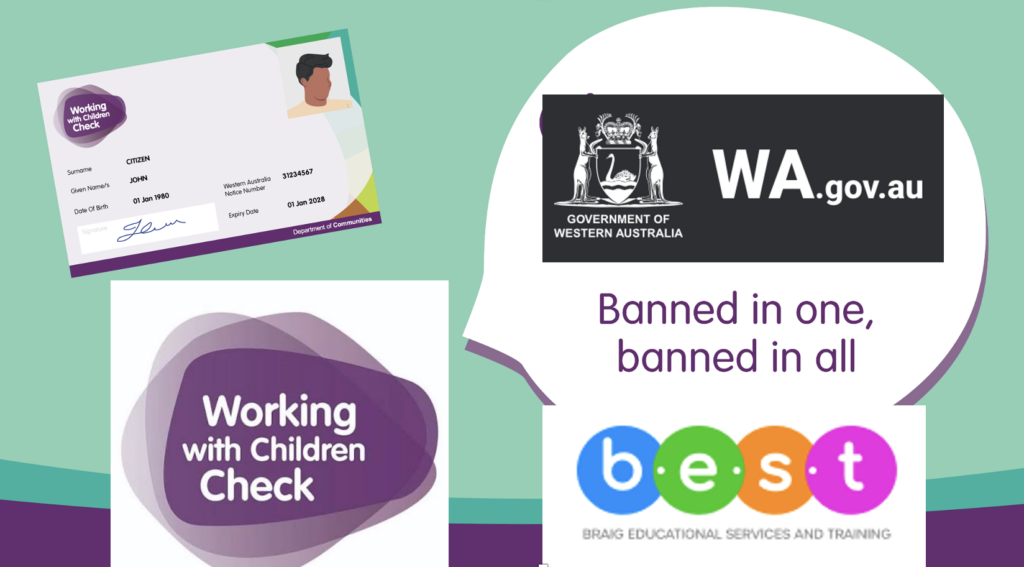
Working with Children Check (WWCC) Changes WA Sept 2026: Who Needs a WWC Check in Childcare and Who Is Exempt?

Working with Children Check (WWC) laws have changed in WA, from 17 September 2026, changes introduced through the Working with Children (Screening) Amendment Bill 2025 implement the mutual recognition of adverse interstate WWC decisions. For early childhood education and care services, this is an important child-safety development.

If a person receives an adverse WWC decision in another Australian state or territory, that decision is now recognised in WA. Put simply: “Banned in one, banned in all.”

For childcare services, this is also a timely reminder to check who needs a WWC Check, who may be exempt. Educators are relatively straightforward. But what about the parent helping with an excursion? A grandparent who volunteers each week? The plumber fixing a toilet? The photographer taking children’s photographs? A gardener working while children are outside? A university student? Or the instructor from an external children’s program such as dance, sport, music or fitness? The answer depends on the person’s role and circumstances.

Our latest BEST article breaks down what the changes mean and provides practical links, factsheets and templates to help services check their compliance.

ECRU Childcare Compliance Spot Checks WA 2026: What Is ECRU Looking For?

There has probably never been a stronger focus on child safety and compliance in early childhood education and care than there is right now. Regulatory changes, serious incidents and recent enforcement actions are encouraging all services to take a closer look at the everyday practices that keep children safe.

For Approved Providers, Nominated Supervisors and service leaders, it is worth asking: If ECRU arrived for an unannounced compliance visit tomorrow, would we feel confident in what they would see?

Compliance is more than having the right policies. It is visible in everyday practice—how educators supervise, manage transitions, conduct head counts, administer medication, maintain records, secure the environment and respond when something goes wrong.

Most services work incredibly hard to get these things right, but small gaps can develop over time. Finding and correcting them yourself is far better than having them identified following an incident or during a regulatory visit.

So, what should you be checking in 2026? This BEST guide looks at the key areas emerging from current ECRU information, with practical questions and links to official guidance and resources to help you identify and address any gaps.

ECRU and ACECQA guidance, tools and templates to help you address any gaps you find.

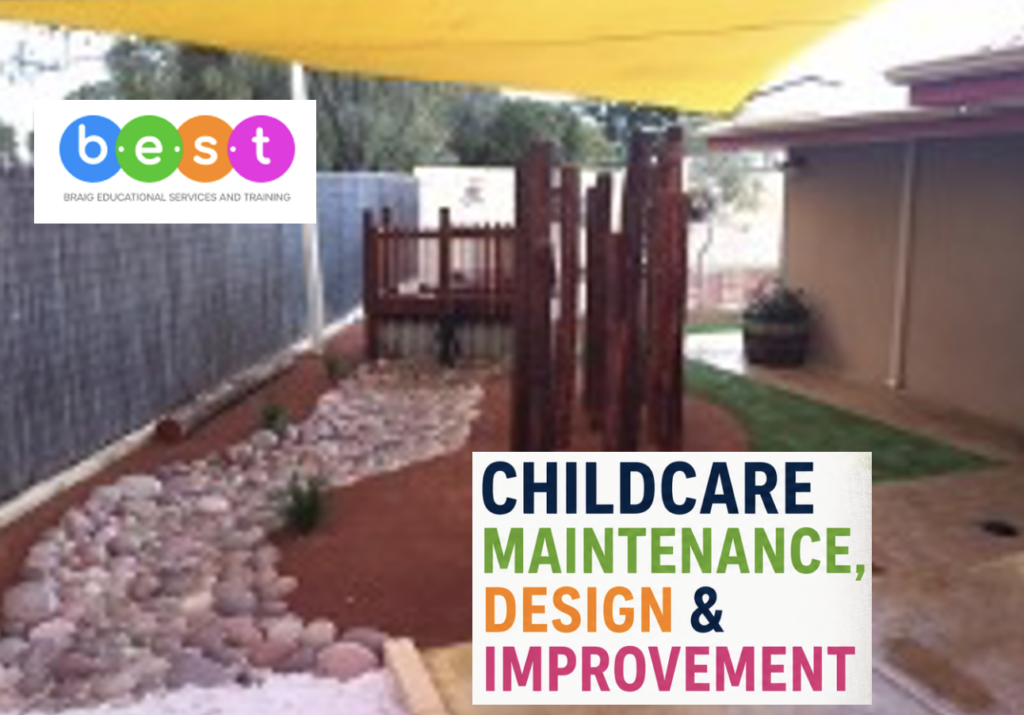
Childcare Maintenance, Playground Design & Repairs in Perth WA: Creating Safe, Inspiring Early Learning Environments

There is a big difference between maintaining a childcare centre and creating an environment where children cannot wait to explore what is around the next corner. At BEST, we believe children deserve both. An early childhood environment must, first and foremost, be safe, well maintained and suitable for the children who use it. But meeting these requirements should never mean creating spaces that are sterile, predictable or uninspiring. A truly great childcare environment can be safe and exciting. Functional and beautiful. Compliant and imaginative. It should invite children to climb, investigate, create, get messy, wonder, build, hide, talk, experiment, take appropriate risks and simply enjoy being children. This philosophy isn’t something new to BEST. We have lived it.

Adequate Supervision in Childcare: Understanding ACECQA’s New Active, Dynamic and Effective Supervision Resource & Adequate Supervision: Active, Dynamic and Effective Practice (July 2026) 

Supervision has always been one of the most important responsibilities in early childhood education and care. We know that children must be adequately supervised, we know educator-to-child ratios must be maintained, and many services already use ACECQA’s Active Supervision in 6 Steps as part of staff induction, supervision plans, professional development and everyday practice.

Now ACECQA has released another useful resource that helps us take our understanding of supervision further.

The new Adequate Supervision: Active, Dynamic and Effective Practice infographic does not replace ACECQA’s existing supervision guidance or its six active-supervision steps. Instead, it helps educators look at the bigger picture of adequate supervision.

It describes three interconnected aspects of good supervision:

ACTIVE – intentional and engaged
DYNAMIC – responsive and flexible
EFFECTIVE – reflective and evaluative

Together, these provide a very practical framework for services to consider not only what educators do while supervising children, but also how supervision changes as circumstances change and how services evaluate whether their supervision practices are actually working. 

That makes this new resource particularly valuable for staff meetings, induction, critical reflection, supervision-plan reviews and Quality Improvement Planning.