Tag Archives: child safety

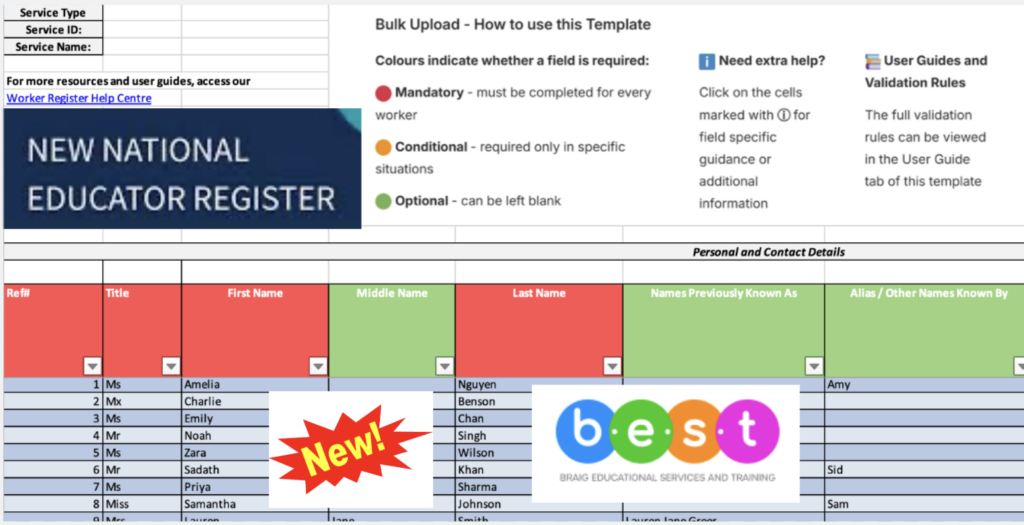
Embedding Child Safety: National Early Childhood Worker Register Begins 27 February 

There are moments in our profession where reform reminds us why our work matters so deeply.

Every day, families entrust services with what matters most in their lives — their children. They trust that the adults working with their children are safe, suitable, qualified, and supported. They trust that the systems behind the service are strong.

From 27 February 2026, one of the most significant national child safety reforms in early childhood education and care will take effect — the National Early Childhood Worker Register

The National Early Childhood Worker Register, developed by ACECQA, represents one of the most significant child safety reforms in early childhood education and care in recent years. It is designed to support regulatory authorities to monitor the workforce, identify risks earlier, and ensure safer environments for children across Australia.

This reform is not simply about administration. It is about visibility, accountability, and protection.

It recognises that safeguarding children is not just about policies — it is about knowing who is working with children, ensuring their suitability, and maintaining accurate records that follow
More Than Compliance: Embedding ASCIA Action Plans to Achieve Exceeding Practice and Protect Every Child (2026 Update)

Every morning, families place their children into our arms with complete trust. They trust that we will notice the small things. They trust that we will act quickly if something is wrong. And for children living with allergies and anaphylaxis, that trust carries life-saving weight. In early childhood education and care, an ASCIA Action Plan is not just a document — it is a child’s safety, a family’s reassurance, and an educator’s guide in moments where every second matters.

With ASCIA releasing updated Action Plans, introducing new devices such as Jext and Neffy, and confirming important changes around review requirements, it is essential that services understand exactly what this means for their practice, their compliance, and their responsibility to children.

This article provides a complete guide for Western Australian childcare services, including:

What ASCIA is and why its Action Plans are critical in childcare

What has changed in the latest ASCIA updates

The legal requirements under the National Quality Framework and ECRU

What paperwork is required, where to access official templates, and how often they must be reviewed

Staff training requirements and where to access approved training and trainer devices

Incident notification requirements and decision-making guidance

What families must provide, including medication and action plans

Other medical action plans childcare services may need, including asthma, epilepsy, diabetes, and eczema

Guidance on stock adrenaline and new device availability in Australia

Most importantly, this article explains how to ensure your service is not only compliant — but prepared, confident, and ready to protect every child in your care.

Because when it comes to anaphylaxis, preparation is not paperwork.

It is protection.

What Changed in NQS 2.2.3 Child Safety and Protection — Practical Guide to What Services Must Do Now

In January 2026, significant changes came into effect under the National Quality Standard, with the most prominent and far-reaching update occurring in Element 2.2.3 – Child Safety and Protection. These changes reflect a stronger national commitment to child safe cultures, clearer accountability for adults, and more explicit expectations around how services identify, prevent and respond to harm.

With the Guide to the National Quality Standard now spanning 692 pages, it is neither practical nor necessary for busy educators and leaders to digest every detail. What matters most is understanding what has changed, what assessors are now looking for, and what services need to do differently in practice.

BEST Childcare Consulting was proud to be part of the consultation group for the new national child protection training, providing sector-informed input into how these requirements translate into real, workable practice for early childhood services.

This article provides a clear, assessment-ready breakdown of the exact new and strengthened wording in Element 2.2.3, with each phrase explained through:

practical actions services can implement immediately, and

guidance on where to access appropriate training, if required.

At the core of these changes is a clear expectation that services maintain a consolidated, intentional approach to child safety training, where all educators, staff, relief educators, students and volunteers complete the National Child Safety Training as a baseline, supported by WA-specific mandatory reporting obligations and ongoing learning in protective behaviours, online safety, trauma-informed practice and cultural safety.

This summary is designed to help services move beyond compliance — and confidently demonstrate embedded, consistent and Exceeding-level practice under the upd

What Childcare Centres Need to Know About the New Infant Sleep Safety Standards Before 19 January 2026

Every baby deserves to drift into sleep in a space that is safe, stable, and carefully designed to protect them. In childcare, families trust us with their child during their most vulnerable moments—when they are resting, sleeping, and unable to advocate for themselves. As educators and leaders, we do not simply provide sleep environments; we provide reassurance, confidence, and peace of mind to families.

From 19 January 2026, all infant sleep equipment used within education and care services must meet new national safety requirements. These changes are not minor—they are about preventing suffocation, entrapment, overheating, falls and other tragic outcomes.

Moving early, planning with intention, and training our teams ensures that we honour the responsibility families place in us. By upgrading equipment, updating policies, and embedding safe-sleep practice into everyday routines, we do more than meet compliance—we actively protect children.

This article explains what has changed, what your service must do, and how to prepare confidently.

Promoting Protective Behaviours to achieve an Exceeding Rating

Protective Behaviours elevates child-safety from being adult-controlled and policy-driven to being child-empowered, embedded in daily practice, critically reflected on, and meaningfully shared with families and community. That’s what moves a service from Meeting into Exceeding. Protective Behaviours (PB) gives your service a shared safety language children can use every day (“I have a right to feel safe,” “helping-hand network,” “early warning signs”). PB West’s programs translate that language into consistent practice, coaching, and family engagement—exactly what assessors look for in Exceeding evidence.

New resources for the New Child Safety Regulations Changes

From 1 September 2025 and 1 January 2026, new reforms will come into effect that strengthen expectations around proactive child safety, leadership accountability, and the safe use of digital technologies. Understanding these changes is not optional—it is essential. By preparing now, you can help ensure our service moves beyond minimum compliance to show a genuine, whole-team commitment to child safety—something that sits at the heart of quality practice and professionalism in early educationThese changes come from the Review of Child Safety Arrangements under the NQF, released by ACECQA in December 2023. To support you, ACECQA has developed two new guides: the NQF Child Safe Culture Guide, focused on embedding child-safe practice in everything we do, and the NQF Online Safety Guide, which helps services manage risks and build safe digital environments for children. Updates will also be made to core reference materials, including the Guide to the NQF, so our everyday practice, policies, and reflections are aligned.