Tag Archives: Auslan

World Nursery Rhyme Week 9-13 November 2026: Five Days of Learning, Language, Music and Connection

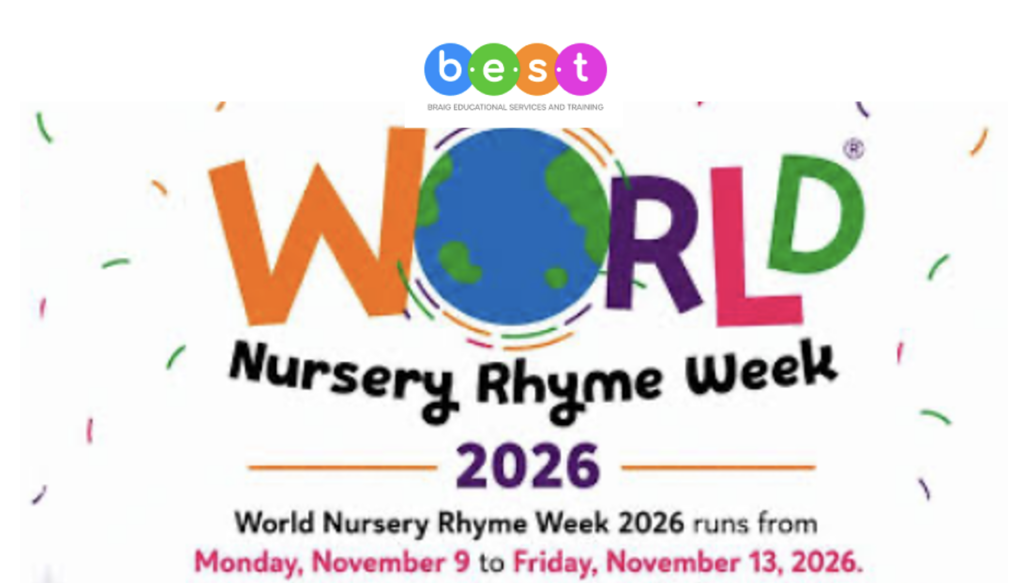
World Nursery Rhyme Week returns from Monday 9 November to Friday 13 November 2026, providing early childhood education and care services with a wonderful opportunity to celebrate the importance of nursery rhymes in children’s learning and development.

Established in 2013 by Music Bugs, this international initiative has involved more than eight million children worldwide. Each year, five nursery rhymes are selected as part of the Rhyme a Day Challenge, encouraging educators, families and children to explore language, music, rhythm, storytelling and movement. 

Nursery rhymes may appear simple, but they provide valuable opportunities to support early literacy, communication, memory, mathematical thinking, social development and emotional wellbeing.

For babies, nursery rhymes can strengthen attachment and communication through familiar voices, eye contact and gentle movements. For toddlers, repetition and actions encourage emerging language, coordination and confidence. Older children can explore storytelling, patterns, prediction, numeracy and creative expression.

World Nursery Rhyme Week also provides an opportunity for educators to reflect on how familiar songs and rhymes are embedded within everyday practice, rather than being limited to group times or special occasions.

In this BEST article, we explore the five official nursery rhymes for 2026, practical programming ideas for different age groups, Australian Auslan resources, connections to EYLF V2.0 and MTOP V2.0, and examples of how services can document meaningful quality improvement across all seven National Quality Areas using the three Exceeding NQS themes.
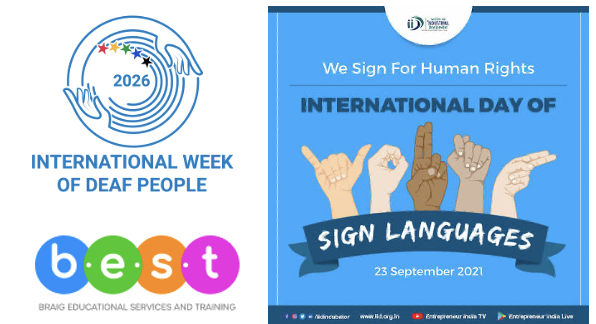
National Week of Deaf People 2026: Celebrating Auslan, Deaf Culture and Inclusive Communication in Early Childhood Education

Communication is so much more than the words we speak. It is the movement of our hands, the expression on our faces, the direction of our eyes, the gestures we make and the ways we connect with one another.

For children, being able to communicate means being able to belong. It means being able to tell someone what they need, share an idea, make a friend, participate in play, express an emotion and know that other people are interested in what they have to say.

During National Week of Deaf People, 21–27 September 2026, early childhood education and care services have a wonderful opportunity to celebrate the many ways human beings communicate and introduce children to Auslan – Australian Sign Language.

This is not simply a week about hearing loss. It is an opportunity to celebrate Deaf people, Deaf culture, language, identity, diversity and inclusion, while helping children understand from their earliest years that there is no single “right” way to communicate. Every Child Deserves to Be Heard – In Every Language

Where Every Voice Matters: Hearing Awareness in Early Childhood Education 

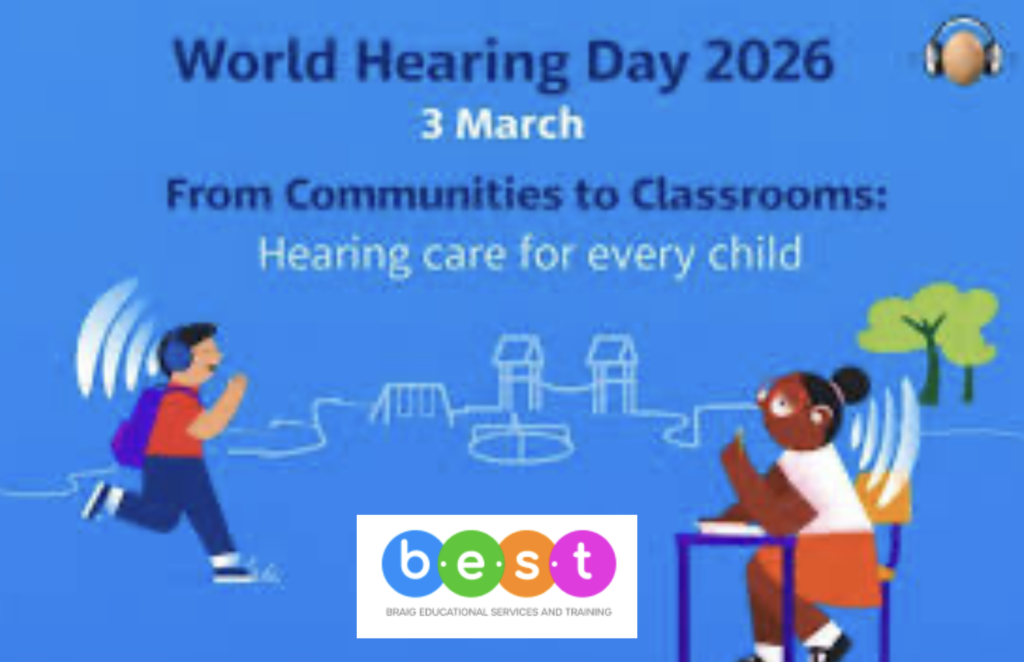
The 2026 World Hearing Day theme, “From communities to classrooms: hearing care for all children,” is more than a public health message. It is a reminder of our responsibility as early childhood professionals. It calls us to look closely at the environments we create, the noise we allow, the language we model, and the inclusion we practise every single day. This theme emphasises the importance of preventing avoidable hearing loss, ensuring early identification and care, and embedding hearing health and inclusive communication into everyday community and early learning environments. It recognises that supporting children’s ability to hear, listen and communicate is foundational to learning, wellbeing and participation in all aspects of ECEC life. 

In early childhood education, hearing care is not only about ears — it is about belonging. It is about ensuring that every child can access learning, connection, relationships and joy. It is about noticing when a child leans closer to hear. It is about recognising when frustration may stem from not fully understanding. It is about slowing down our speech, adding visual cues, learning a few Auslan signs, and adjusting our spaces so every child can participate with confidence.

Our classrooms are communities. And our communities shape futures. When we intentionally embed hearing awareness into our everyday practice, we are not simply acknowledging a calendar event — we are strengthening children’s identities, protecting their wellbeing, and building bridges between health, education and family life. This is the work of early childhood

Promoting Auslan Key Word Sign Language to earn and Exceeding rating

Each year in September, early childhood services have the opportunity to join the global celebration of the International Week of Deaf People. In 2025, the theme “No Human Rights Without Sign Language Rights” reminds us that communication is a fundamental right for every child. Embedding Auslan (Australian Sign Language) in early learning is not only inclusive practice — it is also a powerful way to demonstrate Exceeding quality across multiple areas of the National Quality Standard. From supporting early communication and wellbeing, to strengthening relationships, inclusion, and community partnerships, Auslan offers meaningful ways to bring the Exceeding themes of embedded practice, critical reflection, and meaningful engagement to life in your service.