Tag Archives: early childhood education

Epilepsy Awareness in Action: Embedding Inclusive Medical Practice in ECEC

Some children arrive at our services carrying more than backpacks. They carry medical plans. Emergency medication. Parent anxieties. Quiet hopes that their child will be safe, included, and understood.

For families of children living with epilepsy, every day requires trust. Trust that educators will recognise a seizure. Trust that supervision is vigilant. Trust that systems are strong. Trust that their child will belong — not be defined by a diagnosis.

Purple Day (26 March) is not simply about wearing purple. It is about honouring that trust. For early childhood services, this day provides a meaningful opportunity to strengthen inclusive practice in alignment with the Education and Care Services National Law, the Education and Care Services National Regulations, and the vision of the Early Years Learning Framework — that every child is safe, supported and able to participate fully.

When approached intentionally, Purple Day becomes powerful evidence of Exceeding practice — not because of decorations, but because of strengthened systems, deeper reflection and genuine collaboration.

Embedding Equity: Harmony Week & Closing the Gap Through the NQS Lens

Perfect for Harmony Week (16–22 March) & Closing the Gap Day (19 March 2026) By BEST Childcare Consulting In early childhood education, belonging is not a theme — it is the foundation of everything we do. Harmony Week reminds us that every child walks through our doors carrying language, culture, history, hopes and identity. Some

Where Every Voice Matters: Hearing Awareness in Early Childhood Education 

The 2026 World Hearing Day theme, “From communities to classrooms: hearing care for all children,” is more than a public health message. It is a reminder of our responsibility as early childhood professionals. It calls us to look closely at the environments we create, the noise we allow, the language we model, and the inclusion we practise every single day. This theme emphasises the importance of preventing avoidable hearing loss, ensuring early identification and care, and embedding hearing health and inclusive communication into everyday community and early learning environments. It recognises that supporting children’s ability to hear, listen and communicate is foundational to learning, wellbeing and participation in all aspects of ECEC life. 

In early childhood education, hearing care is not only about ears — it is about belonging. It is about ensuring that every child can access learning, connection, relationships and joy. It is about noticing when a child leans closer to hear. It is about recognising when frustration may stem from not fully understanding. It is about slowing down our speech, adding visual cues, learning a few Auslan signs, and adjusting our spaces so every child can participate with confidence.

Our classrooms are communities. And our communities shape futures. When we intentionally embed hearing awareness into our everyday practice, we are not simply acknowledging a calendar event — we are strengthening children’s identities, protecting their wellbeing, and building bridges between health, education and family life. This is the work of early childhood

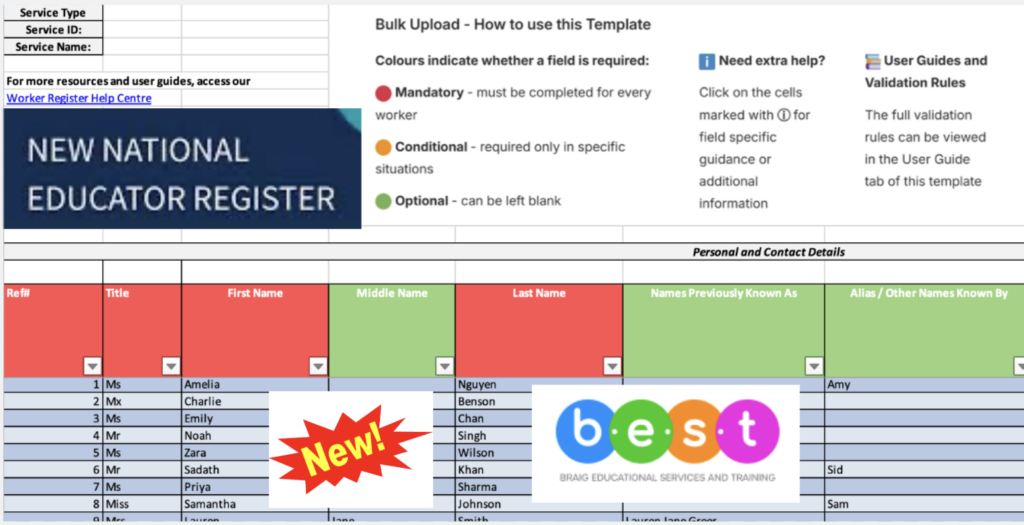
Embedding Child Safety: National Early Childhood Worker Register Begins 27 February 

There are moments in our profession where reform reminds us why our work matters so deeply.

Every day, families entrust services with what matters most in their lives — their children. They trust that the adults working with their children are safe, suitable, qualified, and supported. They trust that the systems behind the service are strong.

From 27 February 2026, one of the most significant national child safety reforms in early childhood education and care will take effect — the National Early Childhood Worker Register

The National Early Childhood Worker Register, developed by ACECQA, represents one of the most significant child safety reforms in early childhood education and care in recent years. It is designed to support regulatory authorities to monitor the workforce, identify risks earlier, and ensure safer environments for children across Australia.

This reform is not simply about administration. It is about visibility, accountability, and protection.

It recognises that safeguarding children is not just about policies — it is about knowing who is working with children, ensuring their suitability, and maintaining accurate records that follow

Showcasing Exceeding Practices by Embedding Sustainability with Sea Week

The ocean is one of Earth’s greatest gifts to humanity — it gives us oxygen, regulates our climate, feeds communities, and connects life across the planet. For young children, water is often their first source of wonder: the sound of waves, the feel of rain, the mystery of creatures beneath the surface. These early moments of curiosity lay the foundation for lifelong respect and care for our natural world.

Sea Week Australia 2026 invites early childhood education and care services to slow down, look deeper, and help children understand their relationship with Planet Water. Under the theme “Caring for Planet Water”, Sea Week is not about teaching children facts alone — it is about nurturing empathy, responsibility, and connection. It is about helping children recognise that even small actions, taken every day, can protect the oceans that sustain all life.

When Sea Week is embedded thoughtfully into everyday practice — through play, inquiry, relationships, and sustainable routines — it becomes far more than a calendar event. It becomes a living example of Exceeding practice: intentional teaching, strong environmental stewardship, and children empowered as capable, caring global citizens.

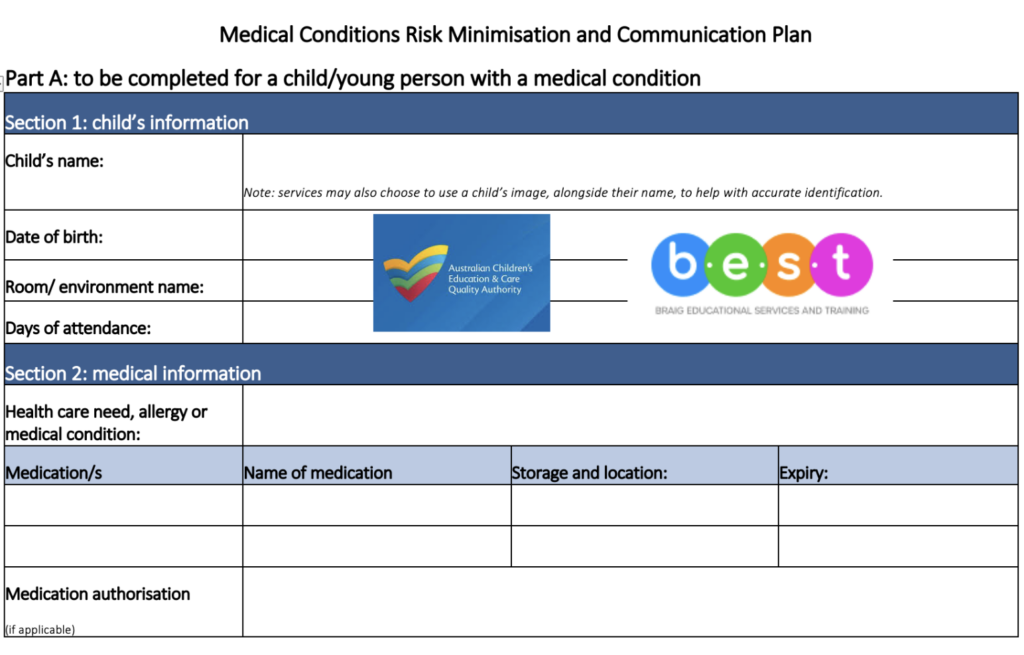
Medical Conditions Risk Management and Communication Plan Template Update on 27 January 2026 

n early childhood education and care, nothing matters more than the safety and wellbeing of the children entrusted to us. When a child lives with asthma, anaphylaxis, diabetes, epilepsy, or another diagnosed medical condition, families place an even deeper level of trust in educators and service leaders. They trust that every risk has been anticipated. They trust that every educator knows what to do. They trust that systems are strong, clear, and consistently followed.

On 27 January 2026, ACECQA released an updated template that strengthens how services plan, communicate and manage medical conditions. While this update does not change the law itself, it significantly improves how services demonstrate compliance, governance, and Exceeding-level practice.

This article explains what changed, what stayed the same, and what BEST recommends services do next.

More Than Compliance: Embedding ASCIA Action Plans to Achieve Exceeding Practice and Protect Every Child (2026 Update)

Every morning, families place their children into our arms with complete trust. They trust that we will notice the small things. They trust that we will act quickly if something is wrong. And for children living with allergies and anaphylaxis, that trust carries life-saving weight. In early childhood education and care, an ASCIA Action Plan is not just a document — it is a child’s safety, a family’s reassurance, and an educator’s guide in moments where every second matters.

With ASCIA releasing updated Action Plans, introducing new devices such as Jext and Neffy, and confirming important changes around review requirements, it is essential that services understand exactly what this means for their practice, their compliance, and their responsibility to children.

This article provides a complete guide for Western Australian childcare services, including:

What ASCIA is and why its Action Plans are critical in childcare

What has changed in the latest ASCIA updates

The legal requirements under the National Quality Framework and ECRU

What paperwork is required, where to access official templates, and how often they must be reviewed

Staff training requirements and where to access approved training and trainer devices

Incident notification requirements and decision-making guidance

What families must provide, including medication and action plans

Other medical action plans childcare services may need, including asthma, epilepsy, diabetes, and eczema

Guidance on stock adrenaline and new device availability in Australia

Most importantly, this article explains how to ensure your service is not only compliant — but prepared, confident, and ready to protect every child in your care.

Because when it comes to anaphylaxis, preparation is not paperwork.

It is protection.

Epilepsy Awareness in Action: Embedding Inclusive Medical Practice in ECEC

Some children arrive at our services carrying more than backpacks. They carry medical plans. Emergency medication. Parent anxieties. Quiet hopes that their child will be safe, included, and understood.

For families of children living with epilepsy, every day requires trust. Trust that educators will recognise a seizure. Trust that supervision is vigilant. Trust that systems are strong. Trust that their child will belong — not be defined by a diagnosis.

Purple Day (26 March) is not simply about wearing purple. It is about honouring that trust. For early childhood services, this day provides a meaningful opportunity to strengthen inclusive practice in alignment with the Education and Care Services National Law, the Education and Care Services National Regulations, and the vision of the Early Years Learning Framework — that every child is safe, supported and able to participate fully.

When approached intentionally, Purple Day becomes powerful evidence of Exceeding practice — not because of decorations, but because of strengthened systems, deeper reflection and genuine collaboration.
Embedding Safe Sleep Culture in Early Childhood Education and Care

Perfect for Red Nose Safe Sleeping week 9 -15 March 2026 By BEST Childcare Consultancy  Every day, families place their babies into our arms with complete trust. They trust that we will notice the small things. They trust that we will follow the safest advice. They trust that when their child closes their eyes to

Disaster Resilience Learning in Early Childhood: Calm, Child-Led and Trauma-Aware

ood education and care services are uniquely positioned to support children not only to be safe, but to feel safe, confident and supported. As extreme weather events, natural disasters and community emergencies become part of children’s lived experiences, high-quality services respond not by increasing fear, but by strengthening emotional literacy, environmental awareness, trust in helpers and a sense of belonging.

Disaster resilience learning in early childhood is not about drills or frightening information. Instead, it is built through ongoing exploration of weather and environmental change, learning about community helpers, embedding emotional regulation skills, and creating space for children’s voices about what helps them feel safe when things feel uncertain.

Two complementary Australian resources support this approach:

The Helping Hands Disaster Resilience Toolkit from ABC Kids Early Education, which supports educators to plan age-appropriate learning about weather, safety, helpers and preparedness

Birdie’s Tree Natural Disaster Recovery resources from Children’s Health Queensland, which use story, play and calming strategies to help children process big feelings safely

When embedded intentionally into everyday practice, these resources support services to demonstrate Exceeding practice across all Quality Areas, while keeping children emotionally protected, empowered and calm.