There is something special about watching a child discover a tiny seedling, spot a bird in a tree, or carefully care for a living plant. These simple moments often become the foundation for a lifelong respect for nature and the environment.
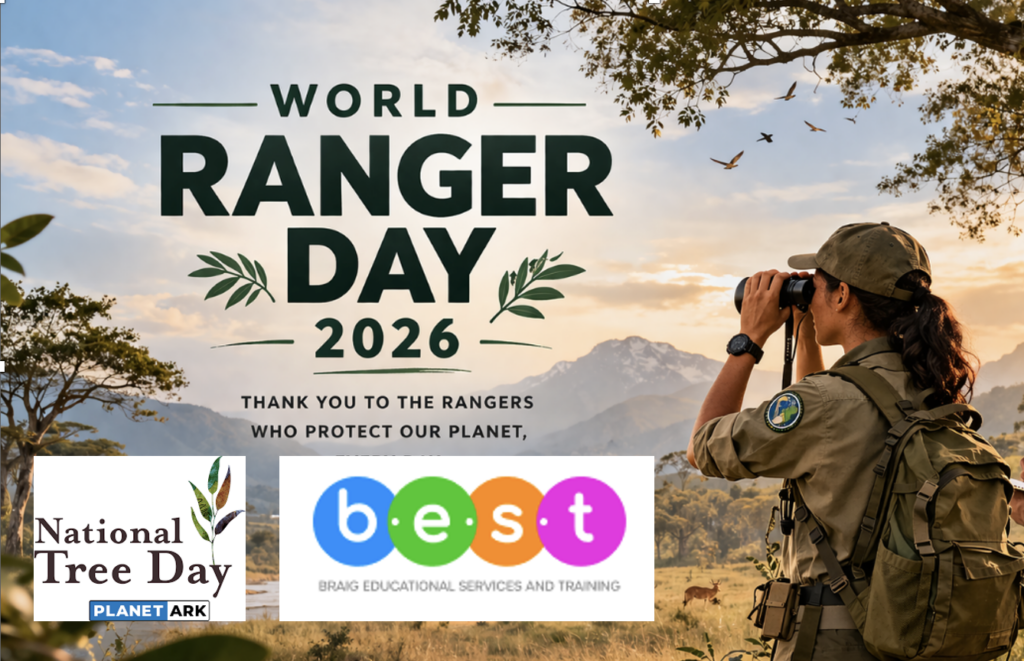
National Tree Day and World Ranger Day provide wonderful opportunities for early childhood services to foster children’s connection with the natural world while supporting the principles of sustainability, environmental responsibility and caring for Country.
National Tree Day is Australia’s largest community tree-planting and nature care event, encouraging people of all ages to improve their local environment through planting and conservation activities. World Ranger Day recognises the dedicated park rangers and conservation workers who protect wildlife, cultural heritage, national parks and natural environments around Australia and across the globe.
Together, these events help children develop an understanding that every person has a role in caring for our planet. They also provide rich opportunities to explore Aboriginal and Torres Strait Islander perspectives, biodiversity, sustainability, community responsibility and the importance of protecting the natural environments we all share.