Tag Archives: Plastic free July

Plastic Free July & NAIDOC Week 2026: The Sea of Fish Challenge for Early Childhood Services

Every July, early childhood services across Australia celebrate NAIDOC Week and Plastic Free July. While these two national events may appear quite different, they are united by one powerful idea—care. Care for Country. Care for Sea Country. Care for culture. Care for community. Care for future generations.

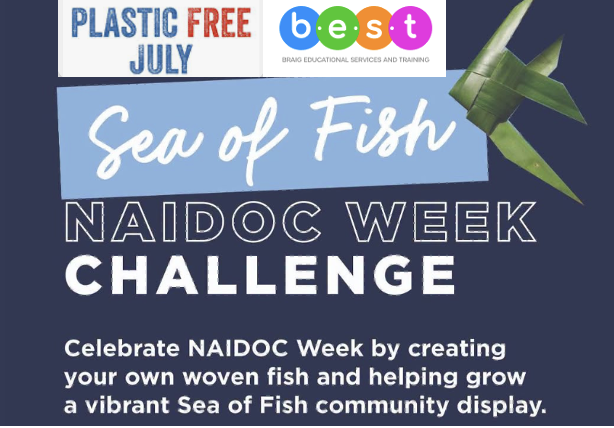
The Sea of Fish Challenge, created by Connecting the Dots through Culture, brings these shared values together through one meaningful, collaborative project that helps children explore the connection between Aboriginal and Torres Strait Islander perspectives, environmental sustainability and caring for our oceans and waterways. More than an art activity, it encourages children to recognise that respecting culture and protecting the environment go hand in hand.

The challenge also aligns with the United Nations Sustainable Development Goals (SDGs) by supporting Responsible Consumption and Production (SDG 12), Climate Action (SDG 13), Life Below Water (SDG 14) and Life on Land (SDG 15). Through play, creativity and inquiry, children learn that even the smallest actions can help care for Country, Sea Country and the world around them. The Sea of Fish Challenge supports the vision of the EYLF V2.0 by nurturing children’s sense of belonging, connection and responsibility, while inspiring them to become respectful custodians of Country, Sea Country and the world around them—one fish, one conversation and one small action at a time.
Raising Environmentally Responsible Children Through Sustainability, Country and Sea Country

Plastic Free July is a global movement that encourages individuals, families, communities and organisations to reduce their use of single-use plastics and make more sustainable choices in everyday life.

For early childhood services, Plastic Free July provides a valuable opportunity to help children understand their connection to the environment and develop habits that contribute to a healthier future. Through play, inquiry and meaningful experiences, children can begin learning that even small actions can make a significant difference to the world around them.

For Aboriginal and Torres Strait Islander peoples, caring for Country and Sea Country has been a responsibility for tens of thousands of years. Country includes land, waterways, oceans, skies, plants, animals, people, culture and spirituality. Sea Country refers to the oceans, reefs, coastal areas and waterways that have sustained Aboriginal and Torres Strait Islander communities for generations.

Traditional custodians understand that all living things are interconnected and that people have a responsibility to care for the environment so future generations can continue to thrive. Plastic pollution threatens many aspects of Sea Country, including marine animals, waterways, beaches and ecosystems. By learning about caring for Country and Sea Country, children can develop respect for Aboriginal and Torres Strait Islander perspectives while understanding their own role in protecting the environment.