Tag Archives: exceeding the national quality standards

Promoting eSafety in Early Childhood Education to Earn Exceeding Rating

In today’s connected world, even our youngest children are growing up surrounded by digital devices, streaming content, and interactive toys. For children under five, technology can open doors to creativity, connection, and discovery — but only when guided by safe, respectful, and intentional practices.

As educators, we hold a powerful role in shaping children’s early experiences with technology. By modelling balanced, mindful, and secure digital use, we help children build lifelong habits of safety, kindness, and confidence online. The eSafety Commissioner’s Early Years program is an invaluable national resource supporting this journey (www.esafety.gov.au).

For services striving for an Exceeding rating under the National Quality Framework (NQF), embedding proactive and reflective online-safety practices is not only a compliance measure — it’s a statement of care, leadership, and excellence. When we nurture digital wellbeing alongside emotional, physical, and cultural safety, we empower children to explore their world — both online and offline — with curiosity and confidence.
Profit, Purpose, and a Promising Future Investing in Childcare 

When you purchase a childcare centre, you’re not just buying a business — you’re securing a reliable, scalable asset that builds long-term wealth and contributes to your community. Many centres operate on owned land or secure leases, offering investors the benefit of both operational profit and property value growth.
While many small businesses rise and fall with changing trends, the early childhood education and care (ECEC) sector continues to grow — supported by strong government funding, consistent family demand, and a national focus on quality education. Childcare services are recession-resistant, community-driven, and financially resilient.
Across Australia, typical profit margins for childcare centres range from 10% to 20% of revenue, with well-run services often achieving returns (ROI) of 25–30%.
Imagine owning a business that delivers both meaning and money — where every dollar earned also makes a difference in the lives of children and families. That’s the power of investing in early childhood education: an opportunity that blends financial strength with social purpose, giving you both a stable income and a legacy to be proud of.

Promoting Psychosocial Safety to Earn an Exceeding rating

Do Childcare Centres Need to Consider Psychosocial Safety?
Absolutely — and it’s now both a legal obligation and a marker of high-quality care.
Psychosocial safety refers to creating a workplace and learning environment that protects everyone’s mental, emotional, and social wellbeing. It ensures educators, children, and families feel respected, supported, and free from bullying, overwork, or emotional harm.
Under the Work Health and Safety (General) Regulations 2022 (WA) and WorkSafe WA’s Code of Practice: Psychosocial Hazards in the Workplace, all early childhood education and care (ECEC) services must identify, assess, and manage psychosocial risks. These requirements sit alongside your obligations under the Education and Care Services National Law and Regulations.
A psychosocially safe service isn’t just compliant — it’s calm, consistent, and connected. When educators feel valued and supported, children thrive in emotionally secure environments that foster learning and belonging.

Sing, Play, Connect: Earning Exceeding Through Nursery Rhymes

World Nursery Rhyme Week is a global celebration of the joy, rhythm, and connection that rhymes bring to early childhood education. Each year, thousands of early learning settings worldwide participate by exploring five official rhymes that promote language development, cultural belonging, and joyful expression.

In 2025, the five official rhymes are:
Sing a Song of Sixpence
Humpty Dumpty
When I Was One (I Played the Drum)
I Hear Thunder
Two Little Dickie Birds

Nursery rhymes are more than melodies — they are gateways to literacy, numeracy, social connection, and cultural identity. Embedding rhyme and song throughout your educational program builds a strong foundation for communication, belonging, and wellbeing — and when reflected upon intentionally, these practices contribute to Exceeding-level evidence across all 7 Quality Areas.

Early childhood professionals can register for free as official ambassadors and access downloadable packs, lyric posters, and activity ideas at www.worldnurseryrhymeweek.com.

Embedding a Recycling Ethos to Achieve Exceeding

In today’s context of increasing environmental awareness and global resource constraints, embedding a strong recycling culture within your early childhood service is not just socially responsible — it supports children’s sense of agency, belonging, and stewardship of the world they inhabit. The campaign National Recycling Week (10–16 November 2025) run by Planet Ark Environmental Foundation highlights the “reduce – reuse – recycle” hierarchy and the circular economy as critical to sustaining resources. 

Incorporating recycling into your everyday program supports children to investigate, question, problem‐solve, collaborate and make meaningful change; it aligns very strongly with the Exceeding themes of Embedded Practice, Critical Reflection and Meaningful Engagement. Embedding recycling means more than a one-off activity — it becomes part of your service’s identity, routines, environment and learning culture.

Below are practical educational programming ideas followed by a QIP (Quality Improvement Plan) style write-up for each of the 7 Quality Areas (QA) under the National Quality Standard (NQS), each weaving in the three Exceeding themes.

Earning Exceeding Through Kindness and Tolerance: Embedding Empathy, Respect, and Inclusion in Everyday Practice

In early childhood education, every gentle word, every shared smile, and every act of inclusion builds the foundation for a kinder, more tolerant world.
World Kindness Day (13 November) and the International Day for Tolerance (16 November) remind us that even the smallest gestures—helping a friend, saying thank you, inviting someone new to play—can grow into powerful lessons about empathy, respect, and belonging.
Children learn kindness not from words alone, but from the everyday examples set by the adults who care for them. When we model compassion, fairness, and open-mindedness, we teach children that everyone deserves to feel safe, valued, and heard.
By embracing the principles of Be You, which promotes wellbeing, resilience, and positive relationships, and drawing on the Building Belonging Toolkit from the Australian Human Rights Commission, services can intentionally create environments where diversity is celebrated and inclusion is lived every day.
Together, these frameworks guide educators to nurture children’s hearts as well as their minds—helping them grow into empathetic, confident individuals who understand that kindness and tolerance are not just special events, but lifelong ways of being.

Honouring Directors’ Day in Early Childhood Education

Every thriving early childhood service has one thing in common — a leader who holds it all together. Someone who answers every question, signs every form, comforts every child, supports every educator, and somehow keeps the service running with calm, compassion, and courage.

On November 10, 2025, we celebrate those remarkable people — our ECEC Directors — the heart and backbone of early childhood education and care in Australia. Directors’ Day is a special moment to pause, reflect, and say thank you to the leaders who do so much more than manage: they nurture, guide, and inspire everyone around them.

This day is separate from Early Childhood Educators’ Day, because leadership in ECEC deserves its own light — a day to honour the people who lift others up, navigate the complex world of regulations and relationships, and still find time to connect with every child, family, and educator in their community.

Today, and every day, we recognise the directors who lead with both heart and skill — who carry the weight of responsibility quietly, and whose dedication shapes not only services, but futures.

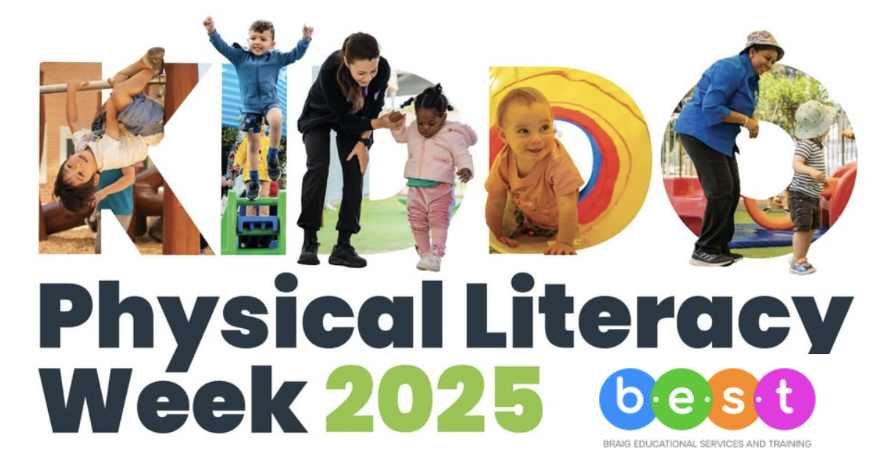
Promoting Physical Literacy to Earn an Exceeding Rating

This November, two national initiatives unite around a single powerful idea — children learn best when they move, play, and connect with the world around them. Physical Literacy Week and Outdoor Classroom Day invite early childhood services to step outside and celebrate movement as learning — nurturing confidence, wellbeing, curiosity, and belonging through outdoor play and exploration. By embracing these events together, services can demonstrate Exceeding practice across all seven Quality Areas, embedding physical literacy, outdoor learning, and community connection into daily routines.

How do I prepare for a CCS Spot Check?

In August 2025, the Australian Government released the Strengthening Regulation of Early Childhood Education and Care Safety through the Child Care Subsidy (CCS) – Provider Guidelines, marking a major shift in how safety, quality, and funding integrity are regulated across the early childhood education and care (ECEC) sector.

Under this strengthened framework, CCS approval is no longer just about meeting administrative requirements — it’s about demonstrating a whole-of-service commitment to safety, quality assurance, and governance accountability. The Guidelines empower the Department of Education to use data analytics, risk profiling, and unannounced CCS spot checks to verify that services receiving federal funding are operating safely, ethically, and transparently.

For approved providers and nominated supervisors, this framework acts as both a compliance roadmap and a reflection tool. It encourages services to regularly self-assess their systems — reviewing incident management, staff suitability, documentation accuracy, and financial integrity before any issues arise.

A practical way to prepare is through the Commonwealth’s free Geccko online training platform (Get Early Childhood Compliance Knowledge Online). Geccko helps educators, leaders, and administrators understand their obligations under the Family Assistance Law (FAL) — covering topics such as enrolment integrity, session reporting, gap-fee requirements, and governance responsibilities. Completion certificates can also serve as evidence of staff competence and proactive compliance during a CCS spot check.

Embedding both the CCS Provider Guidelines and Geccko training outcomes into your Quality Improvement Plan (QIP) demonstrates Exceeding-level practice across multiple Quality Areas — particularly QA2 (Children’s Health and Safety), QA4 (Staffing), and QA7 (Governance and Leadership). It shows your service is not only compliant but continually reflecting, improving, and modelling a culture of safety and integrity at every level.

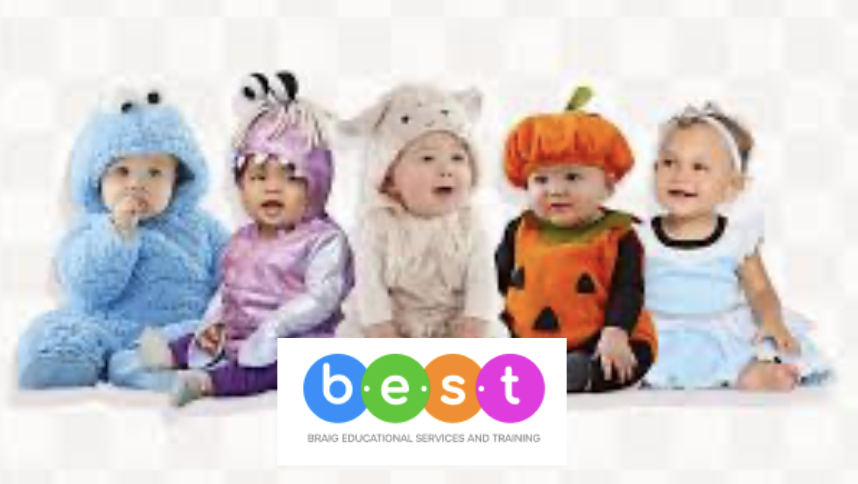
Dressing Up Day: A Child-Friendly Way to Celebrate Halloween in Early Childhood

For children under five, dressing up is more than a costume — it’s a window into imagination, identity, and belonging. Instead of traditional Halloween celebrations that can feel too scary or commercial, early childhood services can reframe this day as a Dressing Up or Imagination Day — a joyful, creative experience that honours curiosity, storytelling, and community. In early childhood settings, this is a wonderful opportunity to explore pretend play, storytelling, and self-expression while respecting families’ cultural perspectives. Instead of focusing on fright, we can focus on fun, friendship, and fantasy — encouraging children to share who they want to be and supporting their emerging sense of identity.

Through simple, non-frightening dress-ups, children explore who they are, who they can be, and how they relate to others. They gain confidence, develop empathy, practise communication, and engage in deep, meaningful play that reflects the principles of the Early Years Learning Framework v2.0 and the National Quality Standard.

This approach also models inclusion and cultural respect — recognising that not all families celebrate Halloween in the same way. By shifting the focus from “scary” to “creative,” services can build shared understanding, strengthen relationships, and create an environment where every child feels safe, seen, and celebrated.