Category Archives: Exceeding the NQS BEST tips

Recognising and Supporting Mental Health Difficulties in Children Under Six

Little Children Have Mental Health Too! When we think about mental health, we often think of teenagers and adults. But mental health begins in infancy! In childcare, we focus on children’s physical health, development and safety. But are we recognising the signs when a child may be struggling emotionally? Could persistent crying be more than separation anxiety? Could challenging behaviour be communicating emotional distress? And what about the quiet, withdrawn child whose struggles may go unnoticed? Not all mental health difficulties are visible, and not every child who is struggling will demonstrate challenging behaviour.

In our latest BEST article, we explore how Bringing Up Great Kids (BUGK) — including our specially tailored childcare professional development and the family program we also facilitate — alongside Be You, Karen Young’s Hey Sigmund and My Brain Books, can help educators look beyond behaviour, recognise possible mental health concerns and support children’s emotional wellbeing. Because recognising children’s mental health needs starts with noticing the child behind the behaviour.
Christmas 2026: Less Is More – More Kindness, More Connection, More Children’s Rights

As another busy year draws to a close, early childhood education and care services across Australia are preparing for the festive season. Traditionally, this means Christmas concerts, graduation ceremonies, handmade gifts, decorations, special events and an endless list of activities to organise.

But this year, BEST Childcare Consulting is encouraging services to consider a different approach. What if Christmas 2026 was about doing less, but making it mean more?

After another demanding year of regulatory changes, workforce pressures, professional development requirements and increasing responsibilities, many educators and directors are approaching December already exhausted. Yet this should also be a wonderful time for children, filled with excitement, imagination, laughter, friendship and anticipation.

Perhaps the answer isn’t another Christmas concert, another elaborate craft project or another event for families to attend. Perhaps it’s simply slowing down and remembering what this time of year can represent: kindness, generosity, belonging, gratitude, friendship, compassion and connection.

But there is another important consideration. Are our festive traditions genuinely respecting children’s rights, or are we sometimes prioritising adult expectations over children’s needs?

With Western Australia’s new child safety reforms commencing on 1 November 2026, this is a particularly relevant time for services to reflect on children’s voices, wellbeing, safety and participation in decisions that affect them.

This Christmas, let’s put children’s rights at the centre of our celebrations, while giving educators permission to slow down and enjoy the season alongside the children.

NEW ACECQA Inclusion Resources: Practical Programming Ideas and Exceeding NQS Examples for Childcare Services

Social Inclusion Week is a wonderful opportunity for childcare services to celebrate diversity, strengthen community connections and reflect on how every child and family experiences a genuine sense of belonging.

With ACECQA’s NEW Inclusion Ready Toolkit and valuable resources from Diversity Kids, services can explore practical ways to remove barriers, strengthen inclusive practices and support every child’s participation.

Our latest BEST article brings together new ACECQA resources, age-specific programming ideas from Babies through to OSHC, and QIP examples across all seven Quality Areas incorporating the three Exceeding NQS themes.

Inclusion isn’t just for Social Inclusion Week – it should be embedded in everyday practice throughout the year!

World Nursery Rhyme Week 9-13 November 2026: Five Days of Learning, Language, Music and Connection

World Nursery Rhyme Week returns from Monday 9 November to Friday 13 November 2026, providing early childhood education and care services with a wonderful opportunity to celebrate the importance of nursery rhymes in children’s learning and development.

Established in 2013 by Music Bugs, this international initiative has involved more than eight million children worldwide. Each year, five nursery rhymes are selected as part of the Rhyme a Day Challenge, encouraging educators, families and children to explore language, music, rhythm, storytelling and movement. 

Nursery rhymes may appear simple, but they provide valuable opportunities to support early literacy, communication, memory, mathematical thinking, social development and emotional wellbeing.

For babies, nursery rhymes can strengthen attachment and communication through familiar voices, eye contact and gentle movements. For toddlers, repetition and actions encourage emerging language, coordination and confidence. Older children can explore storytelling, patterns, prediction, numeracy and creative expression.

World Nursery Rhyme Week also provides an opportunity for educators to reflect on how familiar songs and rhymes are embedded within everyday practice, rather than being limited to group times or special occasions.

In this BEST article, we explore the five official nursery rhymes for 2026, practical programming ideas for different age groups, Australian Auslan resources, connections to EYLF V2.0 and MTOP V2.0, and examples of how services can document meaningful quality improvement across all seven National Quality Areas using the three Exceeding NQS themes.

Directors Day 10 November 2026: Our Early Childhood Leaders Deserve More Recognition Than Ever

On 10 November 2026, we celebrate Directors Day, an opportunity to recognise the extraordinary contribution of directors and leaders working across Australia’s early childhood education and care sector.

While directors have always carried significant responsibilities, the past few years have been particularly demanding. Our sector has experienced an extraordinary period of legislative reform, workforce challenges, increased regulatory expectations, funding changes and growing responsibilities surrounding child safety.

For many directors, it has felt as though one change has barely been implemented before another arrives. Yet through it all, directors have continued to lead their teams, support families, protect children, maintain compliance and strive to provide high-quality education and care.

This year, perhaps more than ever, our directors deserve to be acknowledged, appreciated and supported.

Getting Children Moving: Which Physical Activity Program Is Right for Your Early Childhood Service?

We all know children need to move. Running, climbing, balancing, jumping, throwing, catching, dancing and energetic play are fundamental parts of childhood. But when an early childhood service decides it wants to strengthen physical activity within its program, a surprisingly difficult question can arise: where do we start?

A search for physical activity programs can lead services to KIDDO, Play Active, Munch & Move, Kids at Play Active Play and numerous commercial sport and movement programs. They can all sound similar, but they are not necessarily designed to achieve the same thing.

Some focus on children’s fundamental movement skills. Others focus on how much energetic physical activity children experience throughout their day. Some take a broader healthy lifestyle approach, incorporating nutrition and sedentary behaviour.

The important question, therefore, may not be “Which program is best?” A much more useful question is: “What does our service need to improve, and which program or resource best addresses that need?”

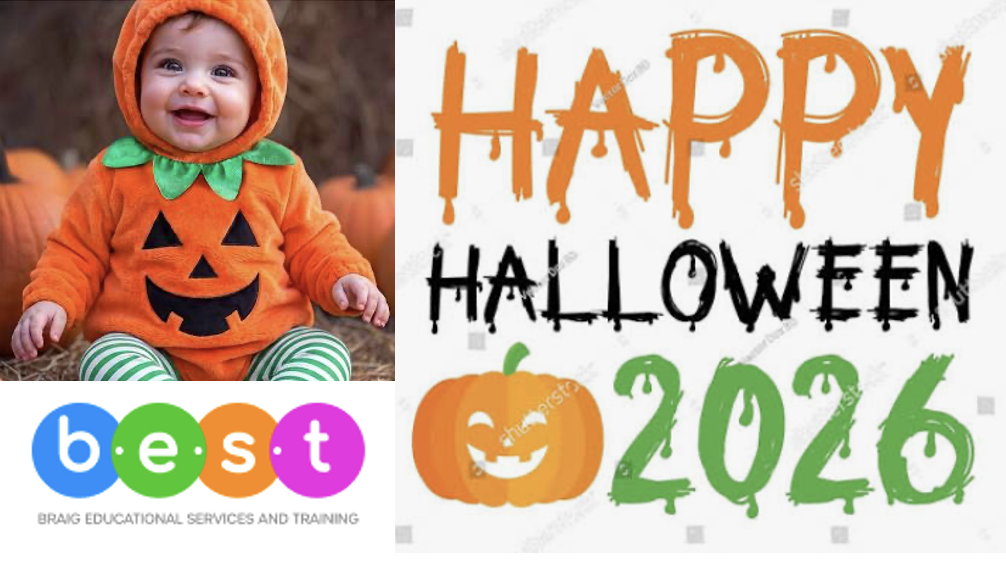
Halloween 2026 in Early Childhood: Can Childcare Services Celebrate Halloween?

For many young children, Halloween is exciting — pumpkins, costumes, funny characters, stories and imaginative play. For others, it may be unfamiliar or frightening, and some families may prefer not to participate. This raises an important question for early childhood services: Are we actually allowed to celebrate Halloween?

The short answer is yes. There is no general rule within the National Quality Framework preventing services from acknowledging Halloween. What matters is how and why we choose to do it — ensuring experiences are safe, inclusive, respectful of families and developmentally appropriate.

Rather than Halloween being limited to costumes, decorations and treats, educators can use children’s interest as a springboard for meaningful learning. Pumpkins can become science investigations, friendly monsters can encourage conversations about emotions, shadows can inspire experiments with light, and costumes can extend storytelling and dramatic play. Even the service cook can become involved through healthy cooking, measurement and food literacy experiences.

Across the service, children can investigate, question, predict, measure, create, cook, taste and imagine, with experiences adapted for babies through to OSHC.

So perhaps the question is not simply, “Can we celebrate Halloween?” but “How can we use Halloween to create meaningful, safe, inclusive and developmentally appropriate learning?”

Approached thoughtfully, Halloween can support creativity, literacy, numeracy, STEM, healthy eating, emotional development, children’s agency and family engagement — turning one day of fun into a genuine whole-service learning opportunity.

National Children’s Week 2026: Celebrating Every Child’s Language, Culture and Right to Belong

Every child who walks through the doors of an early childhood education and care service brings something uniquely their own—their family, their language, their culture, their traditions, their experiences and their developing sense of who they are.

They also bring with them something that belongs equally to every child: their rights.

National Children’s Week, held from 24 October to 1 November 2026, provides education and care services with an important opportunity to celebrate children and reflect on how their rights, voices, cultures and identities are recognised within everyday practice.

The beginning of Children’s Week in 2026 also coincides with United Nations Day on 24 October, creating a particularly meaningful opportunity to introduce children to the idea that children everywhere have rights.

For early childhood services, this week is about much more than adding multicultural experiences to the program. It is an opportunity to ask: Do the children in our service genuinely see themselves, their families, their languages and their cultures reflected in the place where they spend so much of their childhood?

Healthy Eating and Positive Food Experiences in Childcare

Food is so much more than fuel. For a young child, food can mean comfort, family, culture, connection, curiosity and belonging. It is the smell of a familiar meal from home, sitting beside friends at morning tea, picking the first strawberry from the garden, helping an educator stir a bowl of ingredients or proudly announcing, “I tried it!”

These everyday moments matter. During the early years, children are not simply learning what to eat. They are developing attitudes towards food, learning to recognise their own hunger and fullness cues, discovering where food comes from and absorbing messages from the adults around them about food, health and eating.

That makes early childhood education and care an incredibly important place for positive food experiences to begin. This National Nutrition Week, 12–18 October 2026, early childhood services have an opportunity to look beyond the menu and consider the whole food environment we create for children.

Global Handwashing Day 2026: Be a Handwashing Hero! – Hand Hygiene Is Child Safety in Early Childhood

A child’s hand reaches for ours for so many reasons—for reassurance, for help climbing a step, to show us something exciting they have discovered, or simply to hold ours when they are uncertain. Those same little hands spend their days exploring the world around them: digging in sand, creating with paint, touching toys, cuddling friends, eating, wiping noses, investigating nature and discovering everything childhood has to offer.

Keeping those hands clean may seem like one of the simplest routines in early childhood education and care, but it is also one of the most important. Every time an educator helps a baby wash their hands, reminds a toddler to use soap, supports a preschool child to understand how germs spread or models good hygiene themselves, they are doing more than teaching a healthy habit. They are helping protect a child.

This Global Handwashing Day, 15 October 2026, BEST encourages early childhood education and care services to look at hand hygiene through a broader lens: hand hygiene is child safety.